Which Website Authority Metric Can You Trust: DR, DA, TF, CF, AS, or SDR. A Unique Study of 40,000 Websites

SEO specialists, link builders, and marketers rely on website authority metrics every day. They use them to evaluate their own websites, compare them with competitors, and select donor domains for backlink placement.
Before diving into the study, let’s revisit a fundamental question: why do we rely on domain authority metrics when making SEO decisions and evaluating websites?
In most cases, SEO specialists and link builders use domain authority as a proxy for a website’s link equity. But why do we try to measure link equity and domain authority in the first place? Because the strength of a website’s backlink profile, in other words its domain authority, is an important ranking factor in Google Search.
The logic is straightforward: the higher a domain’s authority, the more trust it is perceived to have and the more organic traffic it is likely to receive from Google.
By evaluating a website’s authority, SEO professionals attempt to estimate its potential impact on search performance. That is why, throughout this study, we will analyze the correlation between website authority scores from different SEO tools and each website’s organic traffic.
Through this study, we aimed to answer the following questions:
- Which authority metric is the most reliable?
- Is it enough to rely on a single metric, or is it better to combine several?
- Do authority metrics from different SEO tools correlate with one another, or do they produce significantly different results?
From a practical perspective, the answers to these questions can help you:
- make better SEO and link building decisions, improving the return on your investment in backlinks and digital PR;
- reduce unnecessary analysis and focus on the metrics that matter most;
- potentially lower your software costs by reducing the number of SEO tool subscriptions you need.
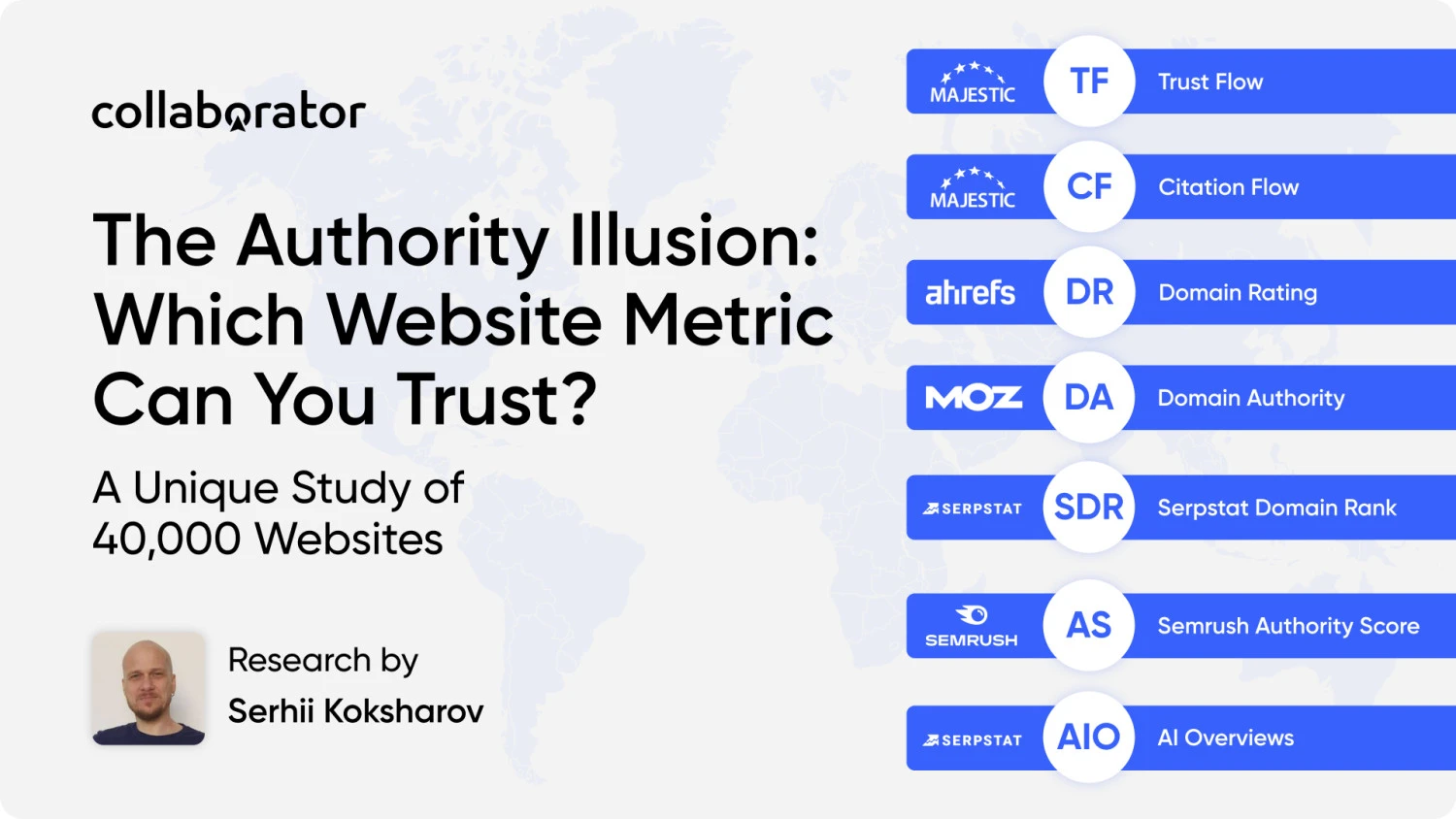
To answer these questions, SEO expert Serhii Koksharov, in collaboration with Collaborator, conducted a correlation analysis of seven of the most widely used SEO authority metrics based on a dataset of more than 40,000 websites across different regions and traffic segments.
In this study, we examine how these metrics relate to one another, measure the strength of their correlations, and identify which metrics most accurately reflect a website’s true authority.
Watch the video below for an overview of the study, its key findings, and practical recommendations for evaluating website authority.
Study Methodology
We analyzed more than 40,000 websites from the Collaborator catalog. For each website, we collected data across seven SEO metrics from different sources.
|
SEO Metric |
Source |
What It Measures |
|---|---|---|
| TF (Trust Flow) | Majestic | The quality of a website's backlinks |
| CF (Citation Flow) | Majestic | The quantity of backlinks, regardless of their quality |
| DR (Domain Rating) | Ahrefs | Website authority based on the quantity and quality of backlinks |
| DA (Domain Authority) | Moz | Website authority based on the quantity and quality of backlinks |
| SDR (Serpstat Domain Rank) | Serpstat | Website authority based on the quantity and quality of backlinks |
| AS (Authority Score) | Semrush | A composite authority metric based on backlinks, traffic, and other SEO signals |
| AIO (AI Overviews) | Serpstat | The number of times a website is mentioned in Google AI Overviews responses |
Although these authority metrics are often treated as interchangeable, they are based on different methodologies and measure authority in different ways.
- TF, DR, DA, SDR, and AS measure website authority based on the strength of a site's backlink profile. In general, the higher the score, the stronger the authority.
- In addition to backlink-based authority, AS also takes traffic and user engagement signals into account, making it different from traditional authority metrics.
One metric in our analysis requires a separate explanation: Google AI Overviews (AIO) citations. Unlike the other metrics included in this study, AIO citations measure something fundamentally different.
It is reasonable to assume that the more Google trusts a website, the more likely it is to cite that website in AI Overviews. That is why we decided to examine the correlation between AIO citations and the various website authority metrics included in this study.
Additionally, website traffic was checked using data from multiple sources (estimated figures).
Because different platforms use incompatible scoring scales, the data was normalized using ranks to enable a proper comparison of SEO metrics. Spearman’s rank correlation coefficient was then calculated for each pair of metrics. This nonparametric measure is used to assess relationships between variables that do not follow a normal distribution.
To interpret the correlation tables, use the following scale:
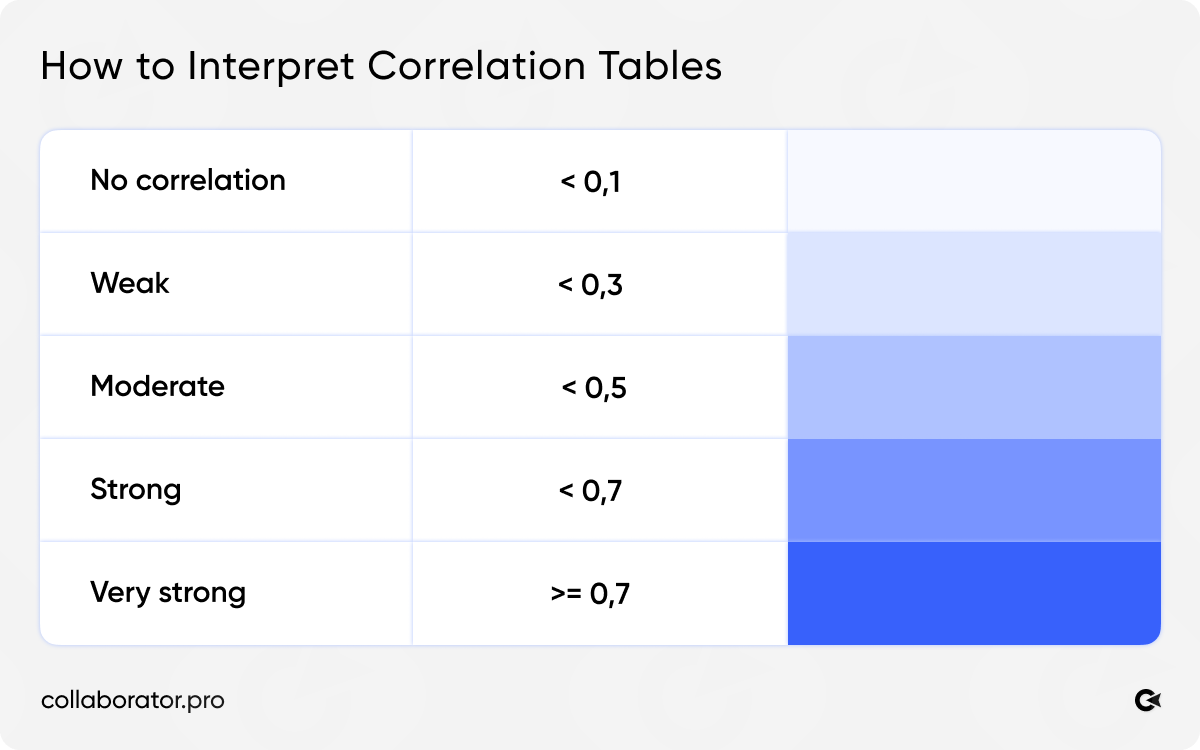
The analysis was performed across multiple segments, both by geographic region and by traffic volume. Regional segments included All Regions (overall), Europe, the United States, Asia, and Latin America. Traffic segments ranged from websites with fewer than 1,000 monthly visitors to those attracting more than 1 million visitors per month.
Study Results: Correlation Between SEO Metrics
Most of the SEO metrics included in the study show either weak or moderate correlations with one another. No pair of metrics reaches the 0.7 threshold required for a very strong correlation.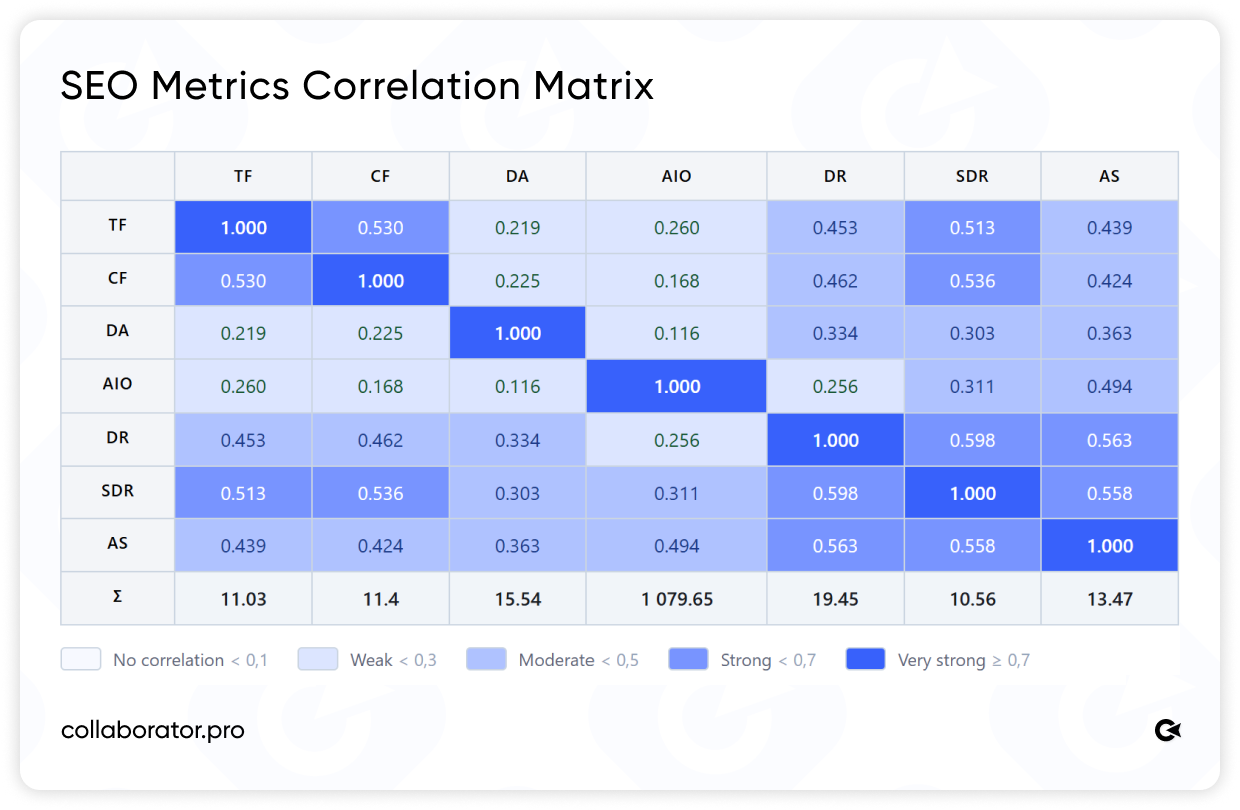
The following metric pairs demonstrated strong Spearman correlations (0.5–0.7):
- DR and SDR: 0.598
- DR and AS: 0.563, and correspondingly SDR and AS: 0.558
- CF and SDR: 0.536
- TF and CF: 0.530, and correspondingly TF and SDR: 0.513
We also analyzed how the correlation between SEO metrics varies across websites with different traffic volumes:
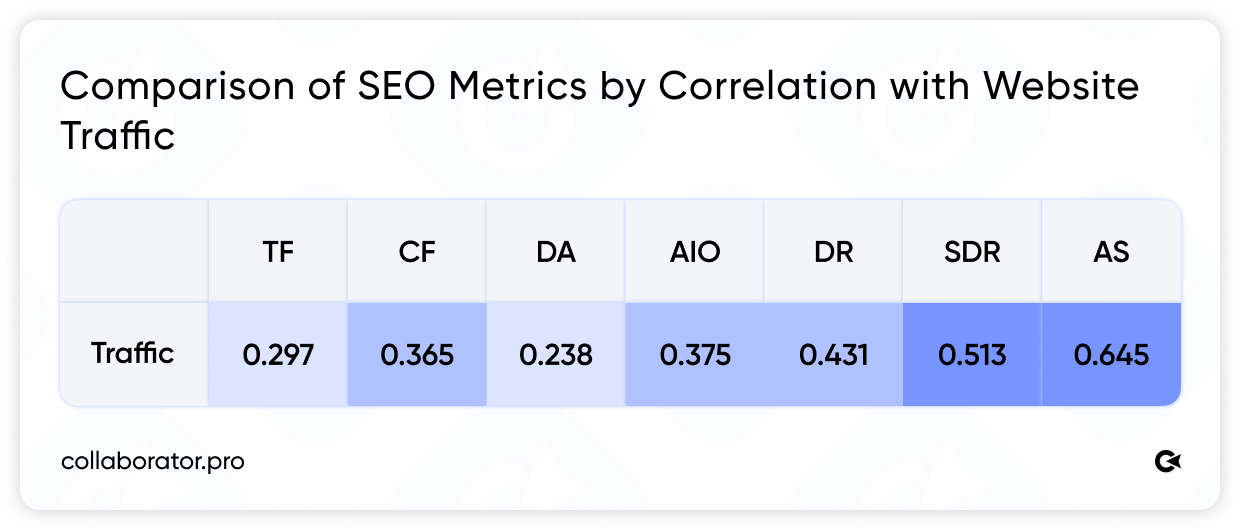
Semrush's Authority Score (AS) emerged as the strongest metric, with a correlation coefficient of 0.645. However, even this metric does not demonstrate a very strong relationship across the full dataset.
Moz's Domain Authority (DA) and Majestic's Trust Flow (TF) show weak correlations with traffic, at 0.238 and 0.297, respectively. Correlations with DR, CF, and AI Overviews citations are even lower.
How Correlation Varies by Region
Do correlation values between SEO metrics depend on the region? Yes, and quite significantly. Below are some of the most notable observations across geographic segments.
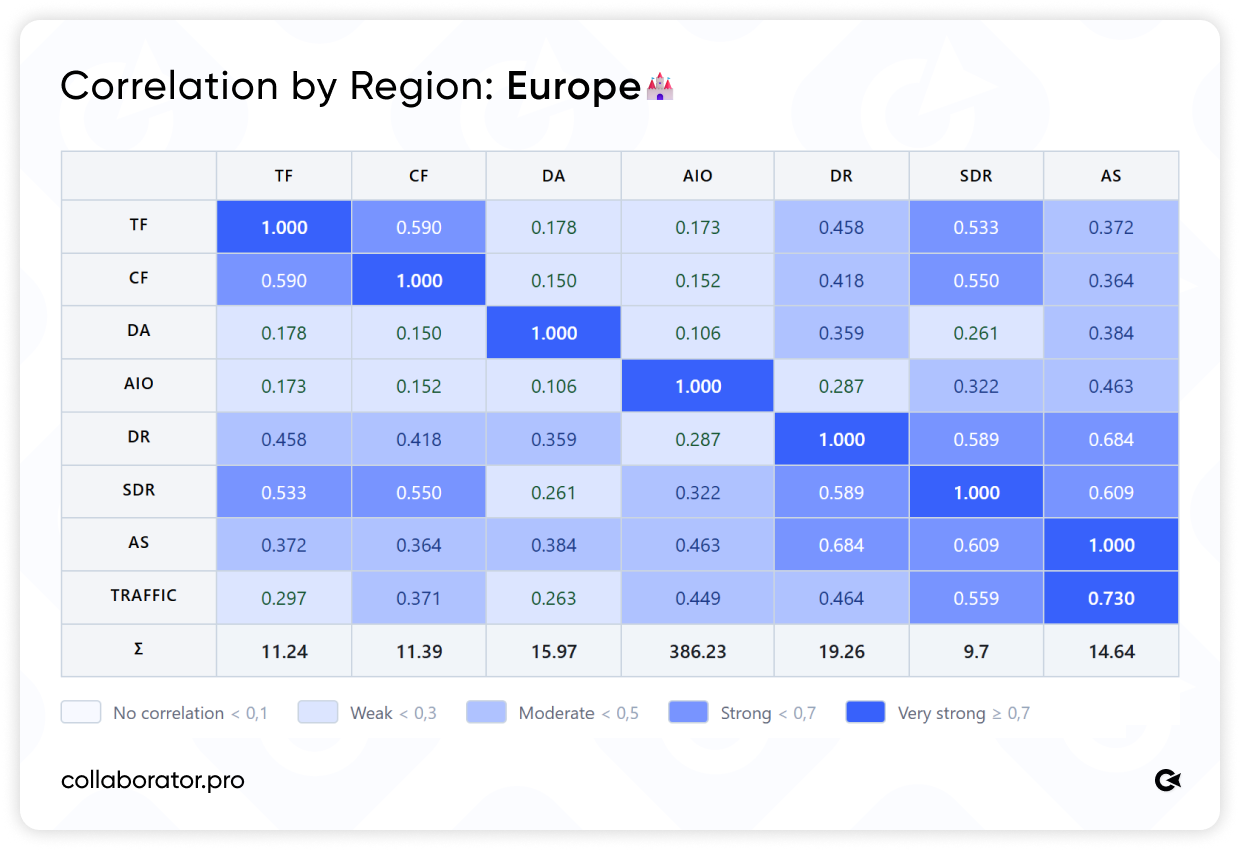
- For European websites (a dataset of more than 15,000 websites from the Collaborator catalog), the relationships between metrics are generally stronger. The correlation between DR and AS reaches 0.684, bringing it close to the threshold for a very strong correlation. SDR shows strong correlations with nearly all metrics except Moz DA. The correlation between SDR and AS is particularly strong, reaching 0.609.
When it comes to correlation with traffic, Semrush's Authority Score (AS) takes the lead with a coefficient of 0.7. For European websites, a high AS score is therefore a strong indicator of strong traffic performance. Since AS also correlates well with DR, either of these metrics can generally be used on its own.
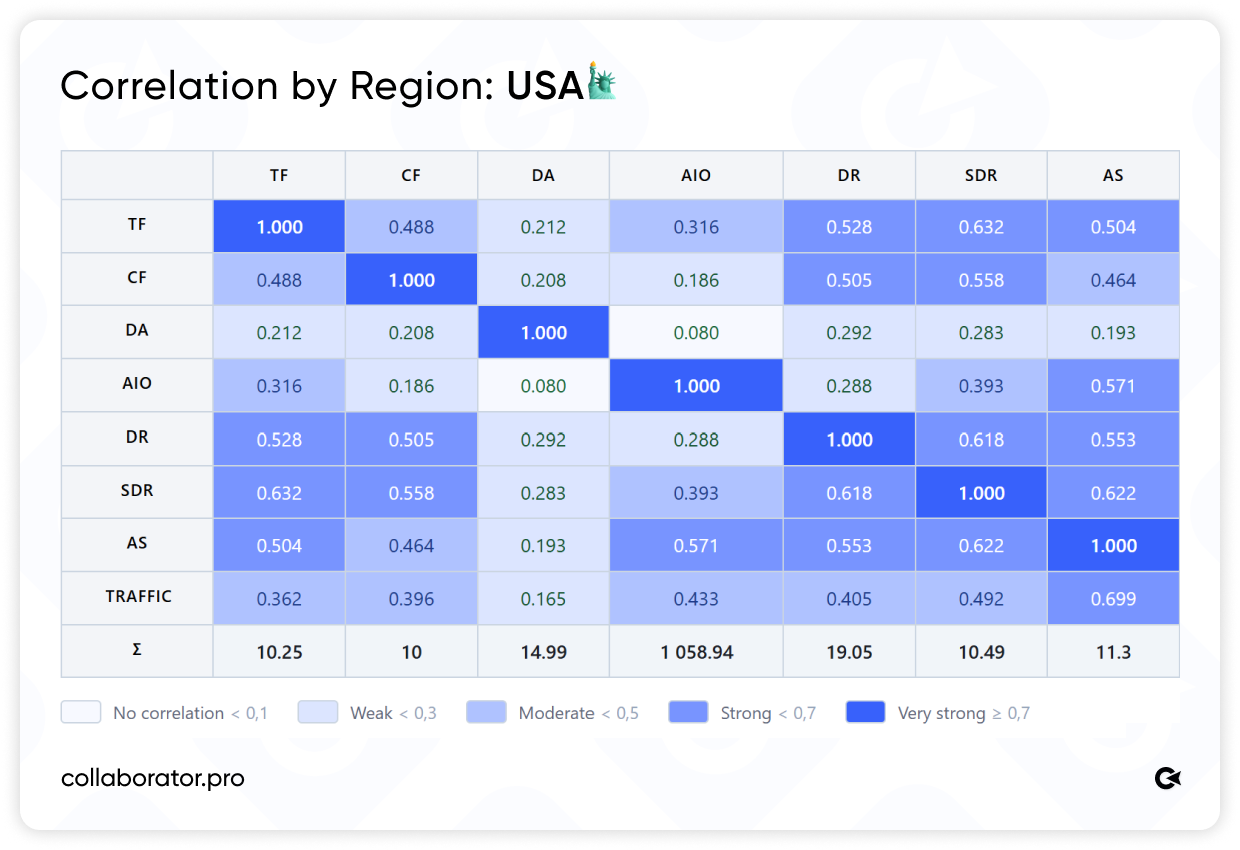
- The picture is similar for websites in the United States: TF and SDR show a correlation of 0.632, DR and SDR also reach 0.618, while AS and SDR likewise score 0.622. Interestingly, AIO demonstrates a strong correlation with AS at 0.571. This is likely because AI Overviews are more widely adopted in the United States than in other regions.
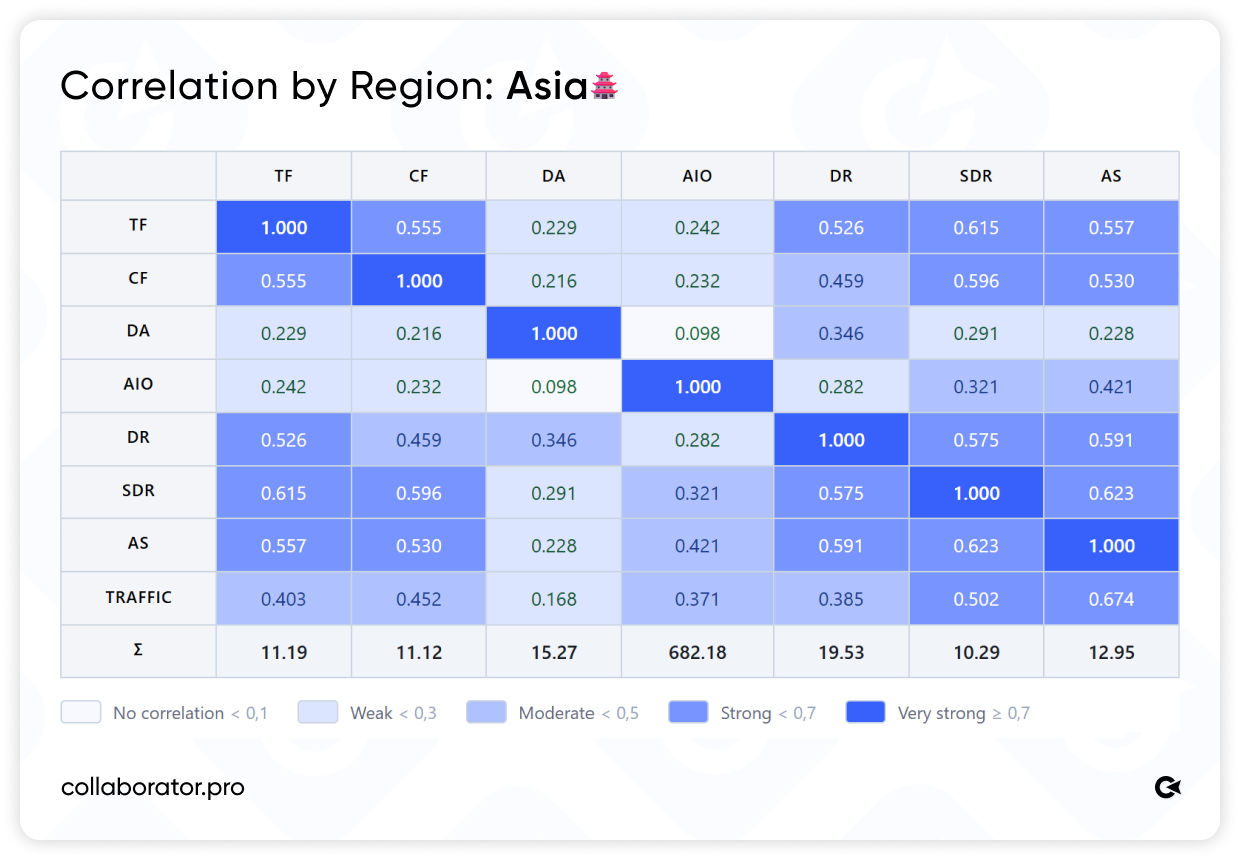
- The picture for Asia is similar to that of the United States, with the exception of a weaker correlation between AI Overviews citations and AS. Otherwise, the results are nearly identical.
- As for the Latin American region, one notable finding is the emergence of very strong correlations between several key metrics: DR and SDR reach 0.756, DR and AS reach 0.702, while AS and SDR show a correlation of 0.746.
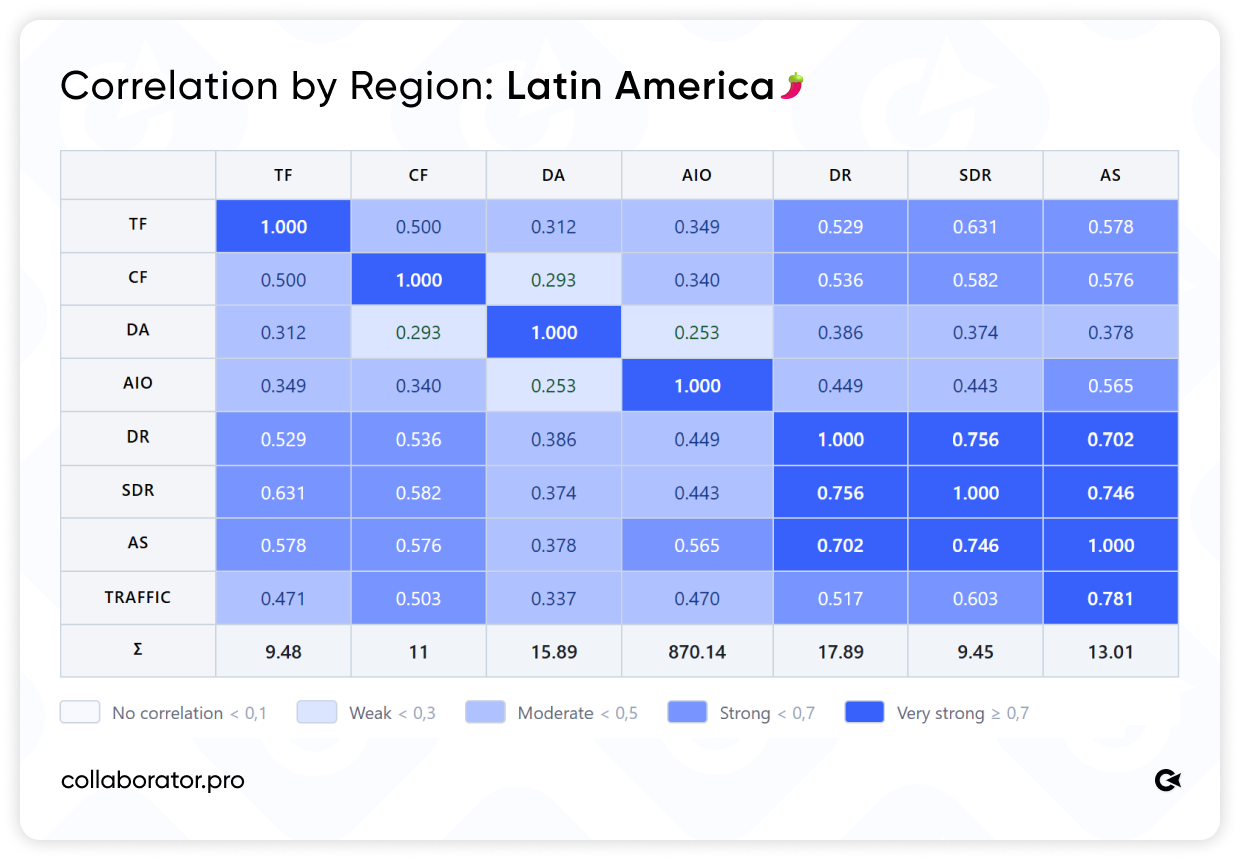
The correlation can also be clearly seen in the rank distribution. Therefore, for this region, it is generally sufficient to rely on just one of these metrics: DR, SDR, or AS.
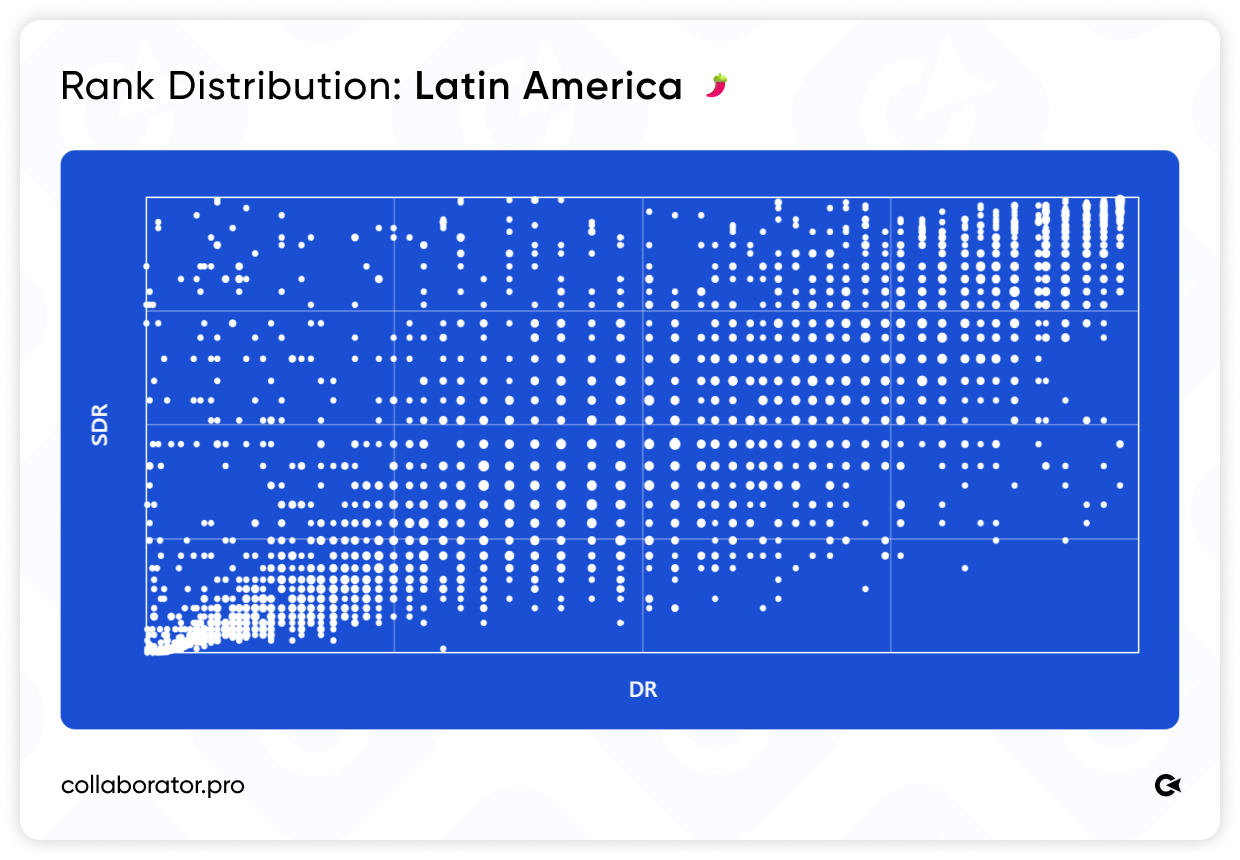
For Latin American websites, a strong correlation can also be observed between Ahrefs DR and Majestic CF, as well as between DR and website traffic.
How Correlation Varies by Traffic Volume
It is important to note that website size has a significant impact on how strongly SEO metrics correlate with one another:
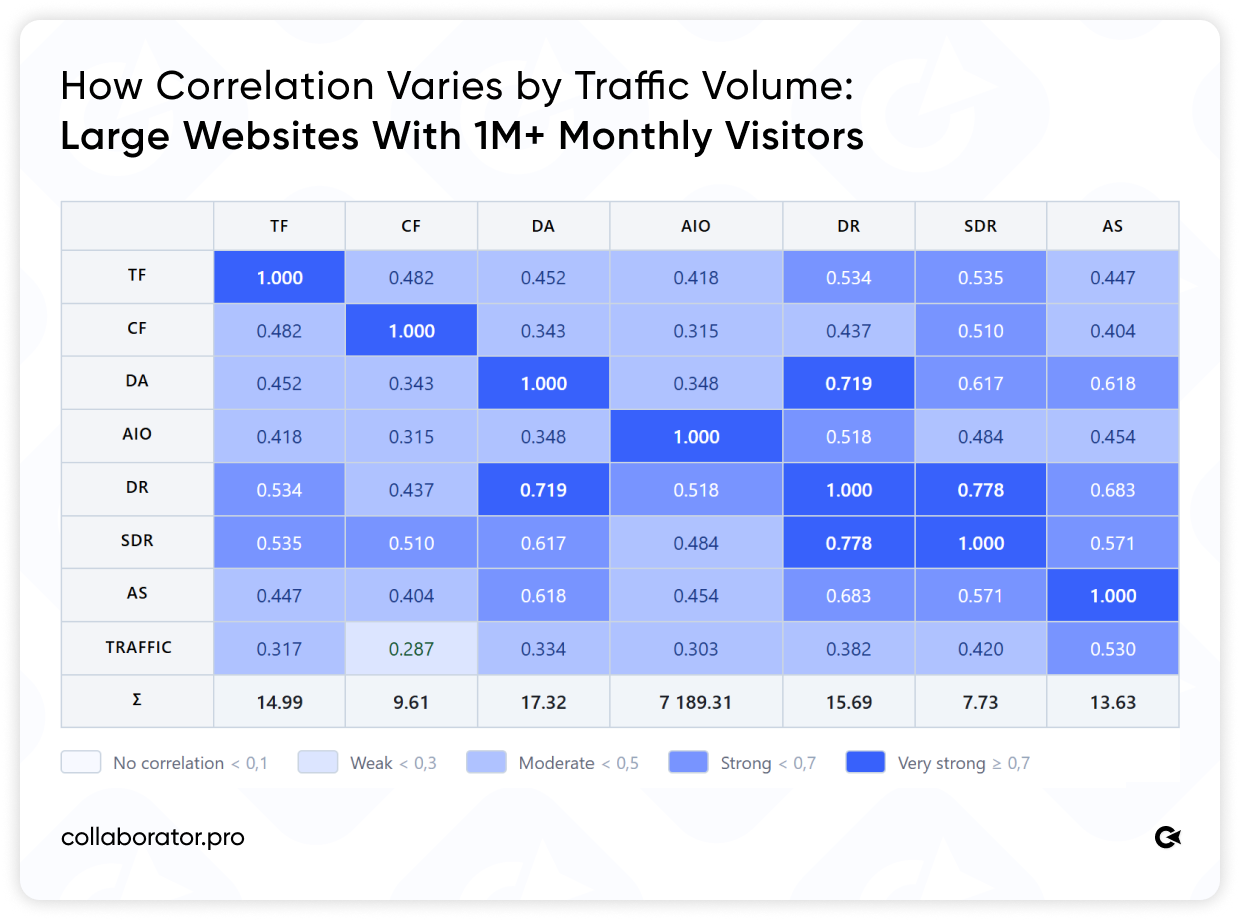
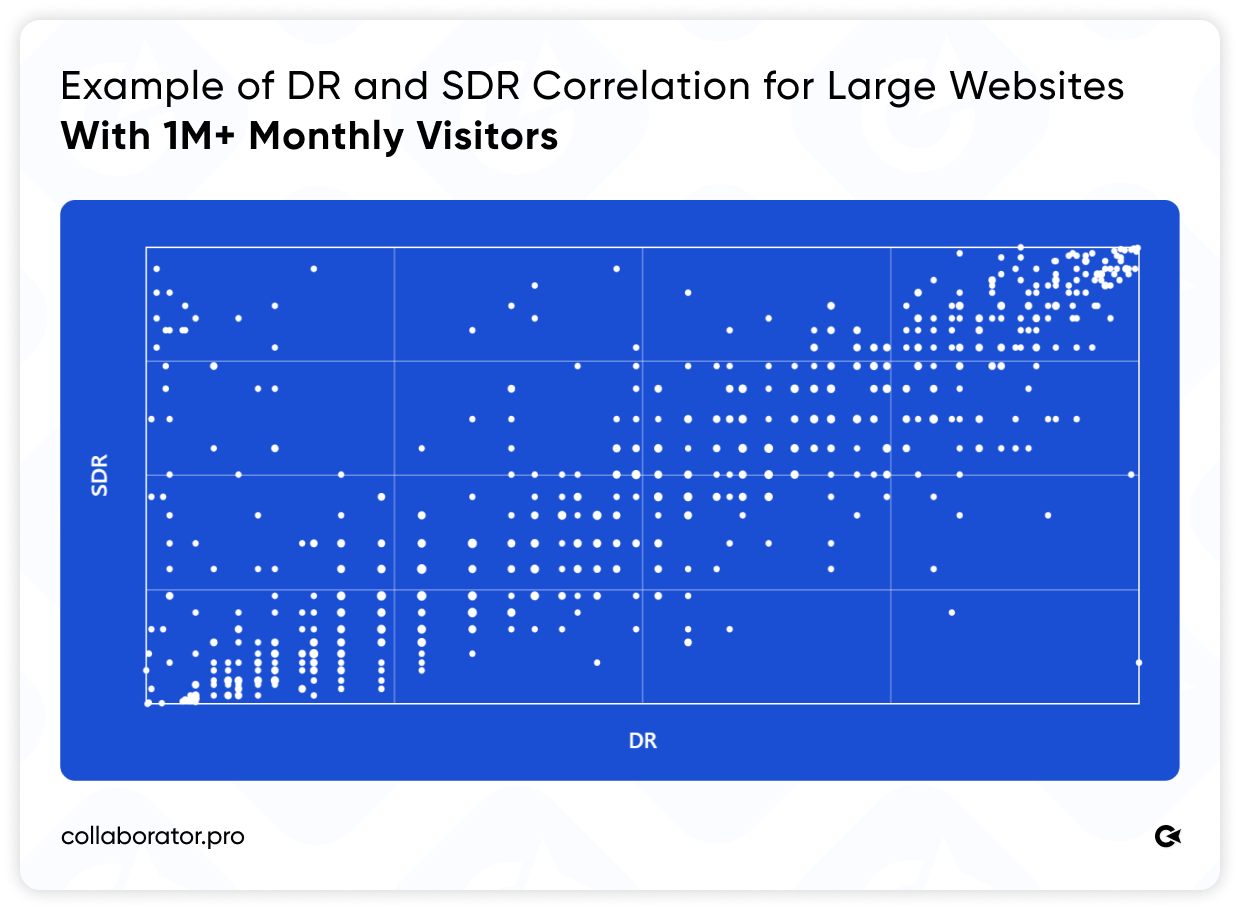
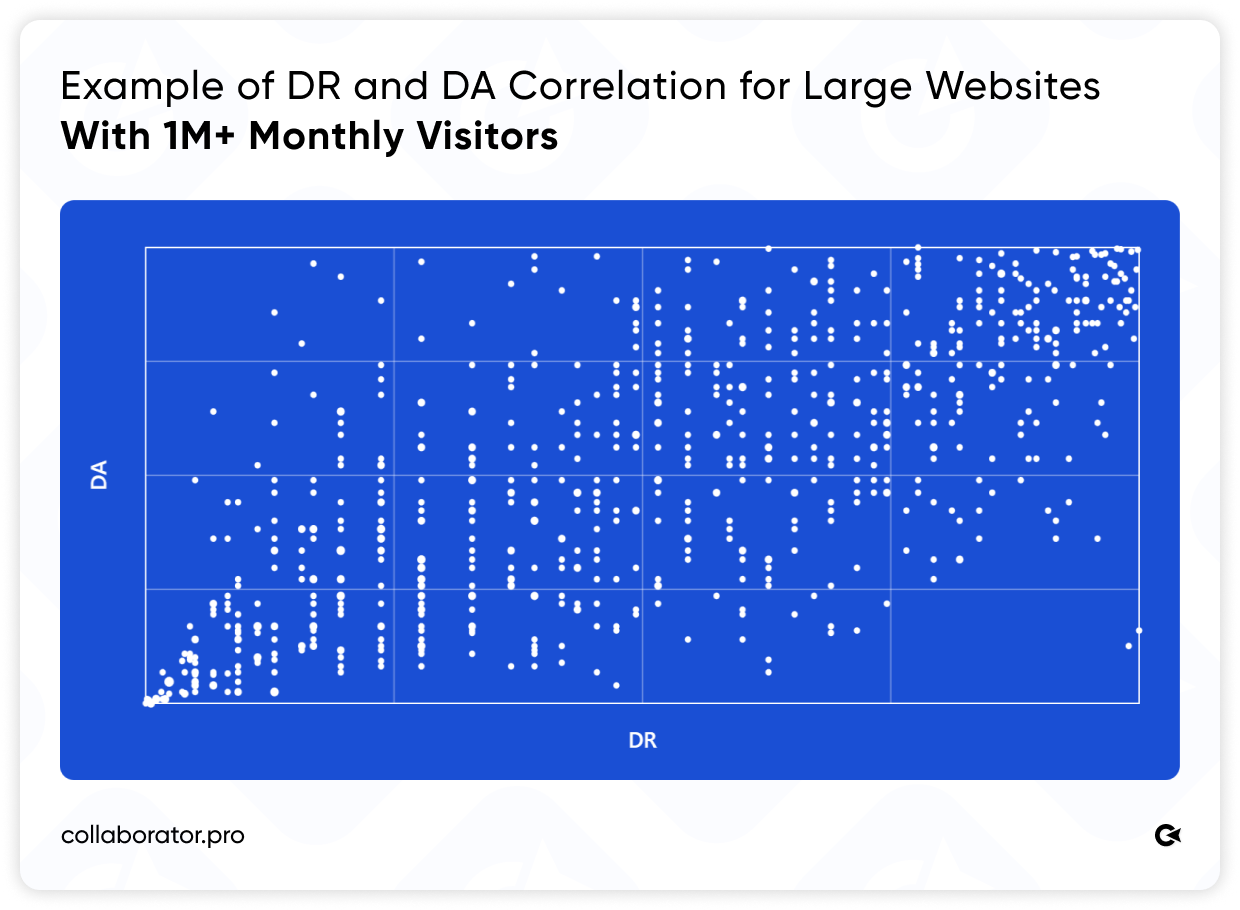
- For websites with very high traffic volumes (more than 1 million monthly visitors), which account for 766 out of 40,000 websites analyzed (2% of the websites in the Collaborator catalog), the metrics are much more aligned and tend to paint a similar picture. Several metric pairs reach the threshold for a very strong correlation (>0.7), including DR and SDR at 0.778, and DR and DA at 0.719. At the same time, no weak correlations are observed within this segment.
Example: Correlation between DR and SDR for high-traffic websites.
Example: Correlation between DR and DA.
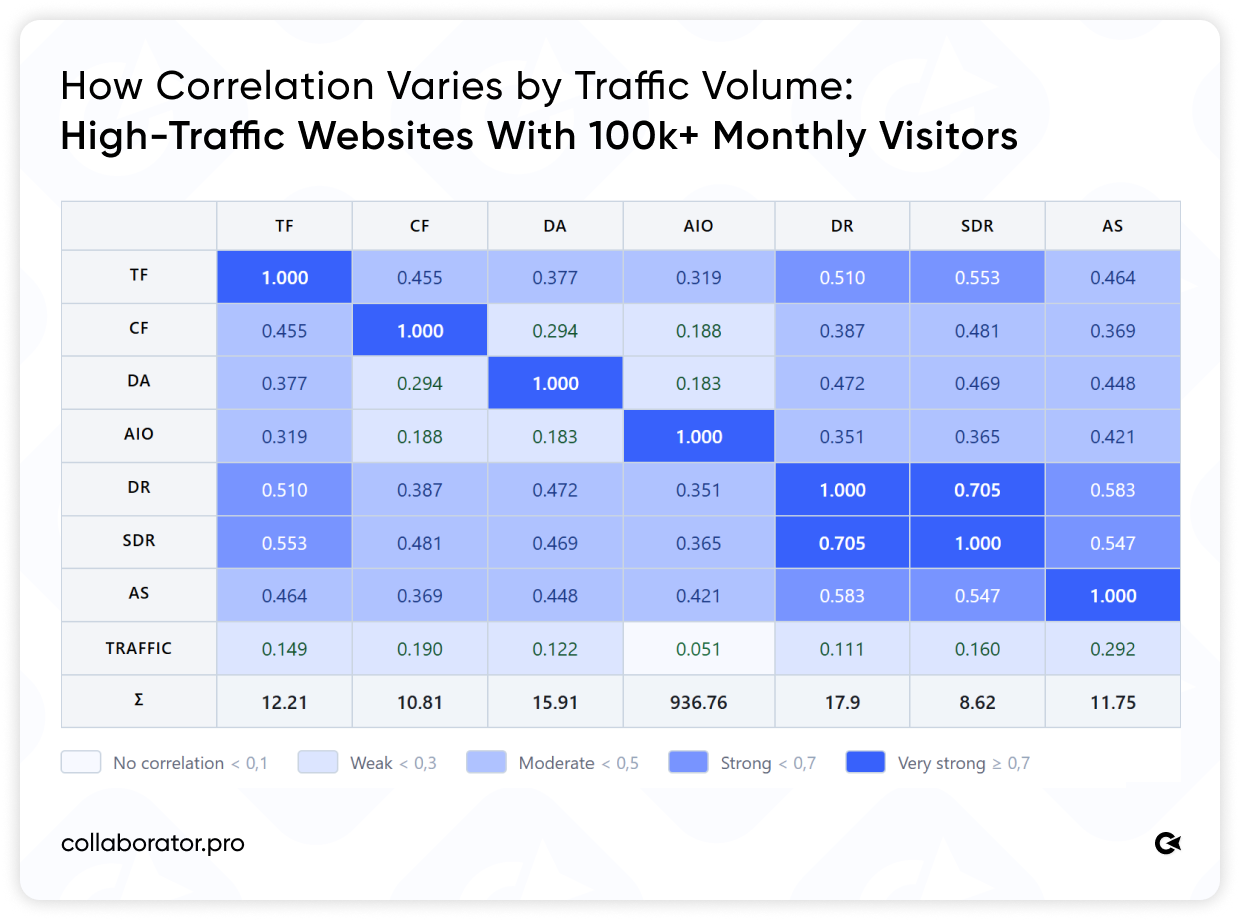
- For websites with high traffic volumes (more than 100,000 monthly visitors), which account for approximately 10% of the sample, the correlation between metrics becomes weaker. The most strongly correlated metric pairs are DR and SDR (0.705), DR and TF (0.51), and DR and AS (0.583).
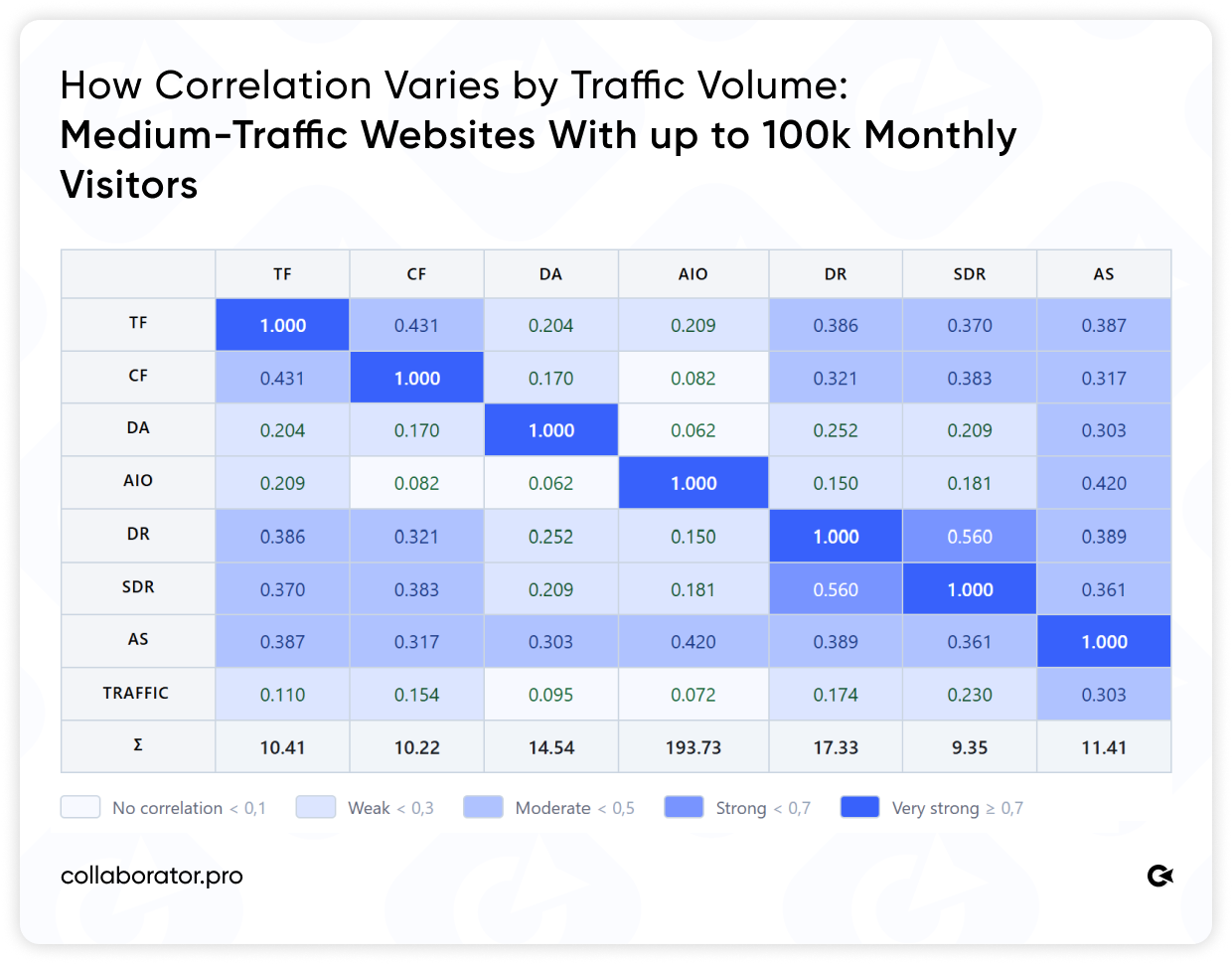
- For websites with medium traffic volumes (up to 100,000 monthly visitors), which account for approximately 30% of the sample, only DR and SDR correlate with each other with a coefficient of 0.560.
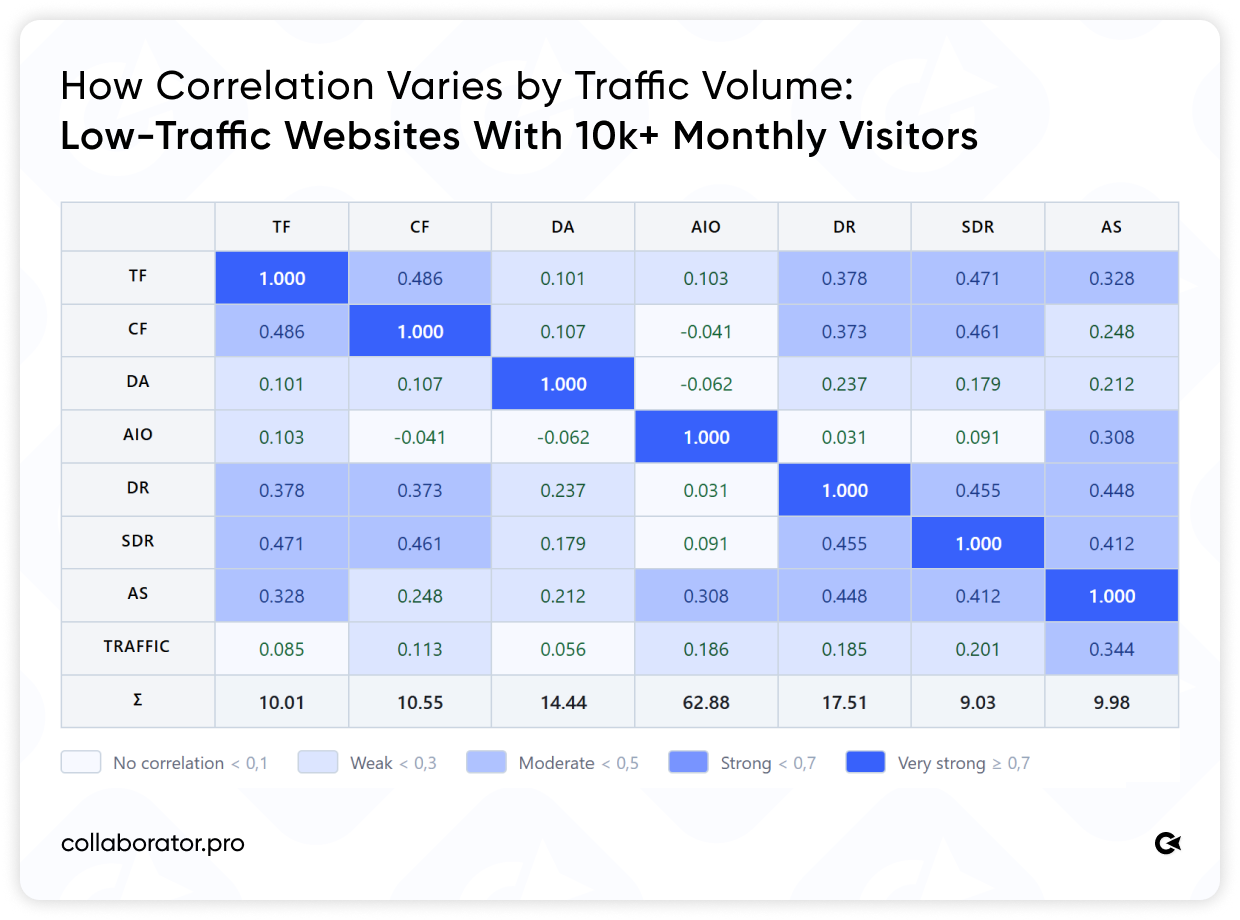
- For websites with low traffic volumes (up to 10,000 monthly visitors), which account for approximately 30–33% of the dataset, the correlation between metrics declines significantly. For the first time in the study, negative correlations appear, with coefficients below zero: AIO and CF show a correlation of -0.041, while AIO and DA show a correlation of -0.062. That means that the number of backlinks may increase while AI Overviews citations decline, and vice versa.
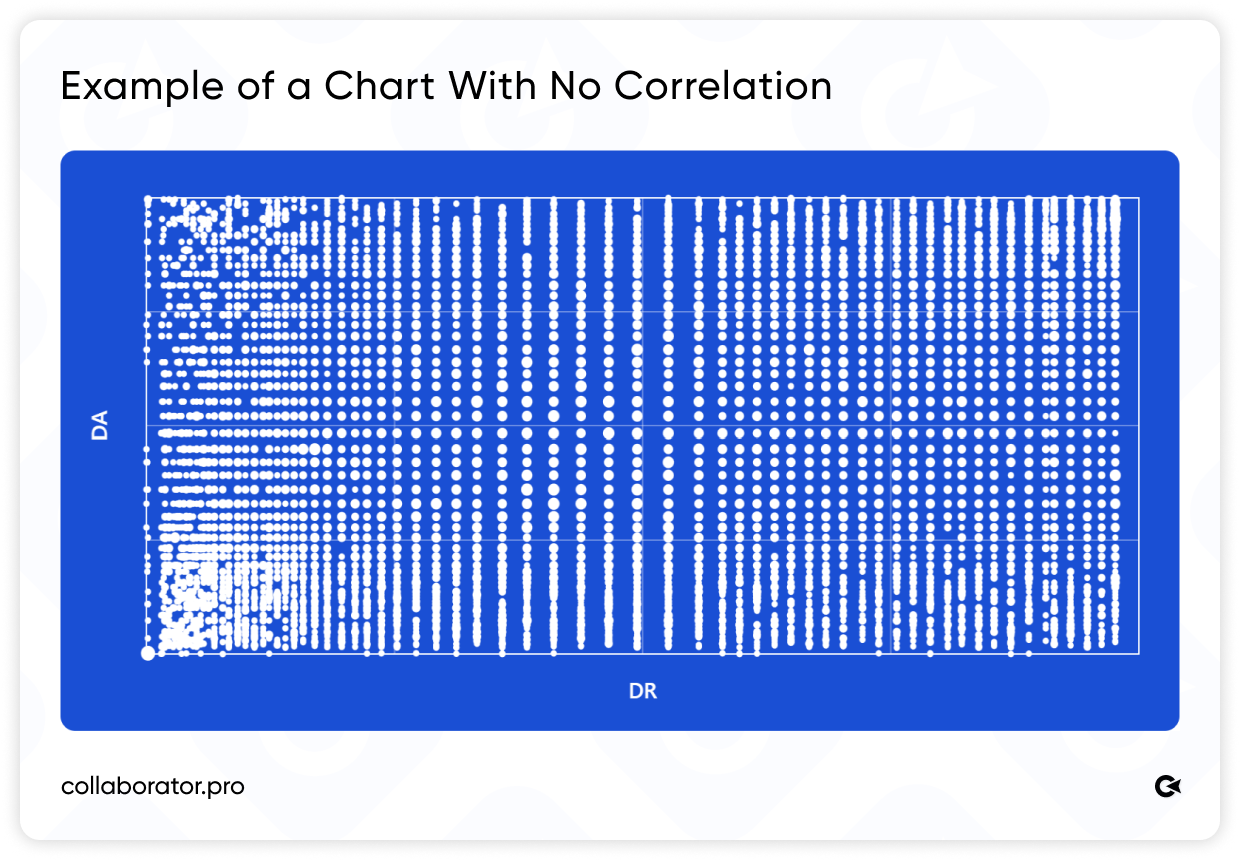
When there is no correlation, this is what the charts look like:
- For websites with very low traffic volumes (up to 1,000 monthly visitors), which account for 18% of the dataset, correlation is observed only between Majestic's TF and CF metrics (0.515), as well as between TF and SDR (0.508).
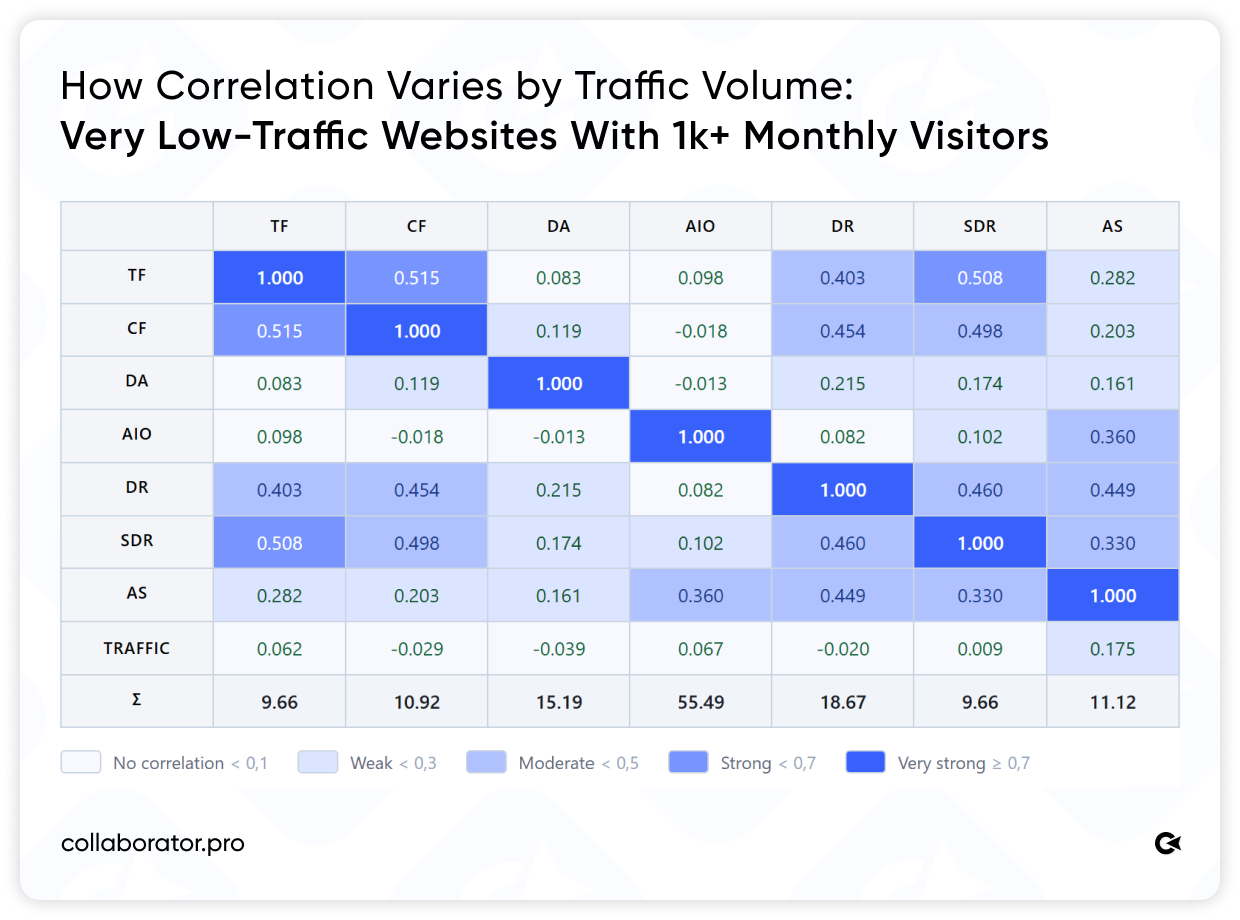
The correlation with traffic is virtually zero, indicating that these metrics do not reflect any meaningful signal.
Conclusions
Overall, different SEO metrics are only weakly aligned with one another. There is no single universal metric that fully captures a website's strength.
Across the full dataset of approximately 40,000 websites, most metrics show weak or moderate correlations. Some metric pairs partially overlap (for example, DR → SDR → AS), but even between these metrics, the correlation is not very strong.
This means that relying on a single metric is not enough, but analyzing all of them at once is often unnecessary. The optimal approach is to focus on two or three metrics that complement each other.
Recommended SEO metrics based on the study:
- DR / SDR / AS are the most closely aligned metrics. They provide the most consistent view of overall website authority, so any one of them can be used as a primary metric.
- Semrush Authority Score (AS) is the only metric that shows a strong correlation with traffic. It is the best choice if the traffic potential of a referring website is a key factor in your evaluation.
- Majestic Trust Flow (TF) and Citation Flow (CF) correlate well with each other but show weaker correlations with most other metrics. They are best used as supplementary metrics alongside your primary authority metric.
- Moz Domain Authority (DA) shows little correlation with other metrics. It can be useful as an independent signal, but it should not be used as the primary criterion for website selection.
- AIO (AI Overviews) is a specialized metric. While it occasionally correlates with AS, it generally represents a different type of signal. It is most relevant for websites targeting the U.S. market. For websites in Ukraine and Europe, it currently provides limited insight.
By region:
- Europe and the United States: Correlations are stronger, particularly within the DR → SDR → AS cluster. This makes it possible to simplify the analysis by focusing primarily on these metrics.
- Asia: The overall picture is similar to that of the United States, although AIO plays a less significant role. The primary metric cluster remains DR → SDR → AS, so the same simplified approach used for Europe and the United States can be applied here.
- Latin America: This is the only region where truly very strong correlations emerge between DR and SDR, AS and SDR, and DR and AS. Metrics are the most aligned in this region, making it sufficient to rely on a single metric from the DR / SDR / AS group. In addition, DR shows a strong correlation with CF and with website traffic, which is unusual compared to other regions.
By traffic volume:
- Large websites (1M+ monthly visitors): Metrics correlate well with one another, making one or two metrics sufficient for analysis.
- Medium and small websites (100,000–1 million and 10,000–100,000 monthly visitors): Correlations are weaker, and each metric provides a different signal.
- Very small websites (up to 10,000 monthly visitors): Metrics are almost ineffective, with correlations to traffic close to zero. As a result, these metrics are unreliable, and it is better to evaluate the website itself rather than rely on metric scores alone.
The best approach is to choose one primary metric (DR, SDR, or AS), supplement it with one or two additional metrics (such as TF or DA), and evaluate traffic separately. The smaller the website, the less useful these metrics become. Conversely, the larger the website, the more closely the metrics tend to align with one another.
Also read: Traffic Analysis of 7,500+ Websites: Ahrefs vs Google Analytics vs Google Search Console. Unexpected Results.
Practical Insights from Ihor Rudnyk

In addition to the findings presented in this study, I would like to share a few personal takeaways after reviewing the results. Hopefully, some of them will prove useful in practice. After all, we always want research findings to have a positive impact on the quality of our day-to-day work😀
- The weak correlation between website authority metrics calculated by different SEO tools is not surprising. In fact, the opposite result would have been far more unexpected, given that these metrics are fundamentally calculated in different ways. Take another look at the first table in this article, which explains what each metric actually measures. That is the foundational piece of information to keep in mind.
- The weak correlation between trust metrics and traffic is not surprising either, since most of these metrics measure link equity, which is only one of Google's ranking factors and therefore cannot be expected to have a direct correlation with traffic.
- The strong correlation between trust metrics depends heavily on website size. Logically, the larger the website, the easier it is for SEO tools to evaluate it, and the more closely their assessments correlate with one another. What is surprising, however, is that these metrics do not correlate strongly with traffic. This points to one simple conclusion: search traffic should always be evaluated separately. For smaller websites, the metrics are neither well aligned nor strongly correlated with one another. Again, this is quite logical, as there is simply less data available for the tools to analyze.
- One of the findings that surprised me the most was just how differently these metrics behave across regions. In some regions, trust metrics from different SEO tools correlate strongly with one another, while in others they do not. Put simply, this means that, for example, DR and DA may produce similar evaluations in the United States, but very different ones in Asia. The practical takeaway is straightforward: whenever you start working in a new region, develop your own intuition and experience. Choose the SEO tool whose metrics align most closely with your own assessment of websites in that particular market.
- The AIO metric is still too experimental at this stage. It should be used only as a supplementary factor and should not serve as a primary criterion in decision-making.
Now, let me answer the questions we asked at the beginning of the study.
Which website authority metric is the best to use?
The larger the website, the less important the choice of authority metric becomes.
As you have probably guessed by now, there is no single correct answer.
For example, if you work with high-value placements ($500+ per guest post), you do not need to worry too much about this issue. In such cases, the authority metric you choose is unlikely to have a significant impact on the quality of your decisions.
However, if you work with lower-cost guest post placements, there is no simple answer to this question.
My personal recommendation is to choose the tool that is most convenient for you, avoid spreading your attention across too many metrics, and take other website evaluation factors into account as well. This will help reduce the likelihood of making poor decisions.
Is it enough to use a single metric, or is it better to combine several?
I recommend running your own test within the specific niche and region you work in. Create a sample of 30–50 domains, evaluate them using different SEO tools, and compare the results with your own impressions. Yes, your impressions.
After reviewing the results of this study, my opinion has not changed: it is better to rely on a single metric.
Depending on your philosophy and what you want to prioritize, whether it is purely link equity or a broader assessment of website authority that incorporates additional factors, you can choose the metric that best fits your needs.
Which tool's authority metric correlates most closely with your own, more in-depth assessment of a website's authority? In most cases, that will be the right tool for working in that particular market and niche.
The completeness of data available to SEO tools can vary significantly between countries such as Japan and Chile. As a result, the quality of the scores they provide may differ as well.
That is why it is perfectly reasonable to choose different tools for different tasks.
Do metrics from different SEO tools correlate with one another?
We've already answered this question in the study🙂
Related reading
- • Traffic Analysis of 7,500+ Websites: Ahrefs vs Google Analytics vs Google Search Console. Unexpected Results
- • Claude for SEO: A Practical Guide to SEO Automation with AI in 2026
- • Ecommerce Link Building: 7 Proven Tactics, Strategy and Costs in 2026
- • 9 Best Free Backlink Checkers and Monitoring Tools in 2026
- • 30 + Free Web 2.0 Submission Sites List for High-Quality Backlinks in 2026
- • Accuracy of Ahrefs, Semrush, and Similarweb: Which SEO Tool Is Best for Traffic Analysis?