30 + Free Web 2.0 Submission Sites List for High-Quality Backlinks in 2026

Finding Web 2.0 submission sites that still help SEO is much harder in 2026 than ever before. The main reasons are that many old-school backlink tactics have stopped working, and a lot of Web 2.0 platforms are now filled with spam.
Today, Web 2.0 websites can still support backlink diversification, indexing, and topical relevance when used properly.
Moreover, Large Language Models (LLMs) frequently cite Web 2.0 sites, so having links from them may turn out to be very beneficial.
We’ve gathered 30+ completely free Web 2.0 websites and manually checked each platform for indexation. You’ll also find Domain Authority data, real examples, key strengths and limitations, practical SEO tips, and common mistakes to avoid when building Web 2.0 backlinks.
Key Takeaways
- Blog platforms: 8 websites for contextual backlinks and niche content.
- Website builders: 12 platforms for branded mini-sites and supporting SEO pages.
- Publishing platforms: 10 websites for content distribution and audience reach.
- Q&A and professional networks: 4 platforms for brand mentions and entity SEO.
- Web 2.0 backlinks can still support SEO in 2026 if the content looks natural and provides real value.
What Are Web 2.0 Submission Sites?
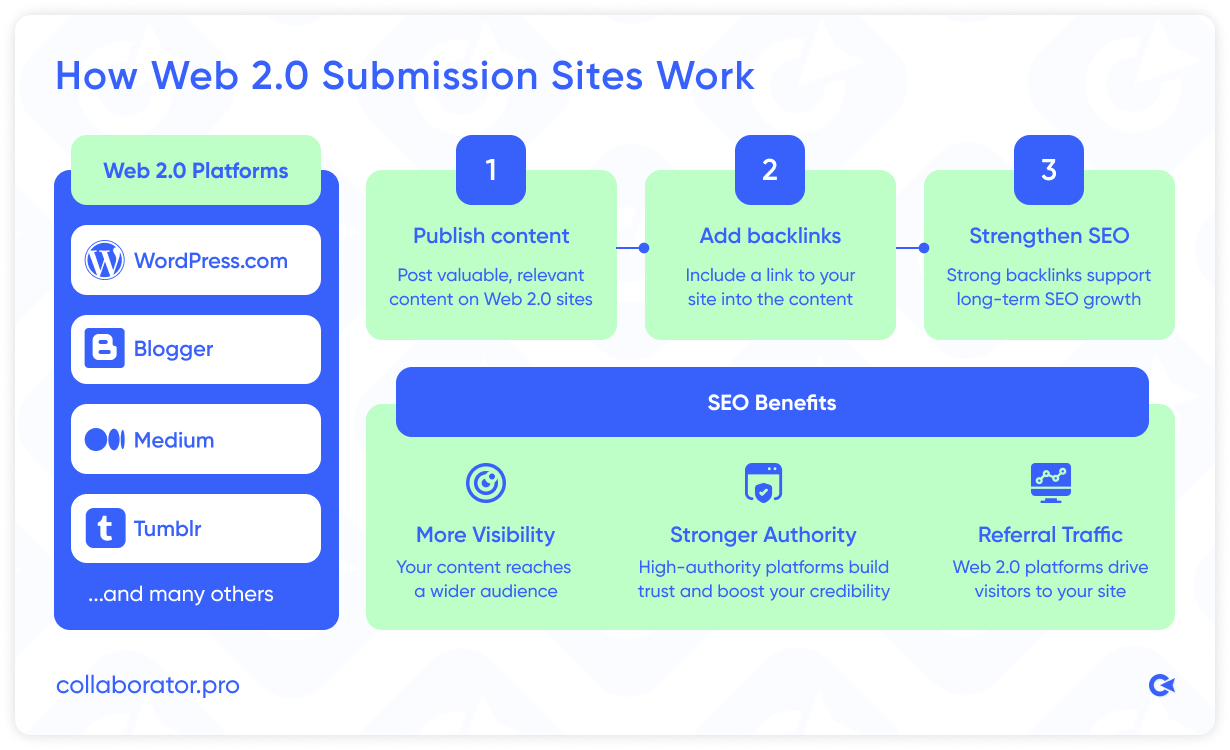
Web 2.0 submission sites are interactive, user-generated platforms that usually provide free, high-authority subdomains where individuals and businesses can publish content, create blogs, or build profile pages. Popular examples of Web 2.0 websites include WordPress, Medium, and Tumblr.
Since many Web 2.0 platforms have strong Domain Authority (DA), they are widely used for off-page SEO and link building. Users can publish relevant content on these platforms and add links pointing back to their websites, commonly known as Web 2.0 backlinks. These backlinks can help strengthen backlink profiles, improve search engine rankings, increase online visibility, and drive referral traffic.
To help you find more platforms like these, we’ve handpicked 30+ free Web 2.0 sites, divided them into categories, and reviewed each of them in detail. Keep reading to discover the platforms that best match your link building needs.
30+ Free Web 2.0 Submission Sites List
Not all Web 2.0 sites provide equal SEO value. Some platforms are better for contextual publishing, while others are useful mainly for brand diversification or indexing support.
Below we’ll break down which Web 2.0 sites are best for different SEO goals, starting from free blogging platforms.
Blog Platforms
Blog platforms are one of the most widely used types of Web 2.0 sites because they allow users to publish full articles with contextual backlinks.
From an SEO perspective, blog-based Web 2.0 sites usually offer stronger potential because search engines can better understand the topic of the page and the context surrounding a backlink.
The table below gives a quick overview of each platform we’ve included.
|
Website |
DA |
Link Type |
Best Use Cases |
|
WordPress.com |
94 |
Mostly nofollow links |
Long-form niche articles Supporting content clusters Tiered link building |
|
Blogger.com |
92 |
Mostly dofollow links |
Supporting blogs Beginner-friendly SEO content Indexing support |
|
Over-blog.com |
27 |
Mostly dofollow links |
Evergreen articles International SEO Supporting niche blogs |
|
Edublogs.org |
82 |
Mostly nofollow links |
Tutorials Educational content Informational SEO pages |
|
Ghost.io |
72 |
Mostly dofollow links on self-hosted blogs |
Thought leadership Expert publications Niche authority building |
|
Substack.com |
92 |
Mostly nofollow links |
Newsletter publishing Recurring niche content Expert commentary |
|
Write.as |
66 |
Mixed dofollow and nofollow links |
Short niche posts Supporting content Simple contextual links |
|
Beehiiv.com |
79 |
Mixed dofollow and nofollow links |
Newsletter SEO Personal branding Expert niche content |
Pro tip: Blogging platforms work best for SEO when you treat them like real niche blogs, not just pages created to drop backlinks.
Now, let’s take a closer look at each platform, starting with WordPress.
WordPress.com
WordPress is one of the most widely used blogging platforms for Web 2.0 backlinks. It gives users enough flexibility to create real blog-style pages with articles, categories, tags, internal links, and contextual backlinks, which makes it a solid option for building topical relevance around a niche.
Strengths: Strong indexing potential; high domain authority; supports detailed content; helps build contextual relevance; flexible blog structure.
Limitations: Free blogs have limited customization options; low-quality or overly promotional pages may be removed or deindexed.
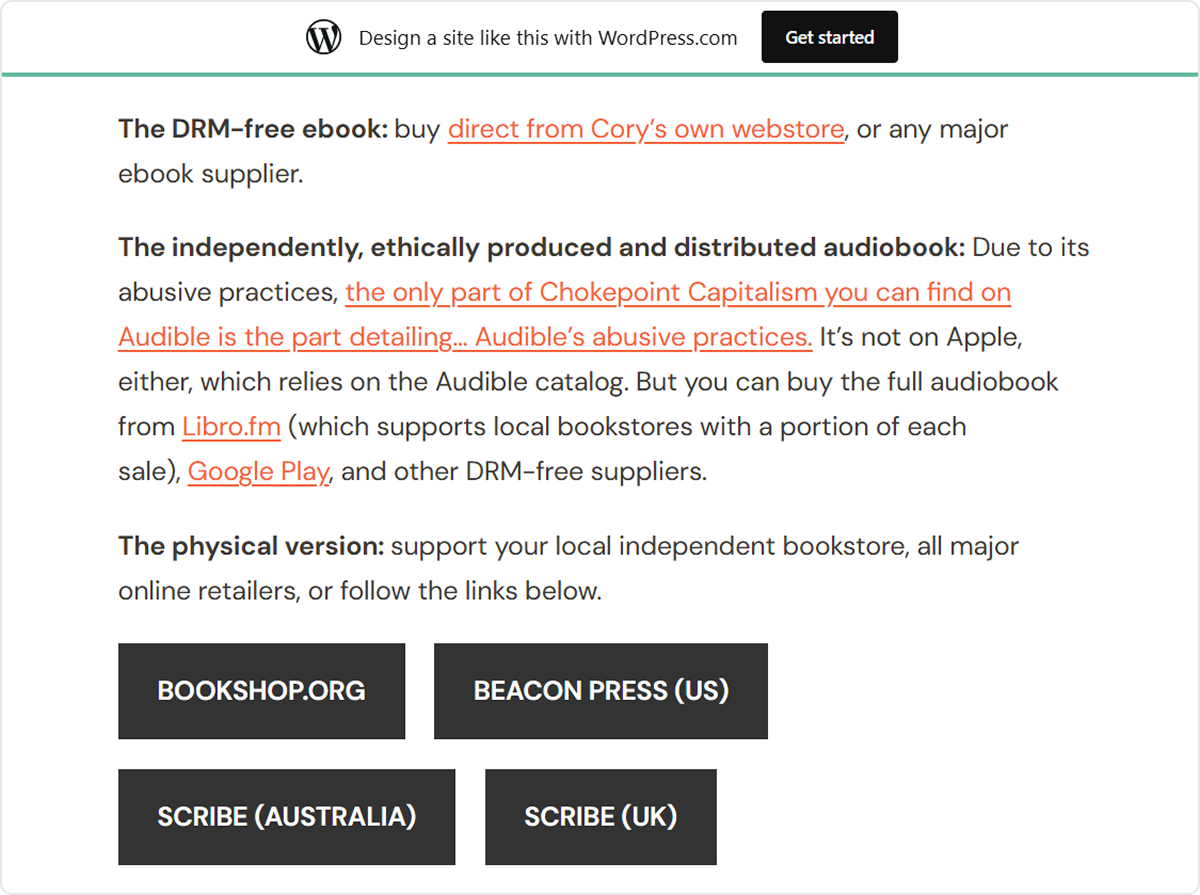
Example of a blog post with links on WordPress
Blogger.com
Blogger is a simple and beginner-friendly blogging platform often used for Web 2.0 link building. Since it belongs to Google’s ecosystem, Blogger pages are usually indexed quickly, which makes the platform useful for publishing supporting content and contextual backlinks.
Strengths: Easy to set up; fast indexing potential; free to use; suitable for long-form content; simple content management.
Limitations: Limited design and customization options; lower engagement compared to modern publishing platforms; low-quality blogs may lose visibility over time.

Example of a blog post with links on Blogger
Over-blog.com
OverBlog is a blogging platform that allows users to publish articles, build niche-focused blogs, and add contextual backlinks inside their content. It’s commonly used for supporting content and international Web 2.0 link-building campaigns, especially in European markets.
Strengths: Supports long-form publishing; allows contextual backlinks; suitable for niche-focused content; useful for backlink diversification.
Limitations: Smaller audience compared to major blogging platforms; limited customization on free plans; weaker SEO impact if the blog stays inactive.
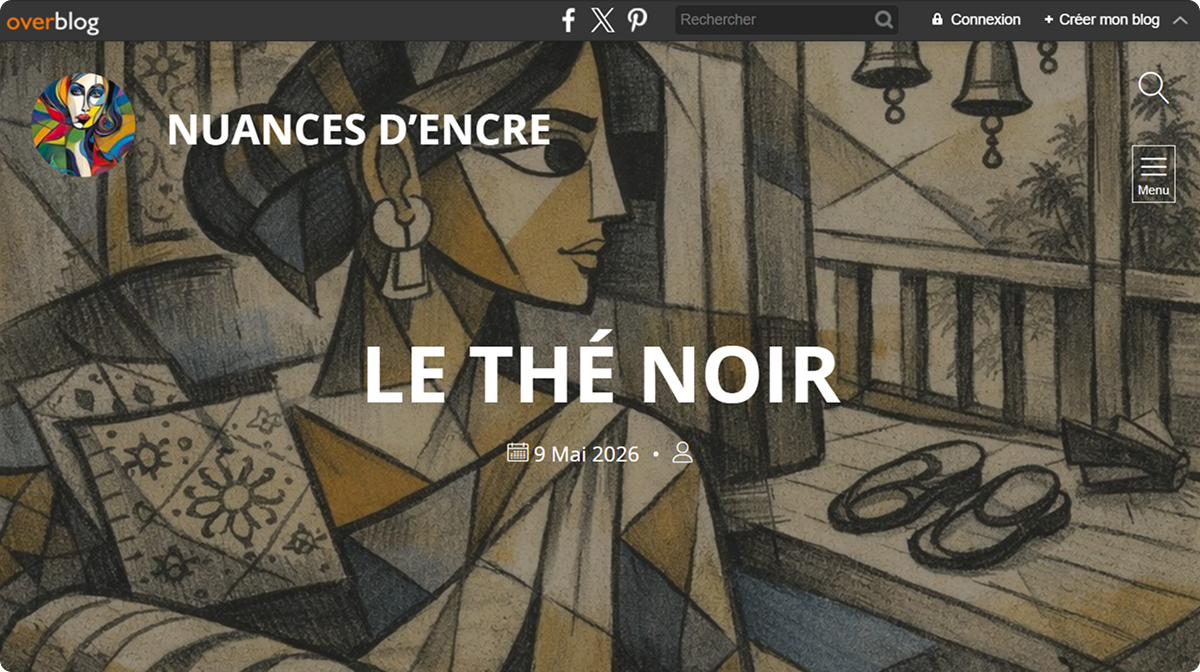
Example of a blog post with links on Over-blog
Edublogs.org
Edublogs is a blogging platform built mainly for educational content, but it can also be used for niche-related Web 2.0 backlinks when the content matches the platform’s style and audience. It works best for informative articles, tutorials, and topic-focused content that feels educational rather than promotional.
Strengths: Supports long-form content; good for informational topics; allows contextual backlinks; suitable for building topical relevance.
Limitations: Less suitable for commercial topics; stricter moderation compared to some blogging platforms; promotional content may perform poorly or get removed.
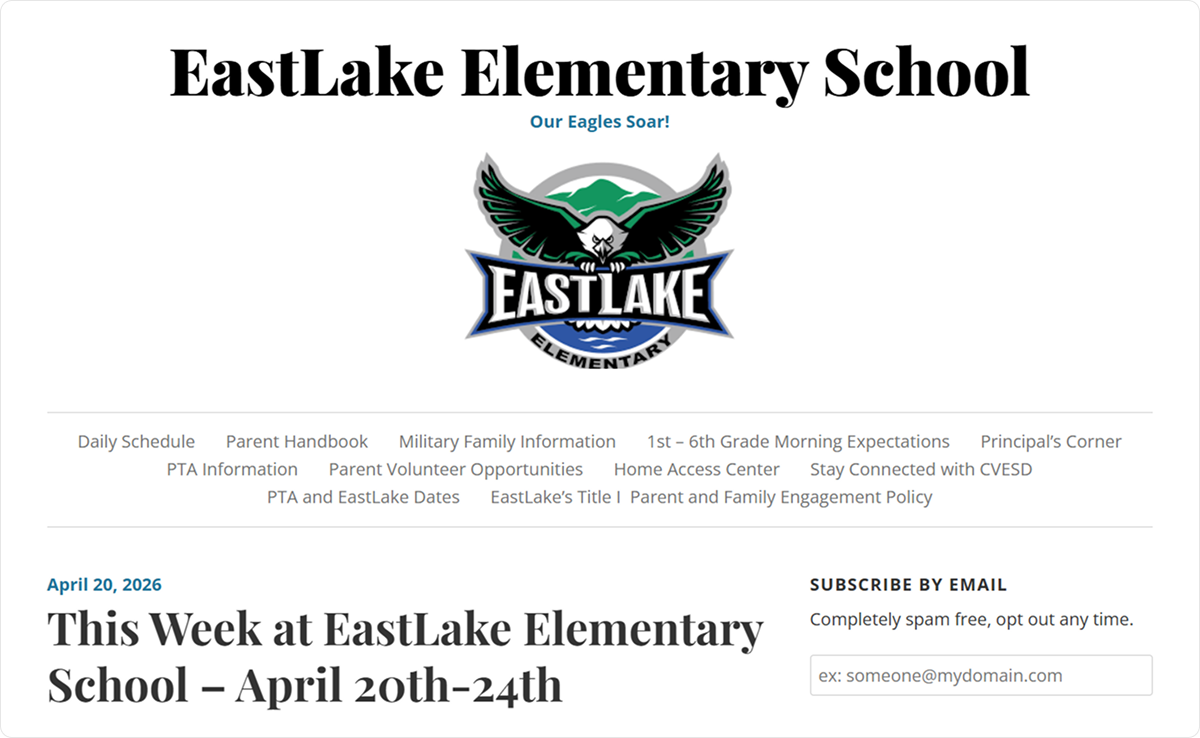
Example of a blog post with links on Edublogs
Ghost.io
Ghost is a modern publishing platform focused on clean long-form content and independent blogging. It’s often used for niche publications, personal brands, and expert-driven content, which makes it a good option for contextual Web 2.0 backlinks placed inside valuable articles.
Strengths: Clean content structure; supports long-form publishing; strong readability; suitable for topical authority and niche relevance.
Limitations: Smaller user base compared to major blogging platforms; fewer community features; requires more effort to keep the blog active and trustworthy.

Example of a blog post with links on Ghost
Substack.com
Substack is a publishing platform that combines newsletters with public blog-style content. Since posts can be indexed by search engines and shared outside the platform, Substack is often used for building topical authority, personal brands, and contextual Web 2.0 backlinks through long-form content.
Strengths: Supports long-form publishing; searchable public pages; strong readability; suitable for building topical authority and audience engagement; combines blog and newsletter content in one platform.
Limitations: Primarily focused on newsletters rather than traditional blogging; limited customization compared to standalone websites; SEO impact depends heavily on content quality and consistency.
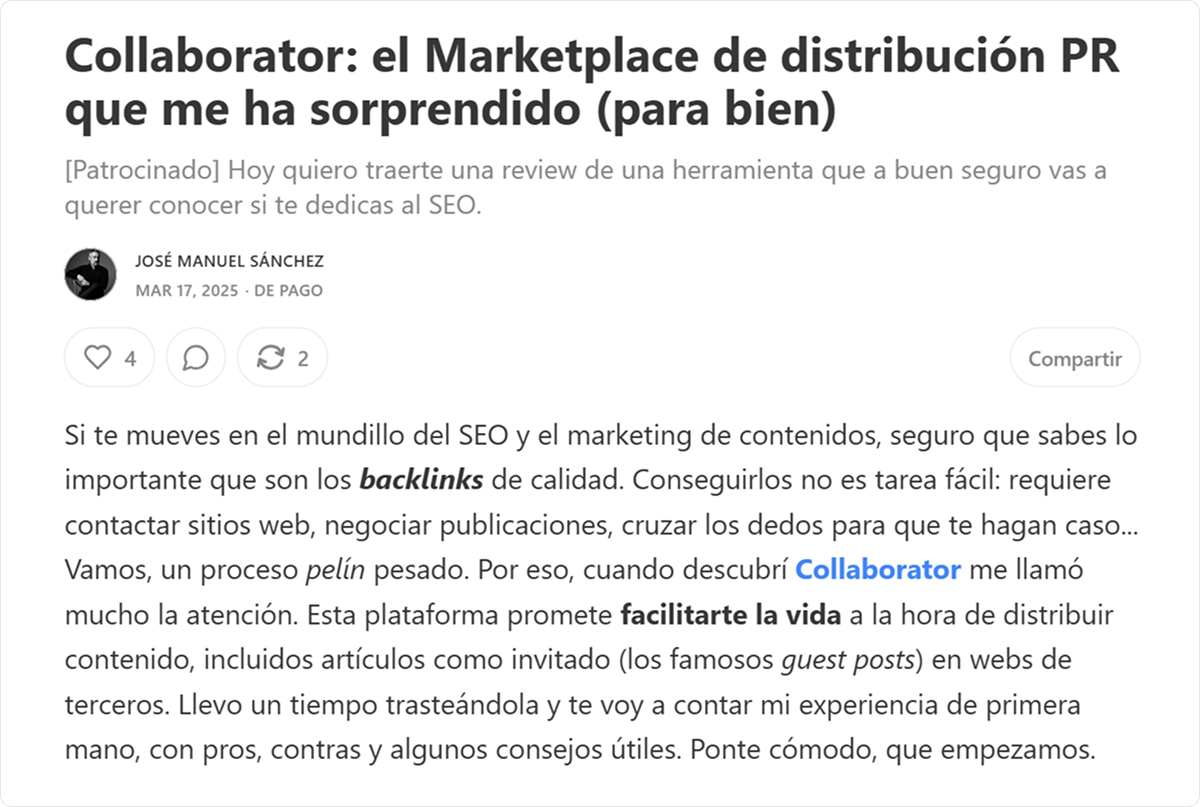
Example of a newsletter post on Substack
Write.as
Write.as is a minimalist publishing platform designed for simple, distraction-free blogging. It’s often used for short articles, personal posts, and niche content, making it a decent option for lightweight Web 2.0 backlinks and supporting SEO content.
Strengths: Easy content publishing; clean and lightweight pages; fast setup; suitable for simple contextual backlinks.
Limitations: Limited customization and formatting options; smaller platform authority compared to larger blogging sites; less effective for large-scale content strategies.
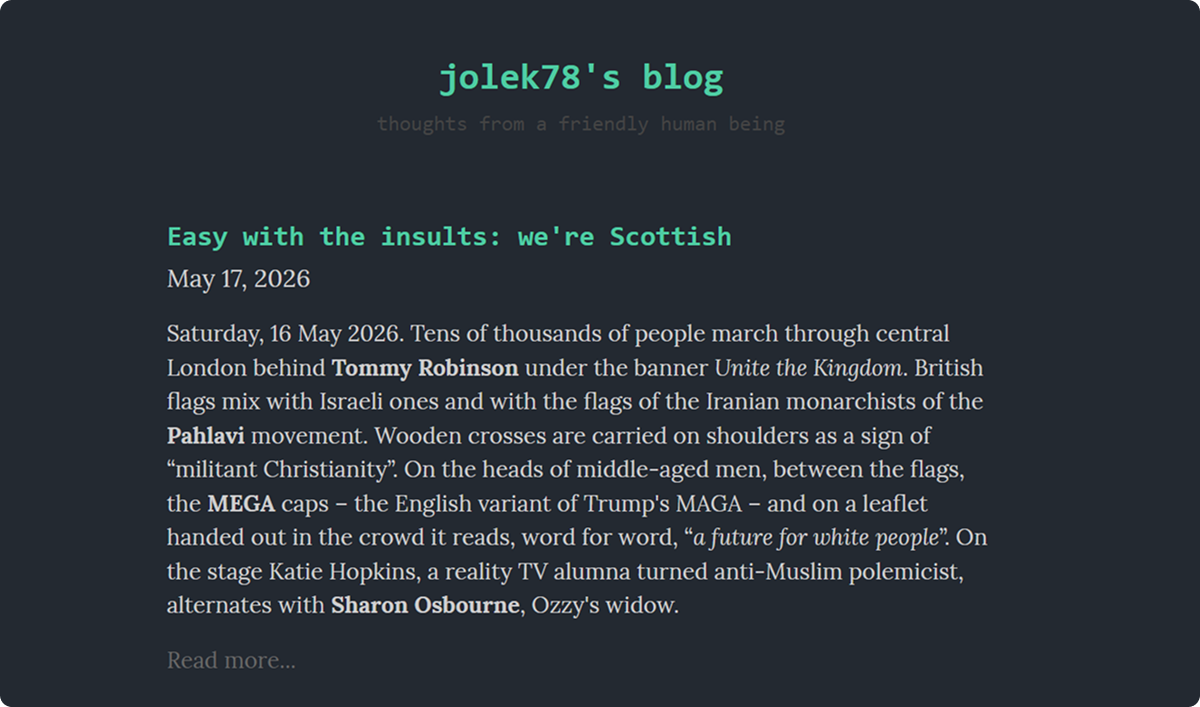
Example of a blog on Write.as
Beehiiv.com
Beehiiv is primarily known as a newsletter platform, but it also supports public blog-style publishing that can be indexed by search engines. Because articles are published on searchable web pages, Beehiiv can be used for contextual Web 2.0 backlinks, especially for niche content and personal brand building.
Strengths: Clean publishing structure; supports searchable web content; good readability; suitable for topical authority and personal branding; combines newsletter and blog content in one platform.
Limitations: Primarily designed for newsletters rather than traditional blogging; lower SEO authority compared to major Web 2.0 blogging platforms; advanced SEO customization is somewhat limited.
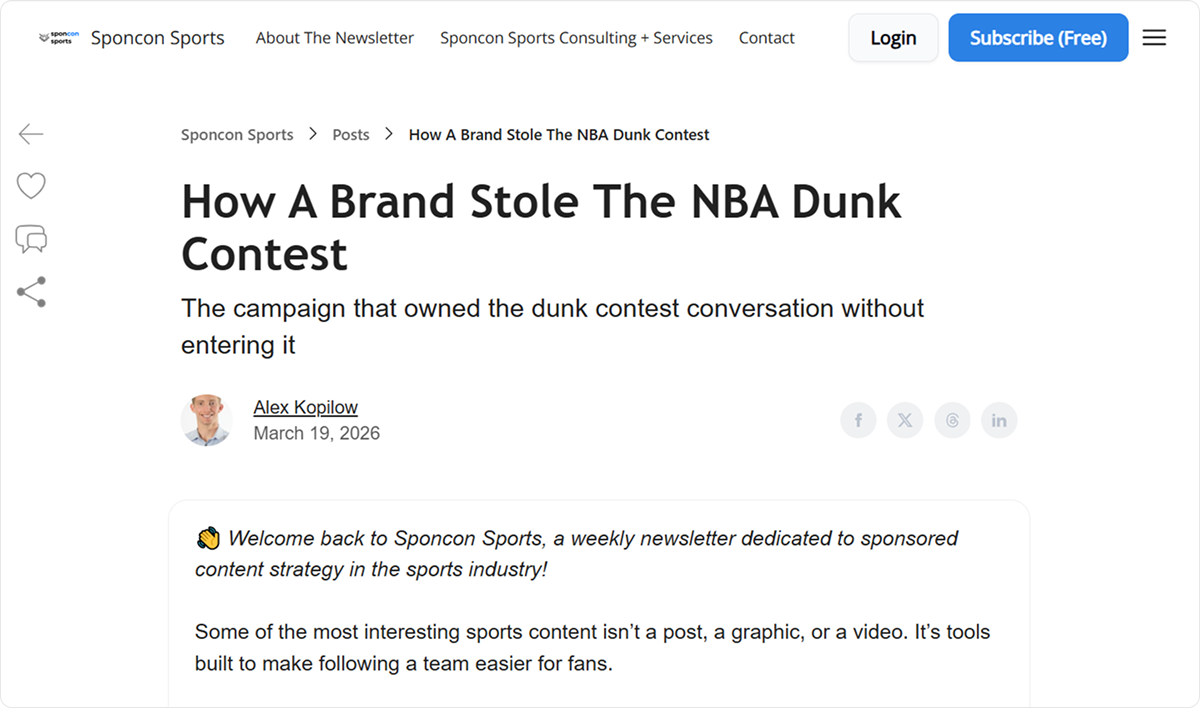
Example of an article on Beehiiv
Another way to build free Web 2.0 backlinks is by creating your own mini-site with a website builder, which gives you more control over customization and branding. Let’s look at some of the best free options.
Website Builders
Website builders let users create standalone mini-sites and branded pages with more freedom over design, structure, and content. Compared to traditional Web 2.0 platforms, they offer better branding opportunities and more control over how a page looks, but they also take more time and effort to maintain and keep active.
Let’s start with a brief comparison table.
|
Website |
DA |
Link Type |
Best Use Cases |
|
weebly.com |
55 |
Mostly nofollow links |
Supporting niche sites Small branded pages Contextual SEO content |
|
strikingly.com |
87 |
Mostly nofollow links |
One-page sites Personal branding Landing pages |
|
webnode.com |
37 |
Mixed dofollow and nofollow links |
Small business sites Local SEO Niche mini-sites |
|
squarespace.com |
59 |
Mostly nofollow links |
Professional branding Portfolio sites Content-driven projects |
|
sites.google.com |
96 |
Mostly dofollow links |
Indexing support Tiered link building Supporting SEO pages |
|
joomla.com |
78 |
Mixed dofollow and nofollow links |
Structured content sites Supporting authority pages Niche websites |
|
page.tl |
20 |
Mostly dofollow links |
Lightweight SEO pages Supporting backlinks Tiered link building |
|
website2.me |
56 |
Mixed dofollow and nofollow links |
Simple branded pages Supporting content Backlink diversification |
|
myfreesites.net |
59 |
Mostly dofollow links |
Experimental SEO projects Supporting backlinks Tiered links |
|
site123.me |
89 |
Mostly nofollow links |
Branded pages Local SEO websites Landing pages |
|
bravesites.com |
21 |
Mixed dofollow and nofollow links |
Simple niche sites Supporting content Backlink diversification |
|
bravenet.com |
71 |
Mixed dofollow and nofollow links |
Community pages Supporting backlinks Small branded sites |
Pro tip: Website builders usually perform better for SEO when you create small branded sites with useful pages and internal links instead of using them only for standalone backlinks.
We’ll review the top free website builders worth most of your attention in detail, starting with Weebly.
Weebly
Weebly is a beginner-friendly website builder often used for simple branded mini-sites and supporting SEO pages.
Strengths: Easy setup; flexible page customization; good for small niche websites.
Limitations: Limited SEO flexibility on free plans; most links are nofollow.

Example of a mini-website built on Weebly
Strikingly
Strikingly focuses on one-page websites and simple personal or business landing pages.
Strengths: Clean design; fast setup; good for branding-focused pages.
Limitations: Limited content structure; less suitable for large SEO projects.
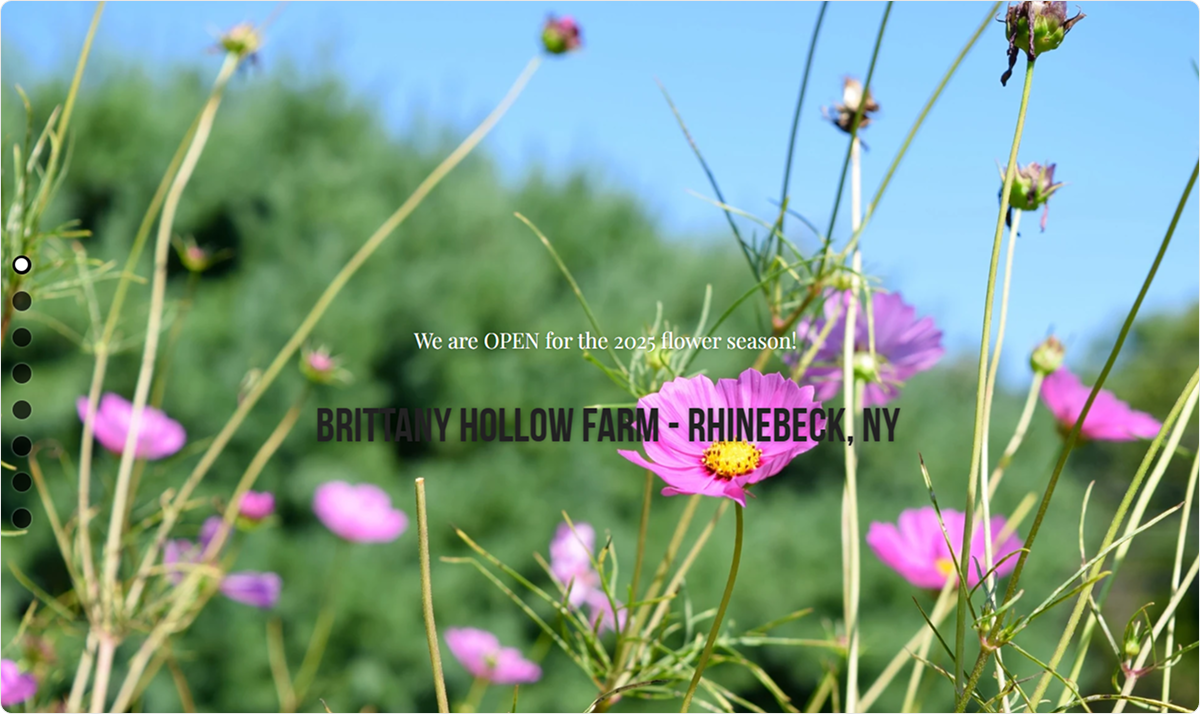
Example of a mini-website built on Strikingly
Webnode
Webnode is a lightweight website builder suitable for small business websites and niche-focused mini-sites.
Strengths: Beginner-friendly; multilingual support; decent customization options.
Limitations: Limited advanced SEO settings on free accounts.
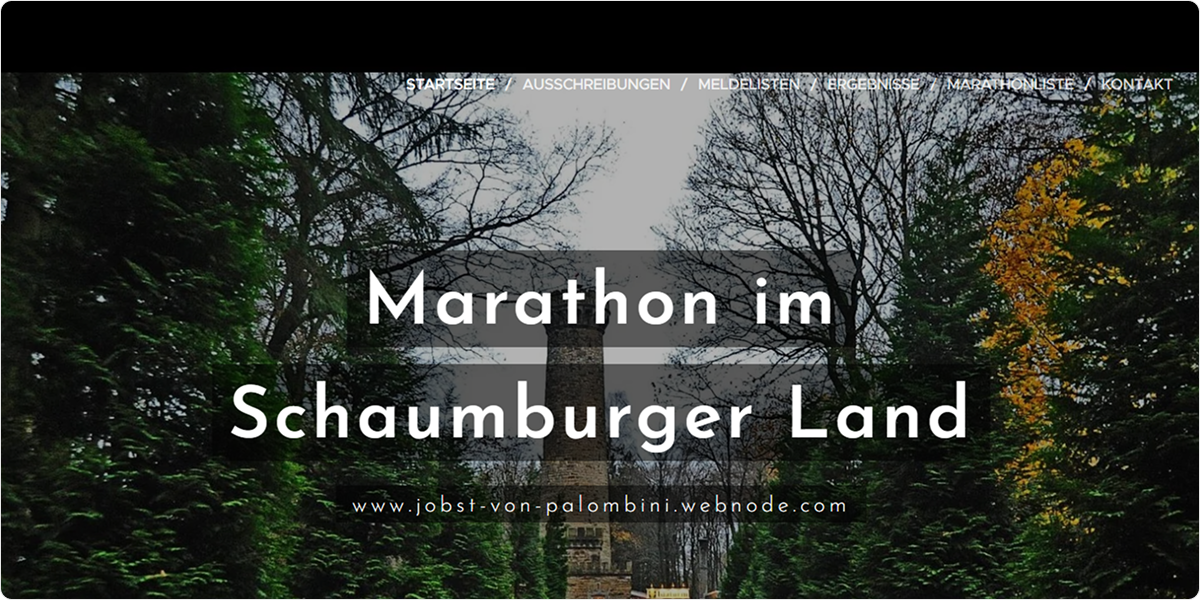
Example of a mini-website built on Webnode
Squarespace
Squarespace is a polished website builder often used for professional portfolios, brands, and content-driven websites.
Strengths: Strong branding potential; modern templates; professional-looking pages.
Limitations: Limited free usage; not ideal for quick Web 2.0 setups.

Example of a website built on Squarespace
Google Sites
Google Sites is a simple website builder commonly used for supporting SEO pages and indexing purposes.
Strengths: Fast indexing potential; easy integration with Google services; simple to manage.
Limitations: Very limited design flexibility; basic website functionality.
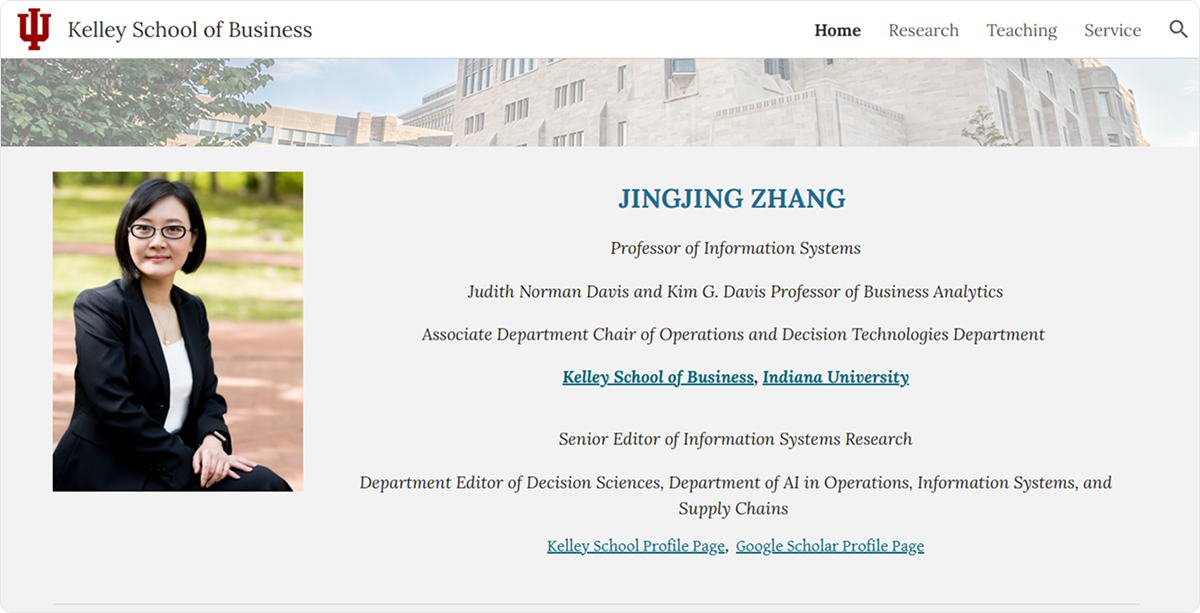
Example of a website built on Google Sites
There are many free website builders you can use to create sites and portfolios. Below are a few other options worth trying.
Additional Website Builders
Each website builder has its own strengths, limitations, and level of SEO flexibility, so it’s worth comparing them before choosing the right platform for your Web 2.0 backlinks.
|
Website |
Strengths |
Limitations |
|
joomla.com |
Flexible structure Suitable for content-heavy websites |
More difficult for beginners Requires setup effort |
|
page.tl |
Simple mini-site creation Lightweight pages |
Outdated design Lower trust and authority signals |
|
website2.me |
Quick branded page creation Simple setup |
Limited customization Lower SEO authority |
|
myfreesites.net |
Free mini-sites Easy for experimental SEO projects |
Low authority Higher spam association risk |
|
site123.me |
Quick setup Mobile-friendly templates |
Less flexibility for large or advanced projects |
|
bravesites.com |
Easy niche-site creation Beginner-friendly |
Limited modern features and customization |
|
bravenet.com |
Supports simple branded pages and community features |
Outdated interface Weaker SEO potential |
Want to reach existing audiences with your content? Then the following section about publishing platforms is for you.
Publishing Platforms
Publishing platforms give creators access to existing audiences, built-in distribution, and community engagement features that traditional Web 2.0 blogs often lack. With stronger content discoverability and varying levels of editorial moderation, these communities can help content reach readers faster and generate more organic interaction.
Let’s review the main features of these platforms in the table below.
|
Website |
DA |
Link Type |
Best Use Cases |
|
medium.com |
95 |
Mostly nofollow |
Brand Visibility Thought Leadership Content Distribution |
|
issuu.com |
94 |
Nofollow |
PDF Distribution Digital Magazines Lead Magnets |
|
wattpad.com |
92 |
Mostly nofollow |
Fiction Publishing Storytelling Audience Engagement |
|
dev.to |
84 |
Mostly nofollow |
Developer Content Technical SEO Coding Tutorials |
|
tumblr.com |
77 |
Mixed |
Brand Content Multimedia Posts Tiered Link Building |
|
hackernoon.com |
88 |
Mostly dofollow in content |
SaaS Promotion Tech SEO Startup Content Developer Audience |
|
vocal.media |
77 |
Nofollow |
Storytelling Niche Content Brand Mentions |
|
justpaste.it |
91 |
Dofollow/nofollow mixed |
Quick Indexing Tiered Link Building Temporary Content |
|
hashnode.com |
60 |
Mostly dofollow |
Developer Branding Technical Blogging SaaS Visibility |
|
hubpages.com |
92 |
Mostly nofollow |
Informational Articles Evergreen Content Long-Tail SEO |
Pro tip: Publishing platforms work best when you create genuinely useful content for their existing audience instead of reposting thin SEO articles just to place backlinks.
Below is a detailed overview of the top 5 publishing platforms, starting with Medium.
Medium
Medium is one of the most popular publishing platforms for long-form articles and thought leadership content. It’s often used for contextual backlinks, personal branding, and sharing niche expertise through well-structured posts.
Strengths: Medium has high authority, strong indexing potential, and a clean reading experience that helps content perform well in search results.
Limitations: Most backlinks on Medium are nofollow, and competition for visibility can be quite high.
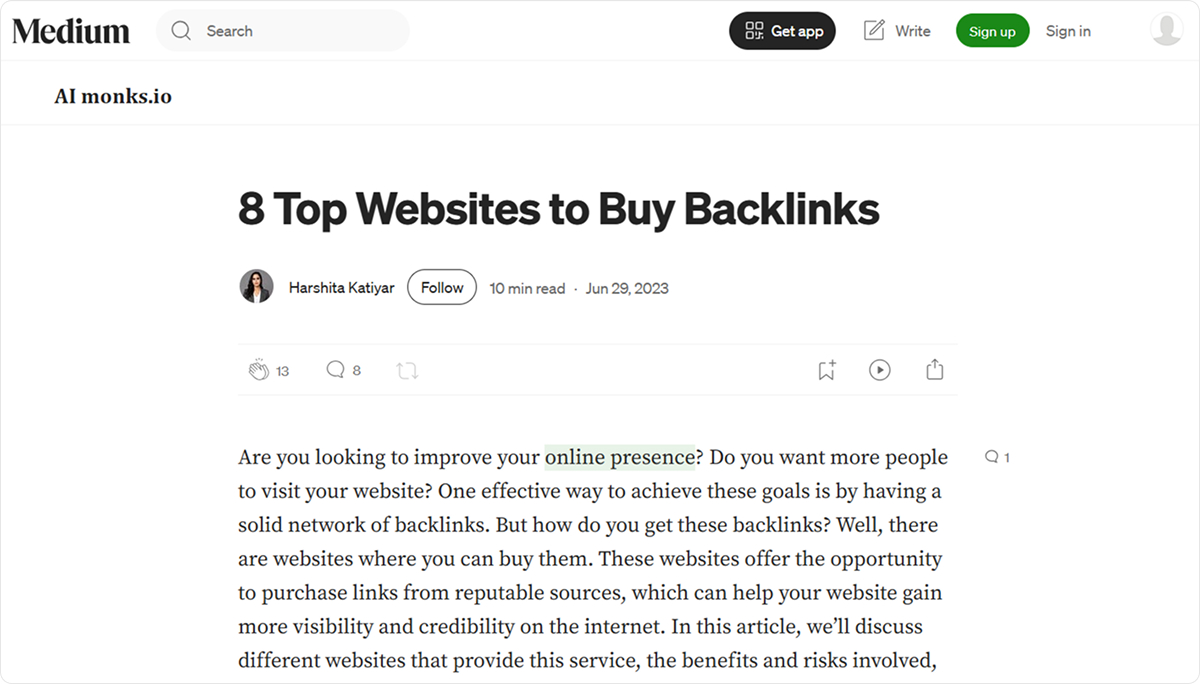
Example of an article on Medium
Issuu
Issuu is a digital publishing platform designed for magazines, brochures, catalogs, and other visual documents. It’s mostly used for branded content distribution rather than traditional blog-style SEO.
Strengths: Issuu works well for visual publications, branded documents, and content distribution across different audiences.
Limitations: The platform provides limited contextual SEO value and is not suitable for traditional long-form blogging.

Example of a PDF file on Issuu
Wattpad
Wattpad is a storytelling platform focused on fiction, creative writing, and audience engagement. While it’s not built specifically for SEO, it can still help with personal branding and visibility in creative niches.
Strengths: Wattpad has a large active community and strong engagement potential, especially for creative content creators.
Limitations: The platform offers limited SEO value for commercial projects and is not designed for traditional link building.
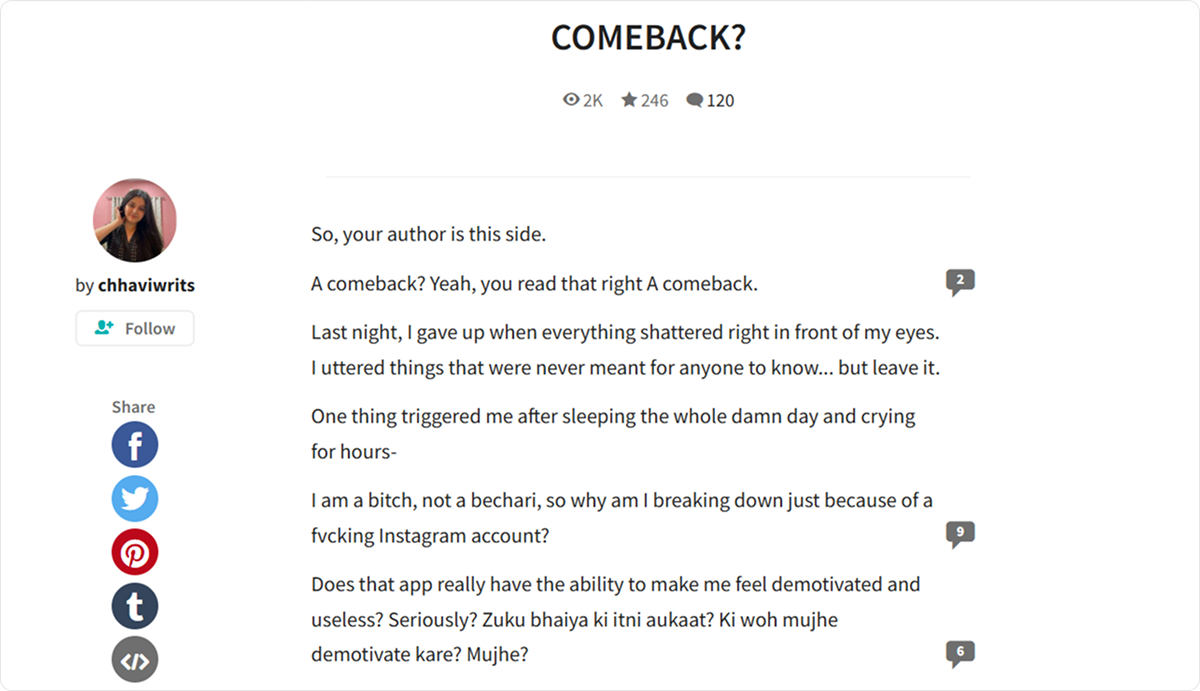
Example of an article on Wattpad
DEV Community
Dev.to is a developer-focused publishing platform where users share programming tutorials, technical articles, and industry discussions. It’s especially useful for building authority in tech-related niches.
Strengths: The platform has strong relevance in the tech industry, fast indexing, and an active developer audience.
Limitations: Dev.to is mainly useful for technical content and provides limited value outside developer-focused topics.
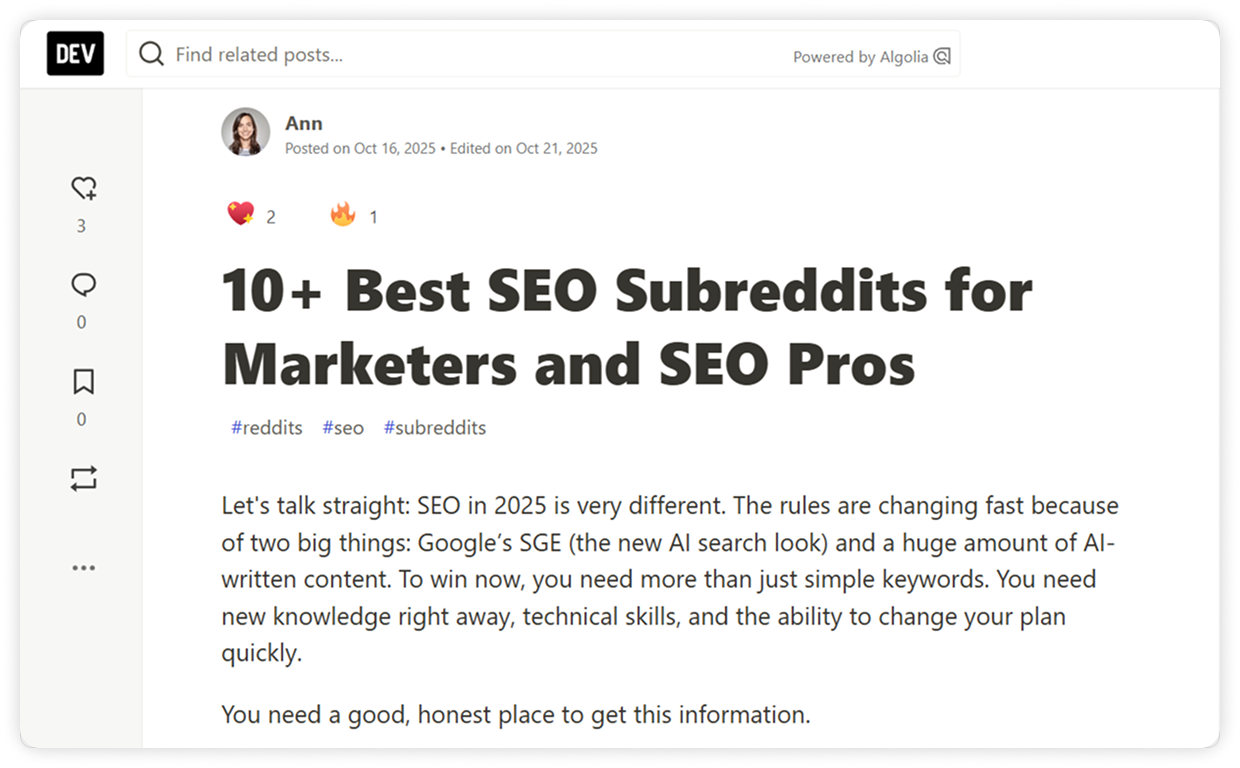
Example of an article on Dev.to
Tumblr
Tumblr combines blogging with social-style publishing, making it useful for lightweight content, visual posts, and niche communities.
Strengths: Tumblr makes content publishing simple, supports multimedia formats, and can help diversify a backlink profile.
Limitations: Its SEO impact is lower than it used to be, and some spam-heavy niches may reduce overall content quality signals.
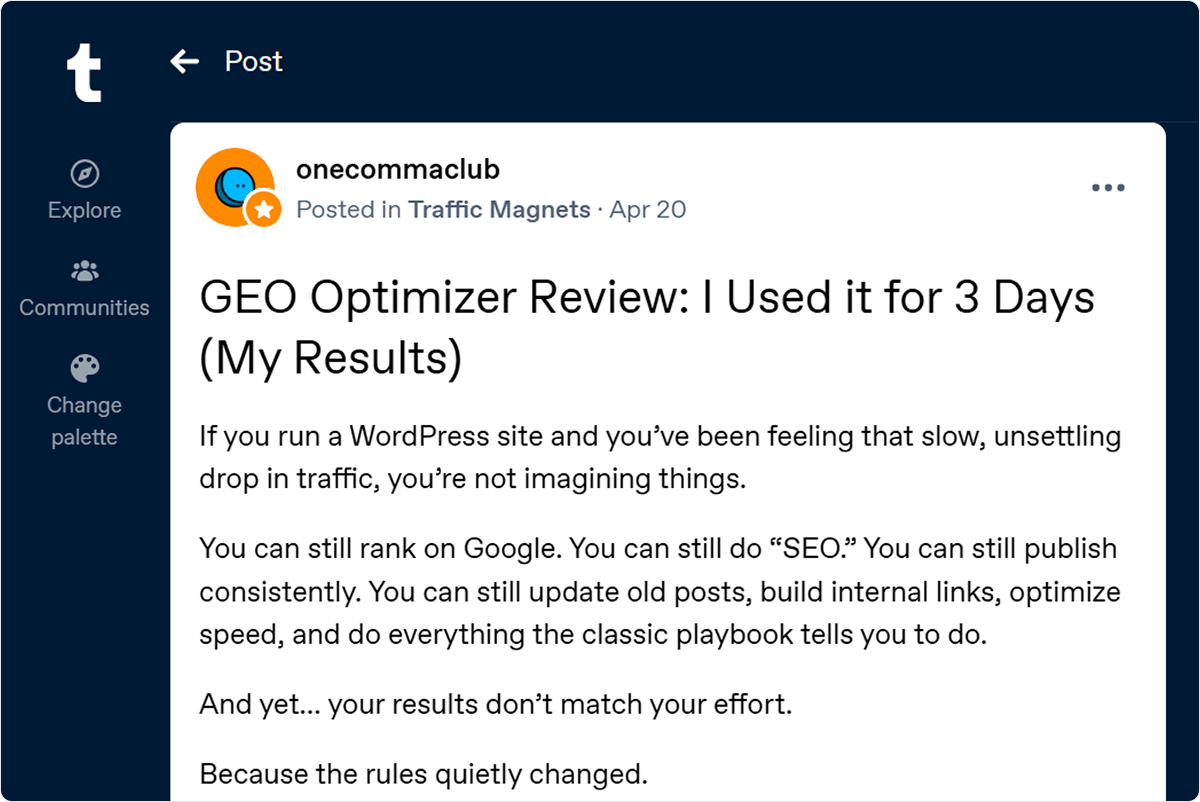
Example of a post on Tumblr
Beyond the platforms mentioned above, there are also several other publishing websites that can be useful for link building and content distribution.
Additional Publishing Platforms
We’ve also gathered several other publishing platforms that may be useful for link building in a table below. Here’s a quick comparison of their main strengths and limitations.
|
Website |
Strengths |
Limitations |
|
HackerNoon.com |
Strong authority in tech niches Good visibility in search results Trusted by developer communities |
Mostly useful for technology topics Editorial approval may be required |
|
Vocal.Media |
Easy content publishing Supports different creative niches Good for personal branding |
Lower SEO authority than major publishing platforms Limited direct SEO impact |
|
JustPaste.it |
Very fast publishing Simple and lightweight platform Useful for quick indexed pages |
Minimal branding and customization Low long-term SEO value |
|
Hashnode.com |
Strong developer-focused authority Supports custom domains and blogging Good indexing potential |
Mostly suitable for programming and tech content |
|
HubPages.com |
Established publishing platform Good long-form content potential Supports evergreen articles |
Strict moderation rules Competitive visibility inside the platform |
Another type of Web 2.0 websites is Q&A platforms. Let’s see how they can support SEO and link building.
Q&A Platforms
Q&A platforms are designed for discussions and answering user questions rather than publishing full-length articles. They are commonly used for brand mentions, topical discussions, and referral traffic, while backlinks from these platforms usually provide less contextual SEO value compared to traditional blogging or publishing websites.
See the table below for a quick comparison of their SEO value and ideal use cases.
|
Website |
DA |
Link Type |
Best Use Cases |
|
reddit.com |
90+ |
Mostly nofollow |
Brand awareness, referral traffic, niche discussions, community engagement, natural link mentions, indexing support |
|
quora.com |
93 |
Mostly nofollow |
Brand mentions, referral traffic, topical discussions, personal branding, niche expertise |
Pro tip: Q&A platforms work best when you focus on answering real user questions and add links only where they naturally support the discussion.
Let’s discuss these websites in detail.
Reddit is a discussion-based platform where users share opinions, niche expertise, and community-driven content through topic-focused subreddits.
Strengths: Strong community engagement, viral traffic potential, niche relevance
Limitations: Limited direct SEO value, strict moderation in many subreddits
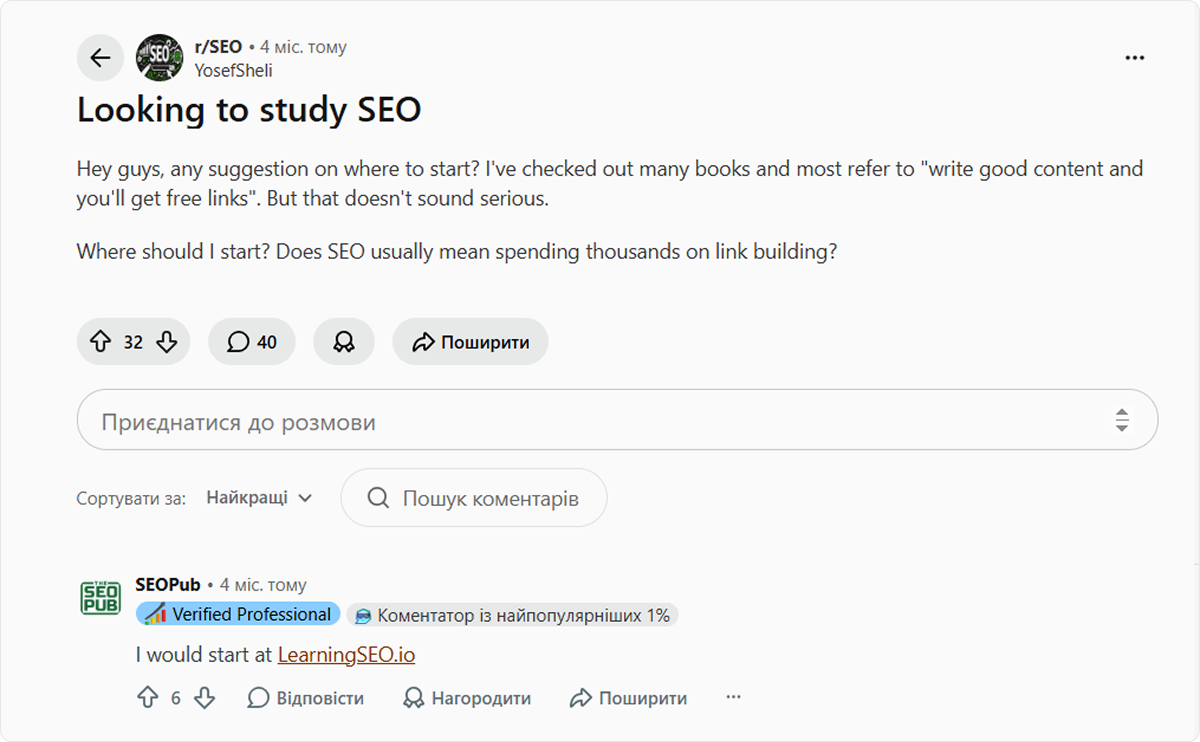
Example of a post on Reddit
Quora
Quora is one of the most popular Q&A platforms where users answer niche-related questions, share expertise, and build visibility through helpful discussions.
Strengths: High authority platform, strong visibility in search results, good referral traffic potential.
Limitations: Limited SEO authority transfer, promotional answers may be moderated or removed.

Example of a post on Quora
Platforms for professional networking can also help improve brand visibility, trust, and entity signals across search engines.
Professional Networks
Professional networking platforms are commonly used to strengthen brand visibility and build trust around a person or business online. These websites usually allow users to create profile pages, company pages, and publish professional content with backlinks.
From an SEO perspective, they are useful for building entity signals, diversifying backlinks, and improving the overall credibility of a brand across search engines.
Take a quick look at the table to compare their SEO value and best use cases.
|
Website |
DA |
Link Type |
Best Use Cases |
|
linkedin.com |
99 |
Mostly nofollow profile and contextual links |
Personal branding Entity SEO Professional authority building |
|
apsense.com |
74 |
Mixed dofollow and nofollow links |
Business networking Supporting backlinks Niche community engagement |
Pro tip: Professional networks work best for SEO when your profiles stay active, complete, and consistent with your brand across other platforms and websites.
Now, let’s take a closer look at each platform, starting with LinkedIn.
LinkedIn is one of the best platforms for strengthening brand visibility and professional credibility online.
Strengths: High domain authority; strong trust signals; great for personal branding and entity SEO.
Limitations: Most backlinks are nofollow and pass little direct SEO value.
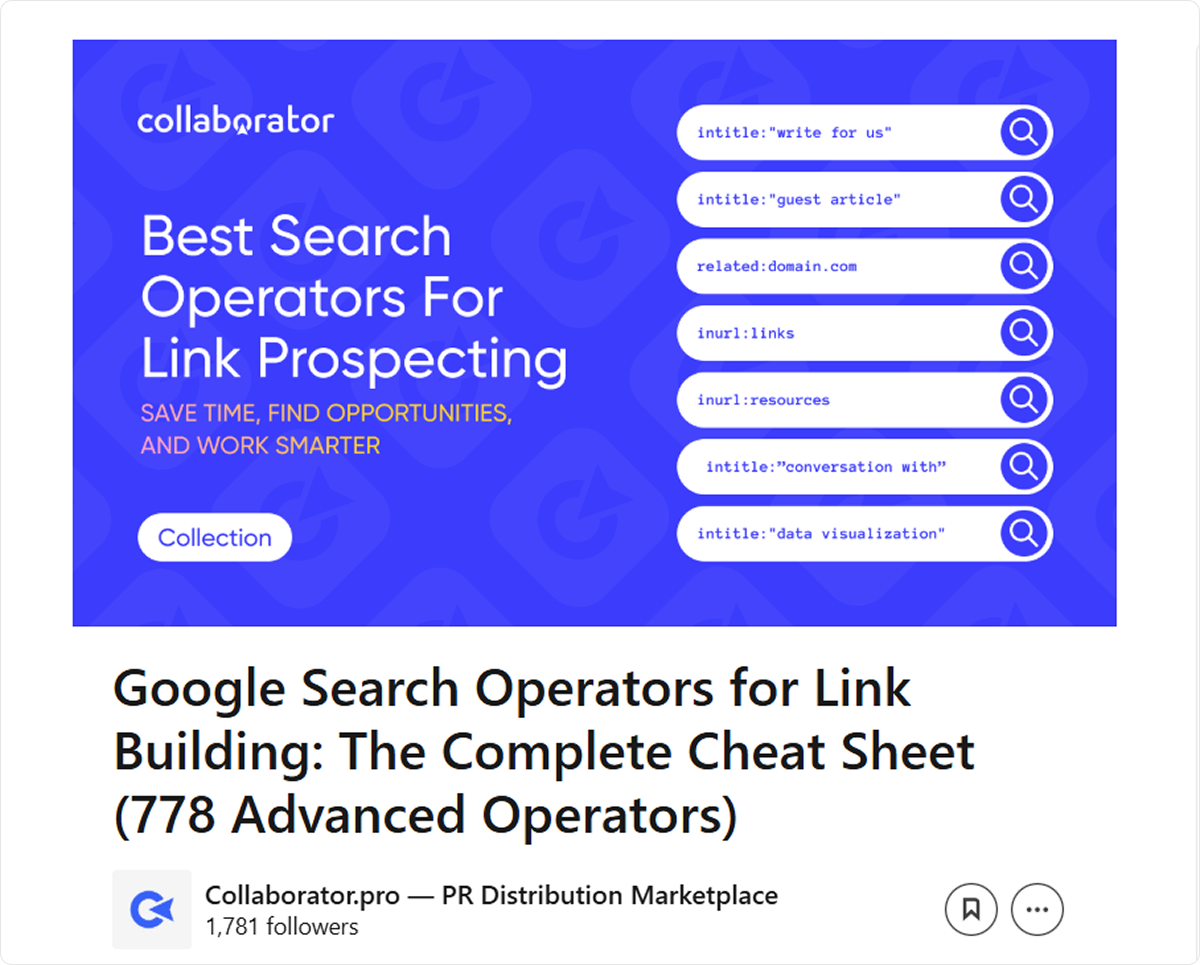
Example of an article on LinkendIn
APSense
APSense is a business networking platform where users can create profiles, publish content, interact with niche communities, and build supporting backlinks.
The platform also has its own credit and member-level system, where credits can either be purchased or earned for free through daily activity and community engagement. Some features and visibility depend on how active you are within the community.
Strengths: Allows profile and contextual links; useful for backlink diversification.
Limitations: Lower authority compared to major platforms; overly promotional content may look spammy.
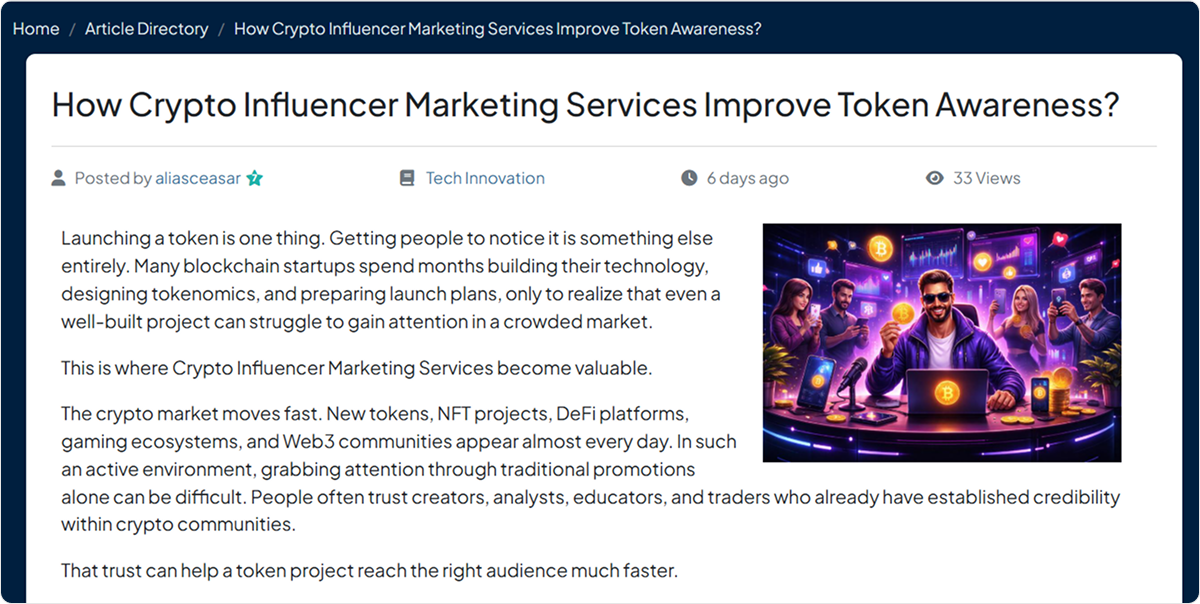
Example of an article on APSense
With so many different types of Web 2.0 platforms available, one important question remains: do Web 2.0 backlinks still provide real SEO value in 2026? Let’s find out.
Do Web 2.0 Backlinks Still Work for SEO in 2026
Yes, Web 2.0 backlinks still work for SEO in 2026. However, Google’s spam systems and AI technologies have made many old-school Web 2.0 link-building strategies ineffective.
- Google’s spam systems detect manipulative link-building tactics much better.
- AI-generated spam has flooded many Web 2.0 platforms with thin, repetitive content.
As a result, search engines pay more attention to contextual authority, indexing quality, and whether the content surrounding a backlink provides real value. That’s why mass-produced Web 2.0 backlinks created only to pass link juice have lost much of their SEO impact.
The effectiveness of Web 2.0 backlinks now depends heavily on content quality, topical relevance, and how naturally they are used.
Also, Web 2.0 platforms still play a role because LLMs frequently reference content published on them. As a result, quality backlinks from these sites can contribute not only to SEO, but also to visibility across AI-driven search experiences.
SEO specialists still use Web 2.0 sites to build backlinks in certain cases. Let’s discuss them in detail.
When Web 2.0 Backlinks Work
Web 2.0 backlinks work best when they are used naturally and combined with other backlink types. In these cases, links from Web 2.0 platforms may benefit your SEO efforts by:
- supporting secondary or tiered link-building campaigns;
- reinforcing brand and entity signals;
- improving backlink diversification;
- helping search engines discover and index new pages faster;
- strengthening topical content clusters;
- providing niche-relevant contextual links.
Typically, Web 2.0 backlinks are more effective as supporting SEO links.
In certain cases, building backlinks on Web 2.0 sites may provide little to no SEO value or even harm your website. These cases are described below.
When Web 2.0 Backlinks Don’t Work or Become Risky
Web 2.0 backlinks don’t work when built using low-quality link-building tactics. These practices are commonly considered black-hat or spam-oriented when building links on Web 2.0 websites:
- spun or heavily rewritten content;
- mass automation;
- exact-match anchor spam;
- duplicate articles published across multiple platforms;
- thin AI-generated pages with no real value.
In the best-case scenario, search engines will simply ignore such links; in worse cases, they may treat them as spam signals and put a website at risk of penalties.
Below, we’ll look at how to build Web 2.0 backlinks safely and use them as part of a sustainable link-building strategy.
How to Build Web 2.0 Backlinks Safely
To build Web 2.0 backlinks safely, it’s best to follow a few simple practices:
- Publish unique content that carries value for your target users
- Create content related to your niche or website topic
- Place links naturally inside contextual content
- Use branded and natural anchor texts
- Build realistic and active Web 2.0 properties
- Publish content gradually over time
Instead of creating dozens of pages just to place links, focus on building Web 2.0 properties that provide value to real users who may be interested in your products or services.
Web 2.0 backlinks are typically combined with other link types to build a more balanced and trustworthy backlink profile. This is where guest posting and distributing PR materials via Collaborator can help strengthen a broader off-page SEO and digital PR strategy.
However, even well-planned Web 2.0 backlink strategies can become ineffective if common SEO mistakes are overlooked.
Common Mistakes to Avoid
Even experienced SEO specialists and marketers make mistakes when building Web 2.0 backlinks. Below, we’ve gathered some of the most common ones so you can use them as a quick checklist:
- Duplicate content across Web 2.0 sites
- Repeated exact-match anchors
- Links only to commercial pages
- Abandoned Web 2.0 properties
- Irrelevant content topics
- Too many outbound links
- Rapid backlink growth
- Overreliance on Web 2.0 backlinks
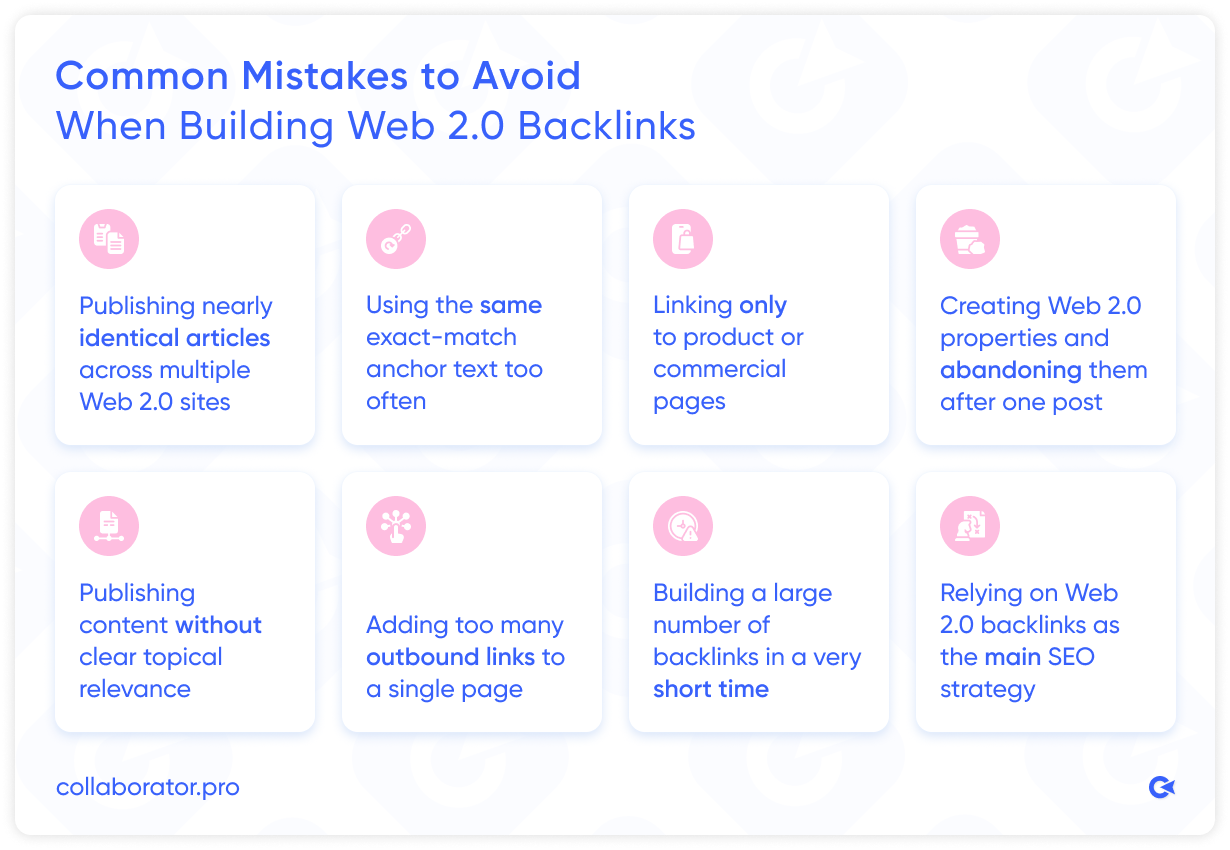
Note: In many cases, a smaller but active and niche-relevant Web 2.0 page can provide more value than a stronger domain filled with outdated or low-quality content.
Conclusion
Web 2.0 submission sites still have a place in SEO in 2026, but only when they’re used thoughtfully. Publishing useful, niche-relevant content works far better than relying on automated, low-quality backlinks.
To make the process easier, we’ve gathered a handpicked and manually checked list of Web 2.0 websites that can help support a more natural and balanced SEO strategy. Combine them with other types of links to make your backlink profile look natural.
This article was written in collaboration with Olena Hlushko, a Content Marketer at Collaborator.
Related reading
- • 13 Best Link Building Tools for SEO in 2026
- • What Is Grounding in AI and How to Use It for SEO
- • 175+ Free Guest Posting Sites List 2026. Top Websites To Submit Guest Posts
- • Free Backlinks: 55 High-Authority Sites List to Build Links for Free in 2026
- • 25 Press Release Submission Sites List 2026: Best Websites to Submit Press Releases [Free & Paid]
- • Best SEO Extensions in 2026: 40+ Free & Freemium Browser Tools for Every SEO Task
- • Which Website Authority Metric Can You Trust: DR, DA, TF, CF, AS, or SDR. A Unique Study of 40,000 Websites