Review sites have always mattered for buyer trust and search visibility. Now, they can also influence which businesses AI tools mention and recommend. That makes choosing the right platforms more important than claiming every profile you can find.
We manually reviewed 42 business review sites and grouped them by industry, audience, cost, and review model, so you can see which ones deserve your attention.
Methodology: How We Selected Review Platforms
To build this list, we manually reviewed each platform in July 2026. We checked that every site still accepts business listings, reaches a real audience, and receives regular customer feedback. Here’s what we considered:
- Industry fit: We checked whether each platform serves a specific niche or works across several industries. This determined where it appears in the article.
- Reach: We looked at how many potential customers could see a business profile, based on reported audience figures or estimated platform traffic.
- Primary market: We identified where each platform’s audience is concentrated, so businesses are not directed to sites that have little relevance in their market.
- Review authenticity: We examined how each platform checks reviewers, moderates feedback, and handles suspicious reviews.
- Cost and effort: We considered the cost of claiming and maintaining a profile, including subscriptions, lead fees, and ongoing management.
Why this methodology matters
The biggest review platform is not automatically the best one for your business. Looking at industry fit, market, reach, review checks, and cost makes it easier to choose profiles that your customers actually use and your team can maintain.
With that said, here’s the list. We’ll start with the platforms that fit any business, then break the rest down by seven industries.
Best Review Platforms for Any Industry
These five platforms work across many industries, but you probably don’t need all of them. Google is the best place to start for most local businesses. Trustpilot makes more sense for online brands, while Facebook, BBB, and Yelp are useful when your customers already use them to compare businesses.
|
Platform |
Best for |
Primary market |
Reach |
Cost |
Review model |
| Google Business Profile | Local businesses | Global | Google Search and Maps | Free | Customers leave public reviews |
| Trustpilot | Ecommerce, online services, and consumer brands | Global | 60M+ monthly users | Free and paid plans | Anyone with a real experience can leave a review |
| Consumer brands with an active Facebook audience | Global | 3B+ monthly users | Free | Customers leave reviews and recommendations | |
| Better Business Bureau | Businesses people research carefully before hiring | US and Canada | 132M+ annual BBB.org visitors | Free profile; paid accreditation | BBB checks reviews before publishing them |
| Yelp | Restaurants and local services | Mainly the US and Canada | 2.4M daily visitors | Free listing; paid upgrades | Anyone can leave a review, but Yelp decides which ones count toward the rating |
Here’s a closer look at these platforms, along with what to keep in mind before you create a listing on each one.
Google Business Profile
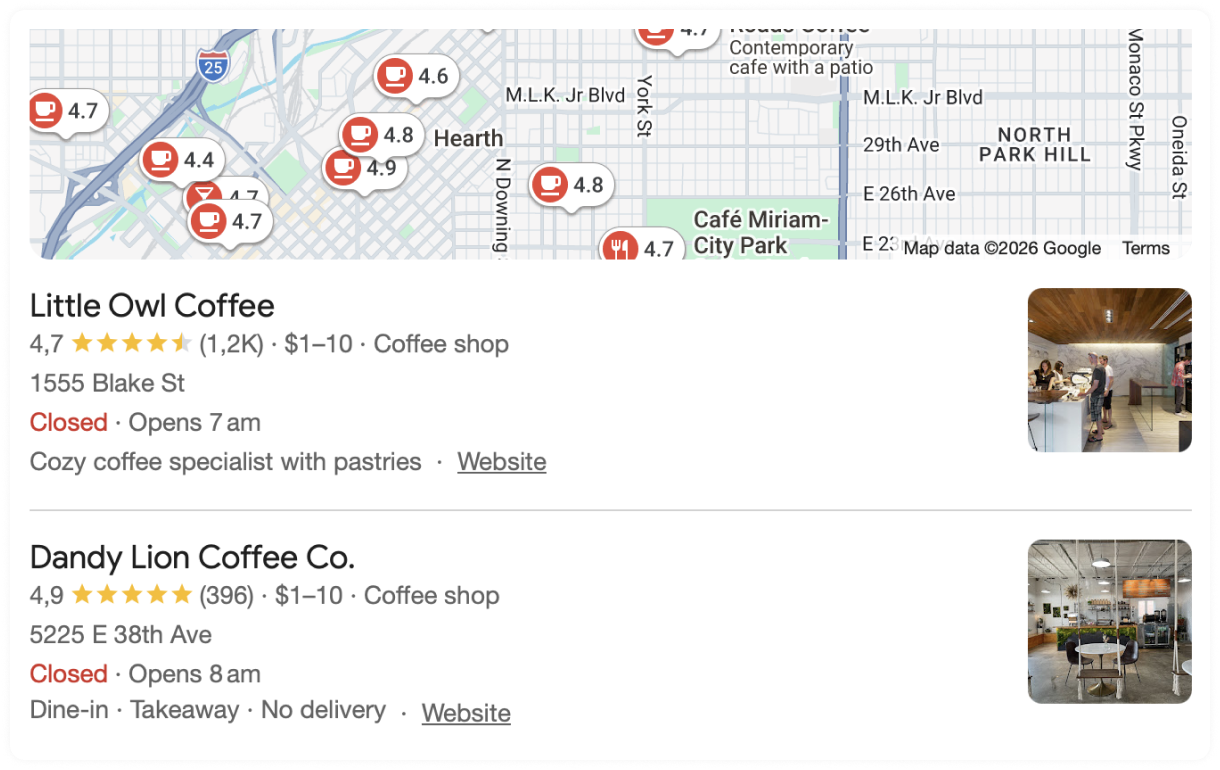
Google Business Profile is the first review platform most local businesses should claim. It displays your rating, reviews, opening hours, location, and contact details in Google Search and Maps. Customers can call you, visit your website, or get directions without leaving Google.
- Best for: Businesses customers can visit and businesses that travel to their customers.
- Why it matters: People see your reviews while they are actively searching for a nearby business or service.
- Keep in mind: Online-only businesses cannot create a profile. Don’t offer rewards for reviews or ask only your happiest customers.
Once you claim your profile, complete every relevant field and keep your hours, contact details, and location up to date.
Add or claim your Google Business Profile
Trustpilot
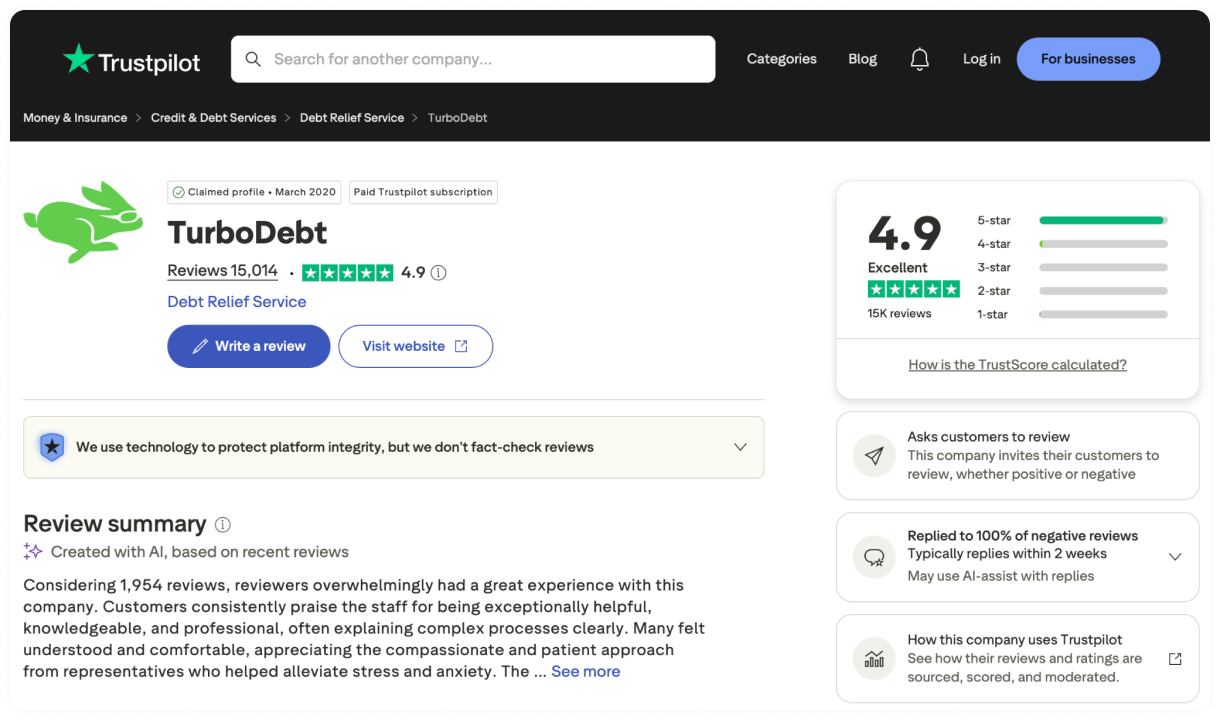
Trustpilot is a good fit for ecommerce stores, online services, and consumer brands. Customers can review a company after a real experience, even if the business did not invite them. This makes it easier to build a steady flow of feedback, but it also means you cannot control who leaves a review.
- Best for: Online businesses that regularly sell products or services to consumers.
- Why it matters: Trustpilot has more than 400 million reviews and is a familiar name to many online shoppers.
- Keep in mind: The free plan includes up to 50 review invitations per month. You will need a paid plan for higher limits and more advanced tools.
Trustpilot can also send review data to Google. This may help a business qualify for Google Seller Ratings, but it does not guarantee that the ratings will appear.
Create a free Trustpilot account
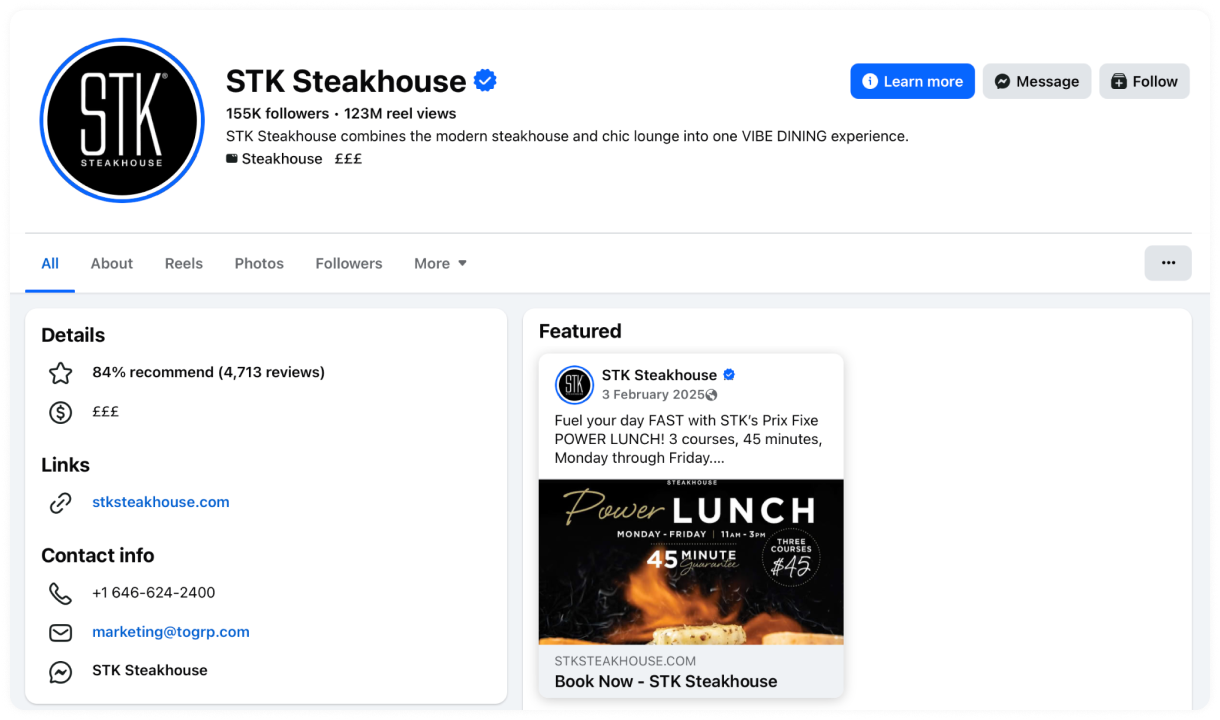
Facebook lets customers review and recommend businesses through their Pages. It is not a dedicated review directory, but recommendations can still help when people discover a business through Facebook search, local groups, or posts from friends.
- Best for: Restaurants, shops, salons, events, trades, and other businesses with an active Facebook audience.
- Why it matters: Reviews support the word-of-mouth activity already happening on the platform.
- Keep in mind: If your customers rarely use Facebook to find businesses, this profile should not be a priority.
If you already manage an active Page, turn on reviews and recommendations. If you don’t use Facebook, creating a Page solely for reviews may not be worth the effort.
Better Business Bureau
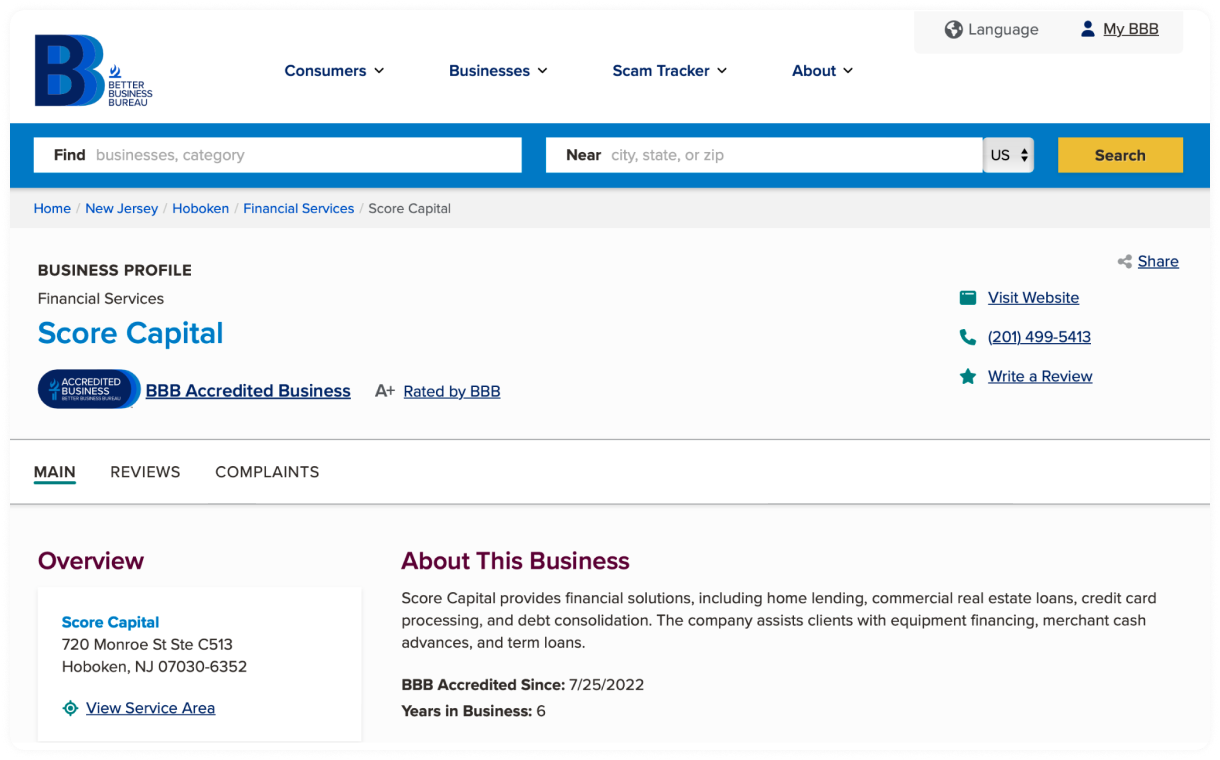
The Better Business Bureau is mainly useful for businesses in the United States and Canada. Customers often check BBB when choosing an expensive service or a company they have not used before. A profile can show customer reviews, complaints, business details, and a BBB letter grade.
- Best for: Contractors, movers, financial services, home-service companies, and other businesses people research carefully.
- Why it matters: BBB checks reviews before publishing them and gives the business a chance to respond.
- Keep in mind: A free profile and paid BBB accreditation are not the same thing. You don’t have to pay to receive a BBB rating.
Accreditation adds the BBB badge and other profile features, but the price depends on the business. Start with the free profile and decide later whether the paid option is worth it.
Claim or add your free BBB Business Profile
Yelp
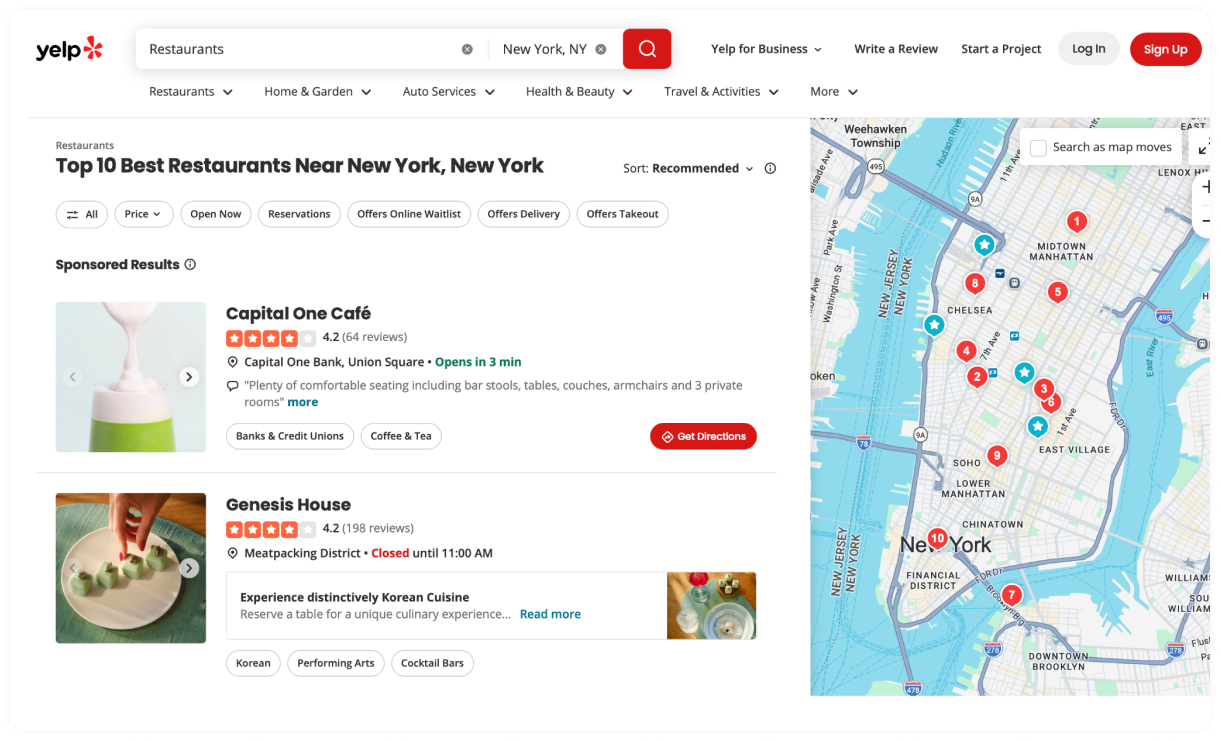
Yelp is most useful for local businesses in the United States and Canada. People use it to compare restaurants, home-service providers, car services, healthcare practices, and other businesses before visiting or getting in touch.
- Best for: Restaurants and local services that customers compare before booking or visiting.
- Why it matters: Yelp reports 2.4 million daily visitors, many of whom are actively looking for a local business.
- Keep in mind: Yelp tells businesses not to ask customers for reviews. Claim your page, keep it accurate, and let customers review you on their own.
Yelp uses software to decide which reviews count toward a business’s displayed rating. Reviews it does not recommend can still be read, but they do not affect the rating. Paying for Yelp advertising does not change how reviews are treated.
Quick note: Yelp reviews can now appear in ChatGPT’s local recommendations, as Aleyda Solís shared on LinkedIn. That gives local businesses another reason to keep their profiles active, accurate, and up to date.
Claim your free Yelp Business Page
Best Review Sites for SaaS and Software Companies
Software buyers use review sites to compare products, check customer experiences, and narrow their options before booking a demo or starting a trial. G2 and Capterra are the strongest starting points for most B2B software companies, while TrustRadius works well for products with longer, more complex buying cycles.
Quick note: G2 acquired Capterra, GetApp, and Software Advice in 2026. These platforms still serve different types of searches, but they are now part of the same wider ecosystem. Treat them as complementary profiles, not four completely independent channels.
|
Platform |
Best for |
Primary market |
Reach |
Cost |
Review model |
|
G2 |
B2B software and broad category visibility |
Global |
5M+ monthly buyers |
Free profile; paid upgrades |
Reviewers verified; reviews moderated |
|
SMB software discovery |
Global |
Part of a network reaching 100M+ annual buyers |
Product listing available; paid promotion and lead programs |
Verified reviews with human moderation and fraud checks |
|
|
Enterprise software and longer buying cycles |
Global |
1M+ monthly buyers |
Free profile; paid plans |
Reviewer identity and product experience checked |
|
|
Side-by-side software comparisons |
Global |
~760K monthly visits |
Product listing available; paid promotion and lead programs |
Verified reviews with human and automated moderation |
|
|
Software companies seeking advisor-qualified leads |
Global |
Part of a network reaching 100M+ annual buyers |
Product listing available; paid lead programs |
Verified reviews plus advisor-assisted matching |
|
|
Competitor and replacement searches |
Global; English-language |
1–2M monthly visitors globally |
Free |
Community suggestions, votes, comments, and reviews; admins approve listings |
Our Top Pick in This Industry: G2
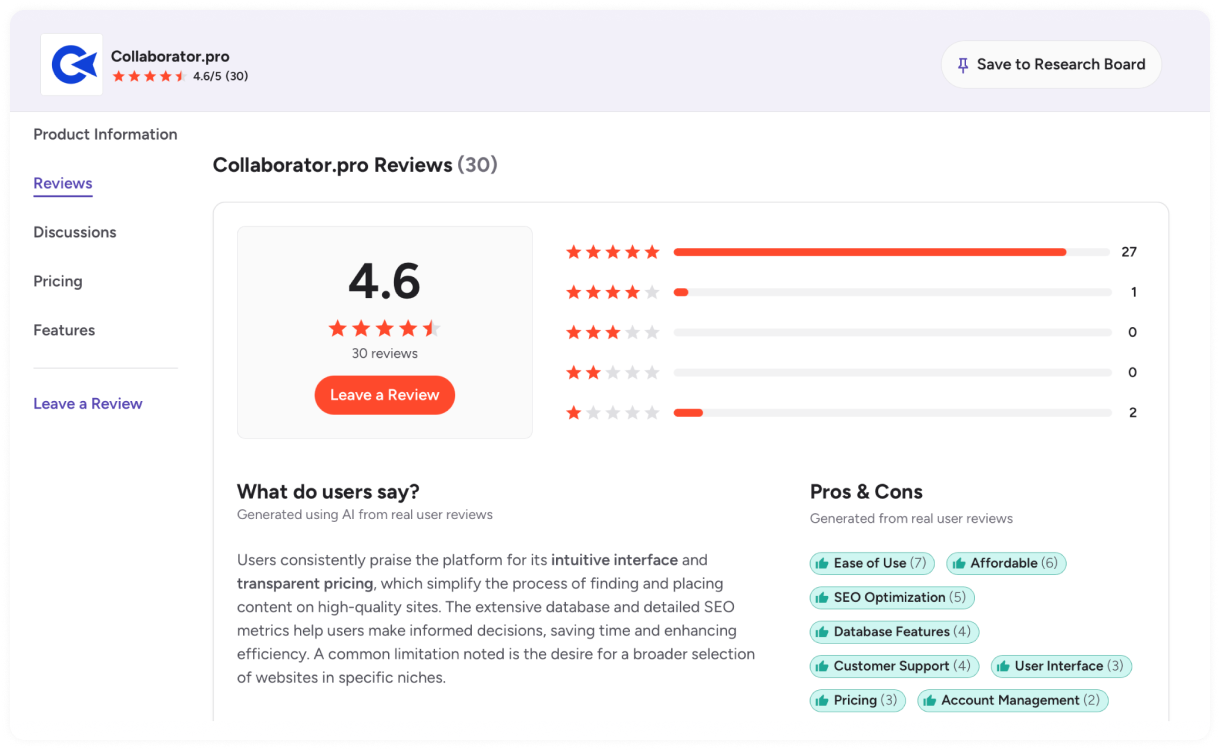
G2 is the first profile most B2B software companies should claim. More than 100 million software and services shoppers use G2 each year to read reviews, compare products, and narrow their options. A complete profile gives them the information they need to understand where your product fits before they visit your site or book a demo.
- Best for: B2B software companies competing in established categories.
- Why it matters: G2 puts your product beside direct competitors when buyers are actively comparing options.
- Keep in mind: You can claim and maintain a basic profile for free, but stronger branding, visitor data, and lead-generation tools require a paid plan.
G2 verifies user identities and moderates every review before publishing it. Vendors can update product details, but they cannot edit or remove customer reviews. That gives businesses less control over what appears on the profile, but it also gives the feedback more weight with buyers.
Best Review Sites for Agencies and B2B Service Providers
Hiring an agency usually involves a larger budget and a longer commitment than buying a typical product. This makes detailed client reviews especially valuable.
For most B2B service providers, Clutch is the best place to start. GoodFirms is especially relevant to development, IT, and digital marketing companies, while The Manifest gives agencies with a Clutch profile additional exposure. DesignRush offers a broad international directory, and Sortlist combines agency profiles with project matching across several European markets.
|
Platform |
Best for |
Primary market |
Reach |
Cost |
Review model |
|
Clutch |
Agencies and B2B providers seeking broad category visibility |
Global |
15M business leaders annually |
Free profile; paid verification and promotion available |
Every review is screened; verified reviews confirm the reviewer’s identity and work history |
|
Software development, IT, and digital marketing companies |
Global |
14,000+ enterprise buyers |
Free listing; paid plans and sponsorships available |
Client reviews are authenticated; company profiles undergo research-led verification |
|
|
Agencies that already maintain a Clutch profile |
Global |
200,000 monthly users |
Included with a Clutch profile; paid sponsorship available |
Uses company information and client reviews from Clutch |
|
|
Marketing, design, development, and technology agencies |
Global; US-weighted |
1M+ monthly visitors |
Free listing; paid sponsorship and marketplace access available |
Direct and third-party reviews are checked through LinkedIn, email, or phone verification |
|
|
SEO, digital marketing, advertising, and creative agencies |
Global |
30,000+ marketers searching monthly |
Free limited profile; paid plans from $233/month when billed annually |
Only agency clients can submit reviews; unverifiable reviews are not published |
|
|
Marketing, creative, and development agencies targeting European clients |
Global; Europe-weighted |
600,000 monthly visitors |
Free profile; paid visibility and opportunity tools |
Clients confirm reviews by email; imported reviews retain their original source |
Our Top Pick in This Industry: Clutch
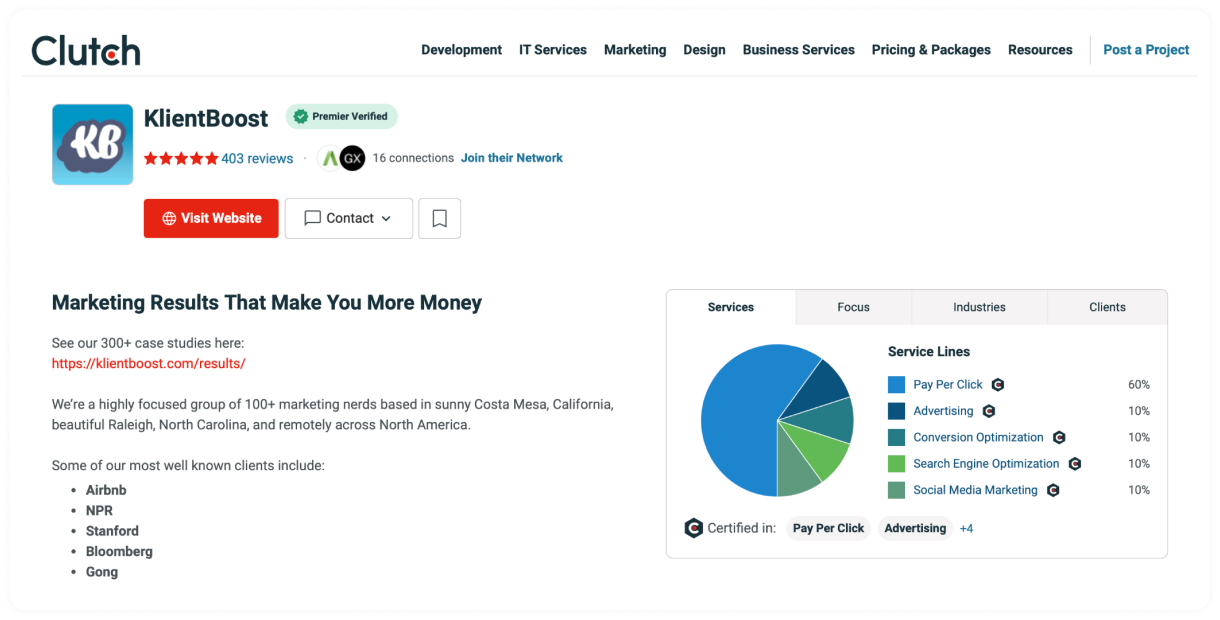
Clutch is the first industry-specific profile most agencies and B2B service providers should claim. Buyers can compare companies by service, location, budget, industry experience, and client reviews. More than 12 million people use the platform each year, so a strong profile can put an agency in front of prospects who are already looking for outside help.
- Best for: Agencies, consultancies, developers, and other B2B providers selling high-consideration services.
- Why it matters: Clutch reviews include details such as the project scope, budget, timeline, results, and the client’s experience working with the provider.
- Keep in mind: A basic profile is free, but collecting detailed reviews takes more effort than requesting a simple star rating. Paid verification and sponsorship can also affect where profiles appear in directory results.
Clutch checks reviewers’ identities and work histories before marking their reviews as verified. Clients can submit feedback online, and Clutch also offers interview-based review collection. The number, quality, and recency of verified reviews contribute to an agency’s Clutch Rank, so collecting a few detailed reviews and keeping them current matters more than creating a profile and leaving it untouched.
Create your free Clutch profile
Best Review Sites for Ecommerce and Online Stores
Online stores need reviews in the places customers check before completing a purchase. The right platform depends heavily on where and how you sell. Amazon matters most when customers buy your products through its marketplace, while SmartCustomer gives independent stores a public profile and can help their ratings appear across Google.
Regional platforms can be equally important. Trusted Shops is built for European ecommerce businesses, ProductReview.com.au reaches Australian shoppers, and Opineo is a strong choice for stores serving Poland. ResellerRatings focuses primarily on retailers selling to US customers.
|
Platform |
Best for |
Primary market |
Reach |
Cost |
Review model |
|
Brands and retailers selling directly through Amazon |
Global, split by marketplace |
300–600M active monthly users |
Seller account required; the Customer Reviews tool requires a Professional plan and Brand Registry. |
Product reviews and seller feedback are separate; eligible reviews may receive a Verified Purchase label |
|
|
SmartCustomer |
Independent ecommerce stores |
Global, strongest in the US |
2M+ monthly users |
Free profile; paid review-management plans |
Reviewers are asked to provide proof of purchase |
|
US online retailers and store-level reputation |
Primarily the US |
~400,000 monthly buyers |
Limited free access may be available; paid plans |
Organic and merchant-requested reviews; profiles can exist without being claimed |
|
|
European stores that also want a trustmark and buyer protection |
Europe, particularly Germany and the DACH region |
45M consumer memberships |
Paid plans; pricing depends on the store |
Transaction-based service and product reviews |
|
|
Ecommerce brands selling to Australian consumers |
Australia |
4.5M monthly visitors |
Free Starter plan; paid plans available |
Reviews are screened; proof-of-purchase and invited reviews may be marked Verified |
|
|
Online stores serving Polish-speaking customers |
Poland |
~1M monthly users |
Paid plans; pricing depends on the subscription period. |
Open reviews plus purchase-confirmed “Trusted Reviews” |
Our Top Pick in This Industry: SmartCustomer
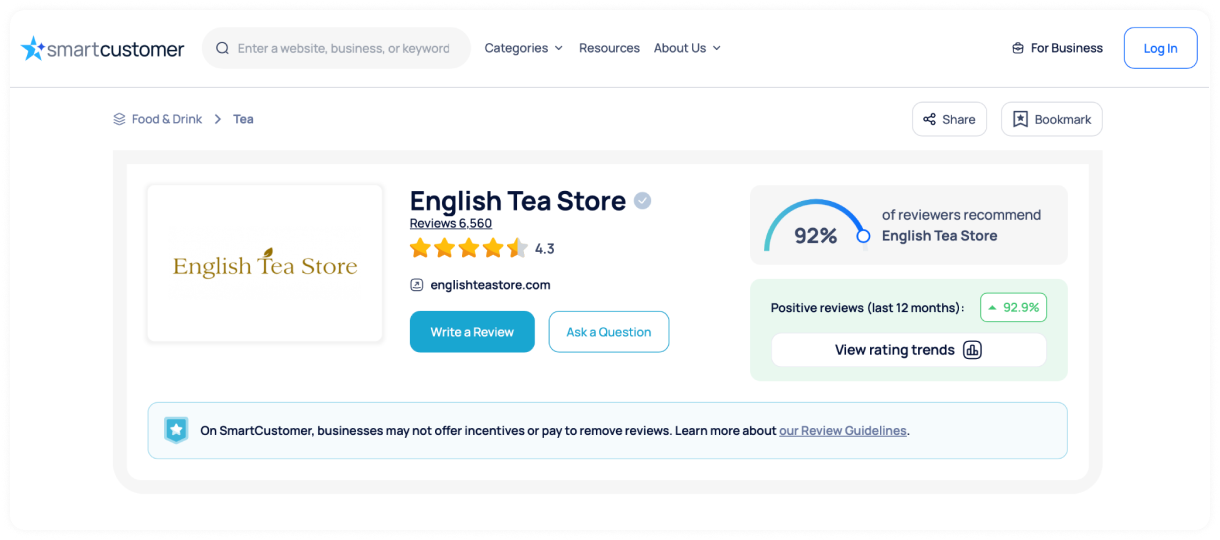
SmartCustomer is a practical starting point for independent ecommerce stores that want reviews to support sales beyond their own website. The platform, previously known as Sitejabber, gives shoppers a public place to research a business and read feedback about both the company and its products. It reports having helped more than 200 million buyers.
- Best for: Independent ecommerce stores selling directly through their own websites.
- Why it matters: SmartCustomer is an official Google review partner, so eligible reviews can contribute to Google Seller Ratings and product ratings in Shopping ads.
- Keep in mind: You can claim a business profile for free, but automated review requests, widgets, analytics, and Google integrations depend on the plan you choose.
Since February 2026, every review submitted to SmartCustomer must be connected to a matching customer record or supported by proof of purchase. Businesses can reply to reviews and correct their profile information, but paying for its tools does not allow them to edit, reorder, or remove customer feedback.
Claim your free SmartCustomer profile
Best Business Review Sites for Local and Home Services
Home-service platforms can do more than display reviews. Many of them connect customers with professionals, provide quotes, or sell leads. They can also work alongside local link building to help businesses become more visible in the areas they serve.
Angi and Thumbtack cover a broad range of US services, while Houzz focuses on design, construction, and remodeling. Checkatrade is the strongest regional option in the UK, hipages serves Australian trades, and HomeStars focuses on Canadian homeowners.
|
Platform |
Best for |
Primary market |
Reach |
Cost |
Review model |
|
Angi |
US contractors and home-service companies |
US |
20M+ monthly users |
Free profile; paid advertising and lead programs |
Named-account reviews screened with automated and human checks |
|
Local professionals offering quote-based services |
US |
10M+ registered customers |
Free profile; businesses pay for leads |
Reviews come from customers who hired or interacted with a professional |
|
|
Remodelers, designers, architects, and builders |
Global; strongest in the US |
~65–70M monthly visitors |
Paid Houzz Pro plans; free trial available |
Client reviews are checked before publication |
|
|
UK tradespeople who can complete its membership checks |
UK |
1M+ monthly visitors |
Paid membership |
Reviews are checked; customers may be verified by SMS or phone |
|
|
Australian trades and home-improvement companies |
Australia |
250K+ monthly visits |
Paid monthly membership; pricing varies by plan. |
Customers submit ratings after jobs; businesses can request reviews |
|
|
Canadian contractors and home-service professionals |
Canada |
Millions of Canadian homeowners served |
Business plans and lead fees; pricing varies |
Reviews go through automated fraud detection software with a manual review |
Our Top Pick in This Industry: Angi
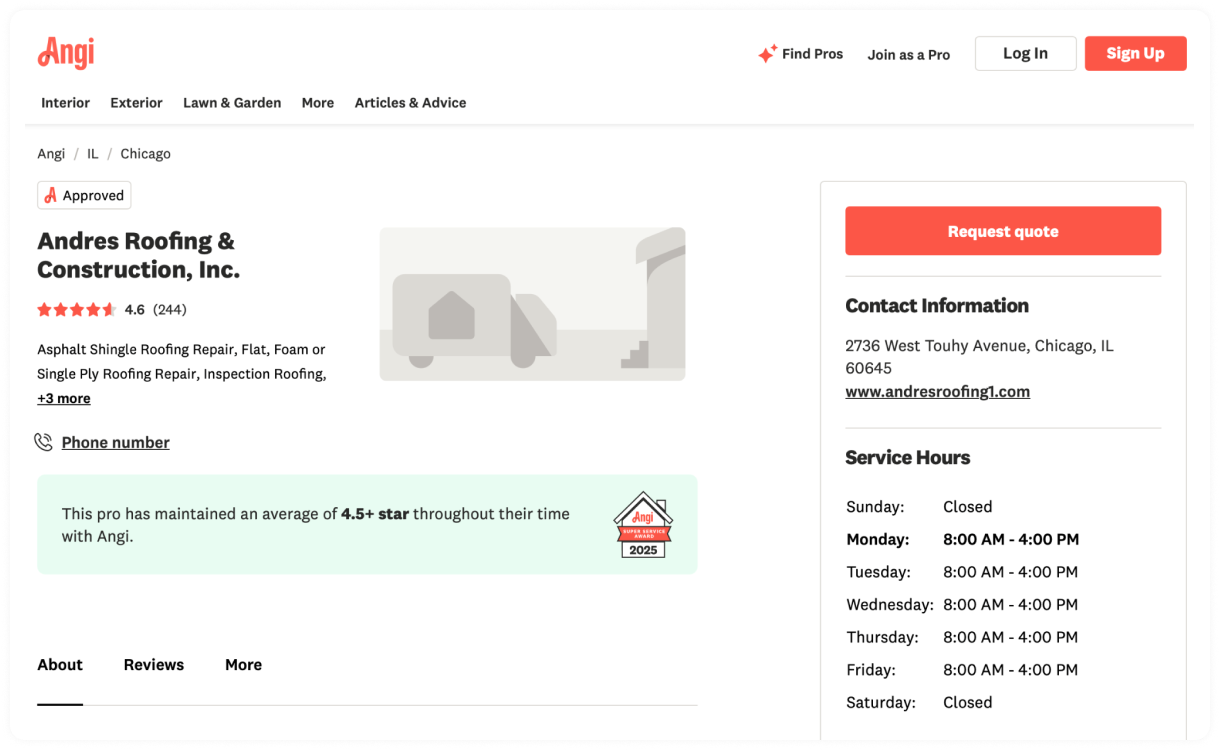
Angi is the best review platform for US home-service companies because customers use it when they are planning a real project, not only researching a business name. Its categories cover more than 500 services, including plumbing, roofing, cleaning, landscaping, remodeling, and appliance repair.
- Best for: US contractors and local companies completing residential projects.
- Why it matters: Reviews appear alongside service information when homeowners are comparing professionals and requesting quotes.
- Keep in mind: Creating a basic profile is free, but greater visibility and access to leads may require paid advertising. Lead quality and cost can differ by service and location, so track how many enquiries become paying jobs.
Angi does not accept anonymous reviews. Reviewers must provide contact information and confirm that they are not connected to the company or one of its competitors. The platform combines automated checks with human investigation to identify suspicious feedback.
Best Review Sites for Travel and Hospitality Businesses
Travelers use several platforms during the same booking journey. Tripadvisor is built around research and comparison, while Booking.com and Expedia combine reviews with accommodation bookings. OpenTable plays a similar role for restaurants by connecting diner feedback with reservations.
Hotels should usually maintain Tripadvisor alongside the booking platforms that generate the most reservations. Restaurants can prioritize Tripadvisor for travelers and OpenTable when reservations form a meaningful part of the business.
|
Platform |
Best for |
Primary market |
Reach |
Cost |
Review model |
| Tripadvisor Top pick |
Hotels, restaurants, attractions, and tour operators | Global | 400M+ monthly users | Free listing; paid advertising and profile upgrades | Traveler reviews screened using automated and manual fraud detection |
| Booking.com | Hotels, apartments, guesthouses, and vacation rentals | Global; particularly strong in Europe | ~500M monthly website visits | Commission charged on completed bookings | Only guests with a Booking.com reservation can review the property |
| Expedia | Accommodation providers targeting international travelers | Global; strongest in North America | ~7M monthly visits | Commission-based; terms vary | Reviews are connected with eligible travel bookings |
| OpenTable | Reservation-led restaurants | Global | 3M+ monthly visits | Paid restaurant plans and cover fees | Reviews come from diners who booked and visited through OpenTable |
Our Top Pick in This Industry: Tripadvisor
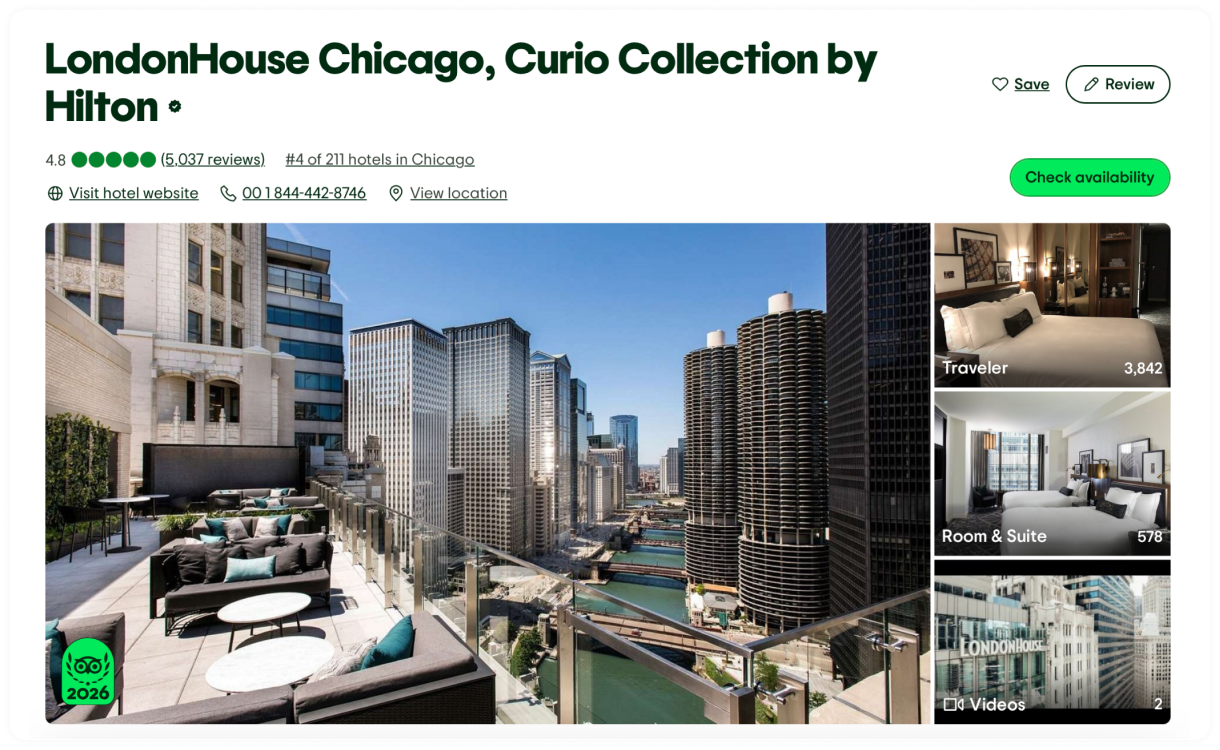
Tripadvisor is the first profile most travel and hospitality businesses should claim. Its listings cover more than eight million hotels, restaurants, attractions, and other places, giving travelers one place to compare options even when they eventually book somewhere else.
- Best for: Hotels, restaurants, attractions, tours, and other businesses serving travelers.
- Why it matters: Review quality, quantity, recency, and consistency contribute to Tripadvisor’s popularity ranking, which affects where a business appears against nearby alternatives.
- Keep in mind: Claiming and managing the listing is free. Premium profile features, advertising, and sponsored placements cost extra, but paying does not allow a business to change its traveler rating or remove valid criticism.
Tripadvisor analyzes review activity for signs of fraud, including unusual submission patterns, reviewer behavior, and location data. It also prohibits incentives, so businesses can ask guests for honest feedback but cannot offer a discount, gift, or free service in return.
Claim your free Tripadvisor listing
Best Review Sites for Healthcare Providers and Law Firms
Healthcare and legal services involve different decisions, so businesses should focus on the platform that matches their profession. Healthgrades, Zocdoc, RateMDs, and Vitals help patients research healthcare providers. Avvo is designed specifically for people comparing US attorneys.
For medical practices, Healthgrades offers the broadest provider coverage, while Zocdoc becomes more valuable when online appointment booking is part of the patient journey. For a US law firm, Avvo is the clear industry-specific choice.
|
Platform |
Best for |
Primary market |
Reach |
Cost |
Review model |
| Healthgrades Top pick |
Doctors, specialists, dentists, and medical practices | US | 7M+ monthly users | Free provider profile; paid promotion available | Patient reviews vetted against content and fraud guidelines |
| Zocdoc | Practices accepting online appointments | US | ~30 million annual users | No upfront subscription; fee for new-patient bookings | Verified reviews come from patients who interacted with a practice they booked through Zocdoc |
| RateMDs | Doctors seeking visibility in the US and Canada | US and Canada | 2M+ monthly users | Free profile claim; paid promotion available | Firsthand patient ratings; suspicious or rule-breaking content can be removed |
| Vitals | Maintaining an additional US doctor listing | US | 5M patients served | Free physician profile | Patient ratings and reviews appear on physician profiles |
| Avvo | Lawyers and law firms | US | 65M+ annual visitors | Free profile; paid marketing options | Reviews limited to people who hired or consulted with the attorney |
Our Top Pick in This Industry: Healthgrades
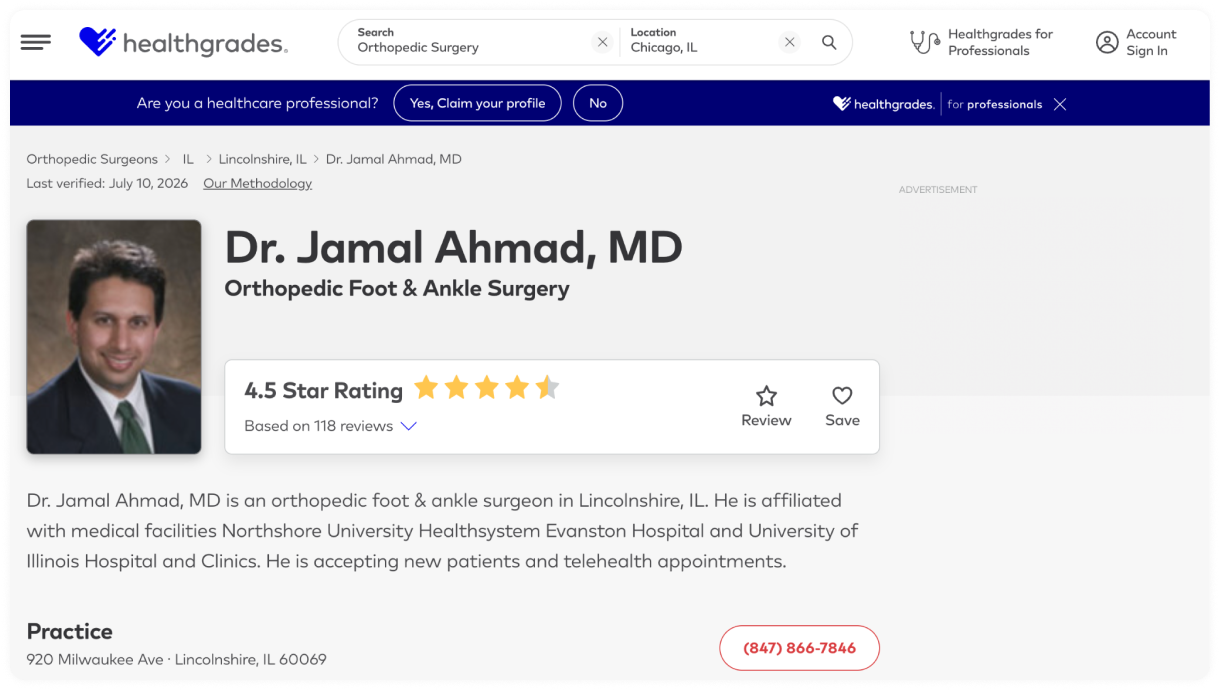
Healthgrades is the first healthcare-specific profile most US doctors and medical practices should manage. The platform creates profiles using data from sources such as the National Provider Identifier Registry, which means a provider may already have a page even if the practice has never claimed it.
- Best for: US doctors, specialists, dentists, and medical practices.
- Why it matters: Patients can compare providers using reviews alongside experience, specialties, insurance information, hospital affiliations, and appointment options.
- Keep in mind: Claiming a provider profile is free, but hospitals and medical groups can pay to promote profiles. Sponsored placements are identified separately and do not allow providers to influence their review scores.
Healthgrades says it vets patient feedback against its community guidelines and removes fraudulent reviews. Doctors cannot pay for positive feedback or pay to remove negative reviews. Practices should claim existing profiles, correct inaccurate information, and respond carefully without revealing protected patient information.
Claim your free Healthgrades profile
Running a law firm? Start with Avvo instead. Its profiles cover more than 97% of licensed US attorneys, and client reviews appear alongside credentials, peer endorsements, disciplinary information, and answers contributed to its legal Q&A forum.
Best Review Sites for Employers
Employer review sites shape how candidates see a company before they apply. They can also rank prominently when someone searches for a company’s name followed by terms such as “jobs,” “salary,” “culture,” or “reviews.”
Glassdoor and Indeed have the broadest relevance for global hiring. Comparably adds structured information about culture, leadership, and compensation, while kununu deserves priority for companies recruiting in Germany, Austria, and Switzerland.
|
Platform |
Best for |
Primary market |
Reach |
Cost |
Review model |
| Glassdoor Top pick |
Companies recruiting across several markets | Global | 55M+ monthly visitors | Free employer account; paid branding plans | Anonymous employee and interview reviews moderated using automated and human checks |
| Indeed | Employers already posting jobs on Indeed | Global | 350M+ global monthly visitors | Free Company Page; paid premium branding available | Anonymous reviews from current and former employees; reviews moderated before publication |
| Comparably | US companies building a culture-led employer brand | Primarily the US | ~417K to 420K monthly visits | Free company page; paid employer-branding services | Anonymous, structured employee ratings across culture and workplace categories |
| kununu | Employers recruiting in German-speaking markets | Germany, Austria, and Switzerland | 3M+ visits every month | Free profile; paid employer-branding plans | Anonymous employee, applicant, and salary submissions checked before publication |
Our Top Pick in This Industry: Glassdoor
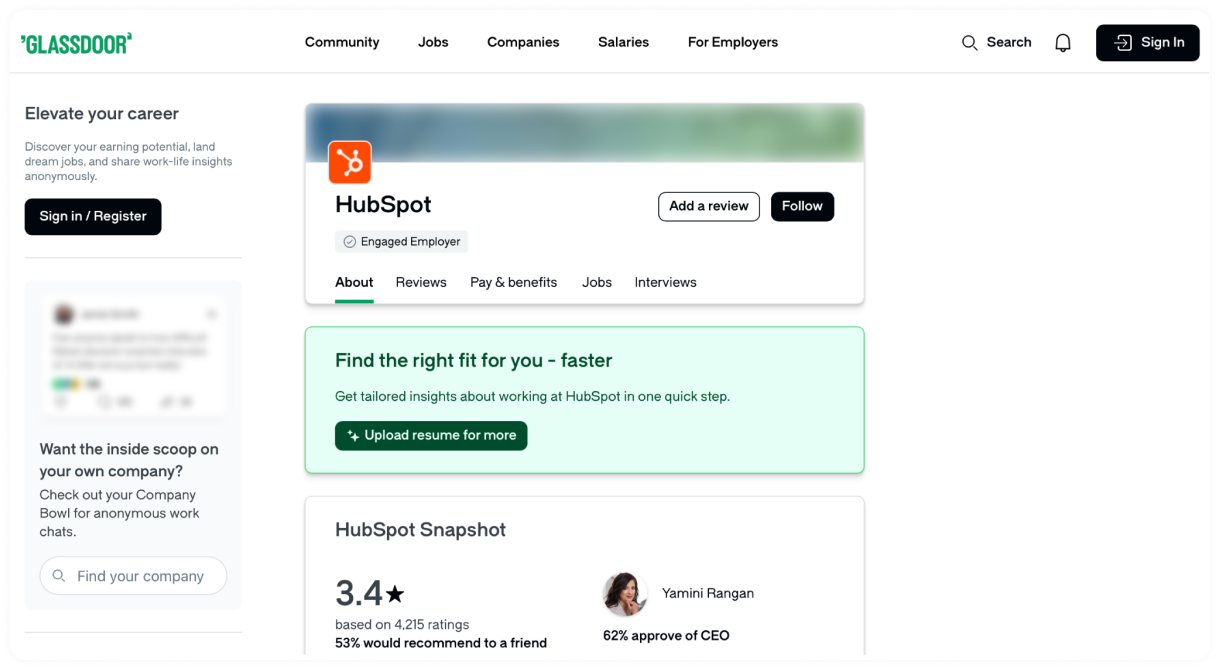
Glassdoor is the first employer review profile most companies should claim. Candidates use it to research employee experiences, salaries, benefits, interviews, leadership, and company culture before deciding whether to apply or accept an offer.
- Best for: Companies that recruit regularly or compete for candidates across several markets.
- Why it matters: A Glassdoor profile can shape a candidate’s first impression of the workplace before they visit the company’s careers page.
- Keep in mind: Employers can request and respond to reviews, but they cannot edit employee feedback. The free account covers basic profile and review tools, while branded content, deeper insights, and competitive benchmarking require a paid plan.
Glassdoor reviews are anonymous and go through automated moderation, with human review used in some cases. A company can flag content that appears to break the community guidelines, but disagreement with a negative opinion is not enough to have it removed.
Quick note: Glassdoor is now part of Indeed, although it still has its own site, reviews, and brand. The two platforms share one login and connected employer tools, so companies using both should treat them as two parts of the same employer-brand strategy.
Claim your free Glassdoor employer profile
How to Choose Which Review Sites to Prioritize
You do not need a profile on every review site in this list. Most companies can build a shortlist based on their business model. Here’s how to approach it:
- Local businesses: Start with Google Business Profile and add a few platforms your customers already use, such as Yelp, Facebook, BBB, Trustpilot, or an industry-specific site. US consumers check six review sites on average when choosing a local business, according to BrightLocal’s 2026 survey.
- Software companies: Choose one or two software review sites, such as G2, Capterra, or TrustRadius. Add a general platform like Trustpilot to collect feedback about the overall customer experience.
- B2B service providers: Prioritize a platform where buyers compare agencies or professional services, such as Clutch. Add Google Business Profile for local visibility or Trustpilot for broader company reviews.
- Consumer and ecommerce brands: Focus on the platforms customers encounter while researching products and checking a company’s reputation. These could include Google, Trustpilot, Facebook, and the marketplaces where you sell.
- Travel, healthcare, legal, and other specialist businesses: Start with a leading platform in your industry. Add one or two general or regional sites that your customers use.
Link-building tip: Some of these platforms also let you link to your website, but that alone is not a reason to use them. If link building is a priority, check our list of free backlink opportunities.
Beyond your business type, ask these four questions as you build your shortlist:
- Does it appear when someone searches for our brand? A platform that already ranks for your company name should be high on your list.
- Does our audience use it? Check whether it serves your industry and primary market and where it fits into the buying process.
- What will it cost to maintain? Include subscriptions, lead fees, staff time, and the work required to collect and answer reviews.
- How does it check reviews? Look at whether the platform verifies purchases, bookings, product use, or reviewer identities. Check how it moderates reviews and handles reports of fraudulent feedback.
Your answers should leave you with a shortlist your team can maintain. Claim each profile, complete every important field, monitor new feedback, and reassess your priorities when you enter a new market or launch a new product.
Best Practices for Managing Your Review Profiles
Once you have your shortlist, claim each profile and complete the information customers need, including your website, contact details, opening hours, service area, and product or service description.
A few simple habits will help you keep those profiles useful:
- Keep your business information consistent and update it when something changes.
- Follow each platform’s rules when asking for reviews. Some allow review requests, while Yelp tells businesses not to ask.
- Never offer rewards or ask only your happiest customers for feedback.
- Respond to both positive and negative reviews without copying the same answer every time.
- Monitor new reviews and report those that break the platform’s rules—not reviews you simply disagree with.
You do not need to check every profile daily. What matters is keeping the information accurate and responding while the customer’s experience is still recent.
What Comes After Reviews
Reviews tell people what your customers think, but they can only do so much if someone has never heard of your business. That’s where independent editorial coverage can help.
Search engines have paid attention to third-party mentions for years, and AI tools now use outside sources when deciding which businesses to recommend. So, after you’ve covered the right review sites, getting featured on publications your customers trust is a natural next step.
Related reading
- • 12 Best Link Building Tools for SEO in 2026
- • 175+ Free Guest Posting Sites List 2026. Top Websites To Submit Guest Posts
- • Ecommerce Link Building: 7 Proven Tactics, Strategy and Costs in 2026
- • 9 Best Free Backlink Checkers and Monitoring Tools in 2026
- • Best SEO Affiliate Programs: Top 35+ Programs Compared
- • Vetted List of 60+ Profile Creation Sites for High-DA Backlinks: Free & Authoritative Platforms