21 Handpicked Advertising Platforms: Compare Features, Costs, and Use Cases

Choosing a platform for your advertising campaign isn't just about picking the most popular option. The challenge is finding a channel that matches your advertising goals without stretching your budget or your team's resources.
To help you compare your options, I've selected 21 online advertising platforms across seven categories, focusing on relevant options rather than trying to cover every platform on the market.
You'll also find recommendations for different business needs, whether you're running B2B or B2C campaigns, managing a small business, promoting an ecommerce store, or planning enterprise-level advertising.
By the end, you'll have a clearer idea of which digital advertising platforms are best to consider for your next campaign.
How I Selected the Advertising Platforms for This List
There are hundreds of online advertising platforms, and comparing them all in a single article wouldn't be practical. Instead, I've focused on platforms that represent different ways to reach potential customers, promote products, and distribute content.
I selected 21 platforms across seven categories. The selection covers both broad advertising solutions, such as Google Ads and Meta Ads, and more specialized options, including LinkedIn Ads for professional audiences, Yelp Ads for local businesses, and Collaborator for sponsored content placements.
Here's what I considered when putting the list together:
|
Selection criterion |
What I looked for |
|
Advertising purpose |
Platforms that support different goals, including lead generation, brand awareness, product promotion, search advertising, and content distribution |
|
Audience and reach |
Solutions that help businesses reach broad consumer audiences, professional groups, local customers, online shoppers, or readers of publisher websites |
|
Advertising formats |
A range of options, from search and social ads to video, display, retail media, and sponsored content |
|
Campaign management |
Platforms that provide ways to launch, manage, target, or buy advertising placements |
|
Business needs |
Options relevant to B2B and B2C companies, small businesses, ecommerce brands, and enterprise advertisers |
What I've Left Out
To keep the comparison focused, I haven't included every service connected with online promotion. This guide concentrates on paid digital advertising platforms and publisher marketplaces rather than covering:
- Traditional advertising channels, such as print, radio, and offline TV advertising
- Organic marketing channels, such as unpaid social media posts and SEO activities
- Marketing and analytics tools, which help plan, track, or optimize campaigns but don't independently provide advertising inventory
- Standalone affiliate and influencer marketing services, which use different partnership and compensation models
21 Best Advertising Platforms by Category
Advertising platforms differ in how they help businesses reach potential customers, promote products, and drive sales. Some focus on search traffic and local customers, while others offer access to social media audiences, publisher networks, retail shoppers, or streaming viewers.
To make it easier to compare your options, I grouped 21 advertising platforms into seven categories based on their main functions and advertising models. Each category highlights the key differences between platforms, including their target audiences, ad formats, and pricing.
With the main types of advertising platforms in mind, let's look at what each category offers and how the available options differ. I suggest starting with digital PR and native advertising platforms.
Digital PR & Native Advertising Platforms
Digital PR and native advertising platforms help businesses promote their brands through third-party websites and publisher networks. However, they differ in how advertisers buy placements and distribute content.
Marketplaces like Collaborator let advertisers choose particular websites and order sponsored placements directly. At the same time, native advertising networks like Taboola and Outbrain distribute ads through recommendation widgets across publisher sites and apps.
The table below compares these platforms by their target users, advertising formats, and pricing models.
|
Platform |
Best for |
Advertising formats |
Pricing |
|
|
|
|
|
|
|
|
|
|
|
Let’s review each platform individually, starting with Collaborator.
Collaborator
Pros:
- Skip manual publisher outreach
- Get your content published fast
- Protect placements for 3 months
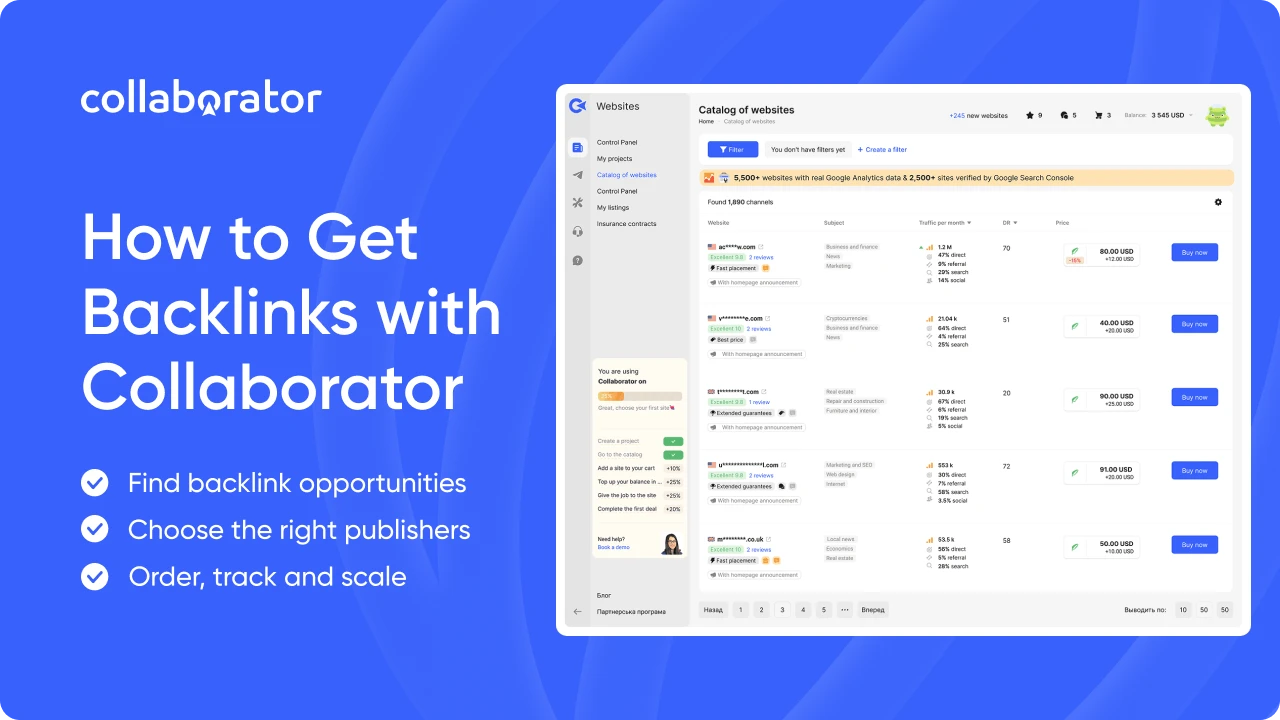
Collaborator is a PR distribution marketplace that connects advertisers with publishers in over 150 countries. Its catalog features more than 44K media outlets, giving businesses a wide range of options to choose from and allowing them to order guest post placements with backlinks directly through the platform.
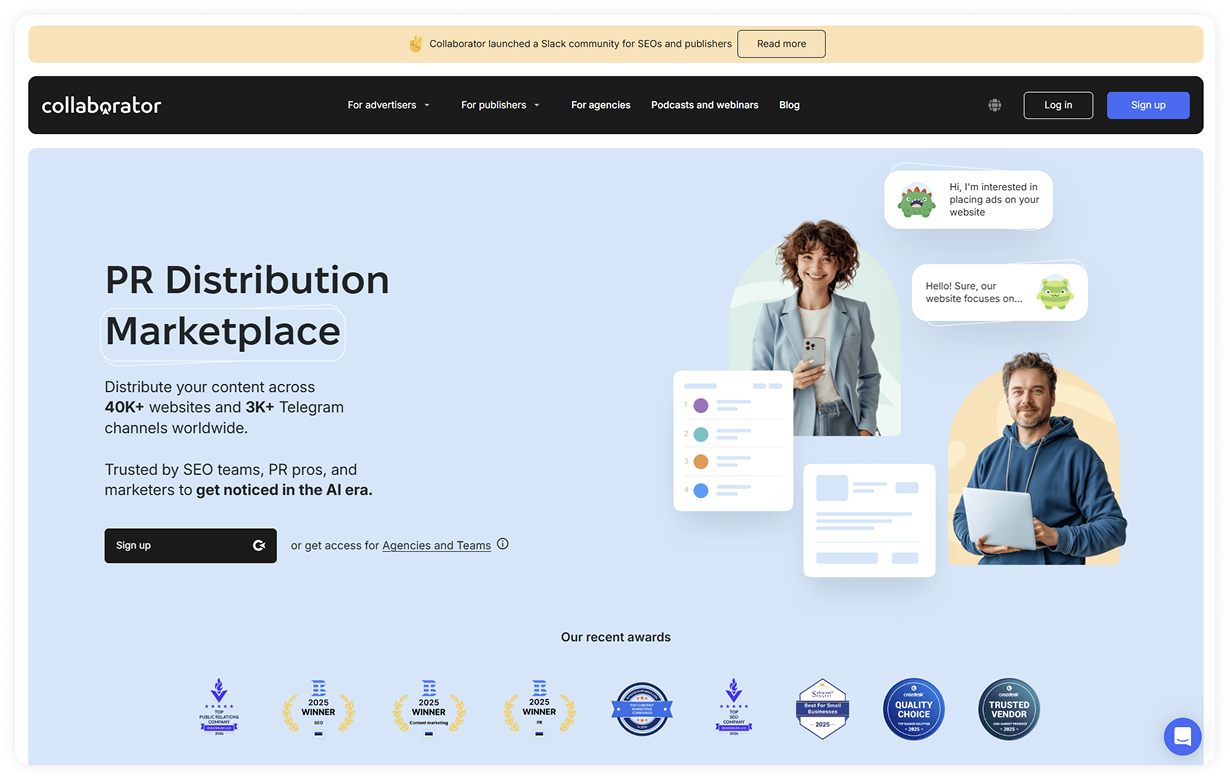
Advertisers can browse the catalog and select publishers without a subscription or an initial balance top-up, based on factors such as:
- Niche and audience relevance. Find websites related to your industry and target audience
- Geography. Choose publishers in specific countries and markets using audience location data from Google Analytics
- Website metrics. Compare SEO metrics from Majestic, Ahrefs, Serpstat, Google Search Console, and other tools
- Placement terms. Review pricing, content requirements, and publication conditions. Over 90% of placements go live within 48 hours
- Guarantees. All placements come with a 3-month guarantee against removal and non-indexation by default. There is also extended guarantee which prolongs protection up to a year
Unlike native advertising platforms such as Taboola and Outbrain, which distribute sponsored content through publisher networks, Collaborator focuses on direct content placements on selected publisher websites.
With its Team Account, Collaborator is worth considering for SEO, GEO, and PR agencies that manage multiple clients and need an organized way to oversee projects, assign roles, and manage budgets.
Taboola
Pros:
- Broad publisher reach
- Multiple ad formats
- Automated campaign optimization
Taboola is a native advertising and content discovery platform that helps advertisers promote content across publisher websites and other digital properties. Sponsored recommendations appear alongside editorial content, giving brands opportunities to reach audiences beyond search and social channels.
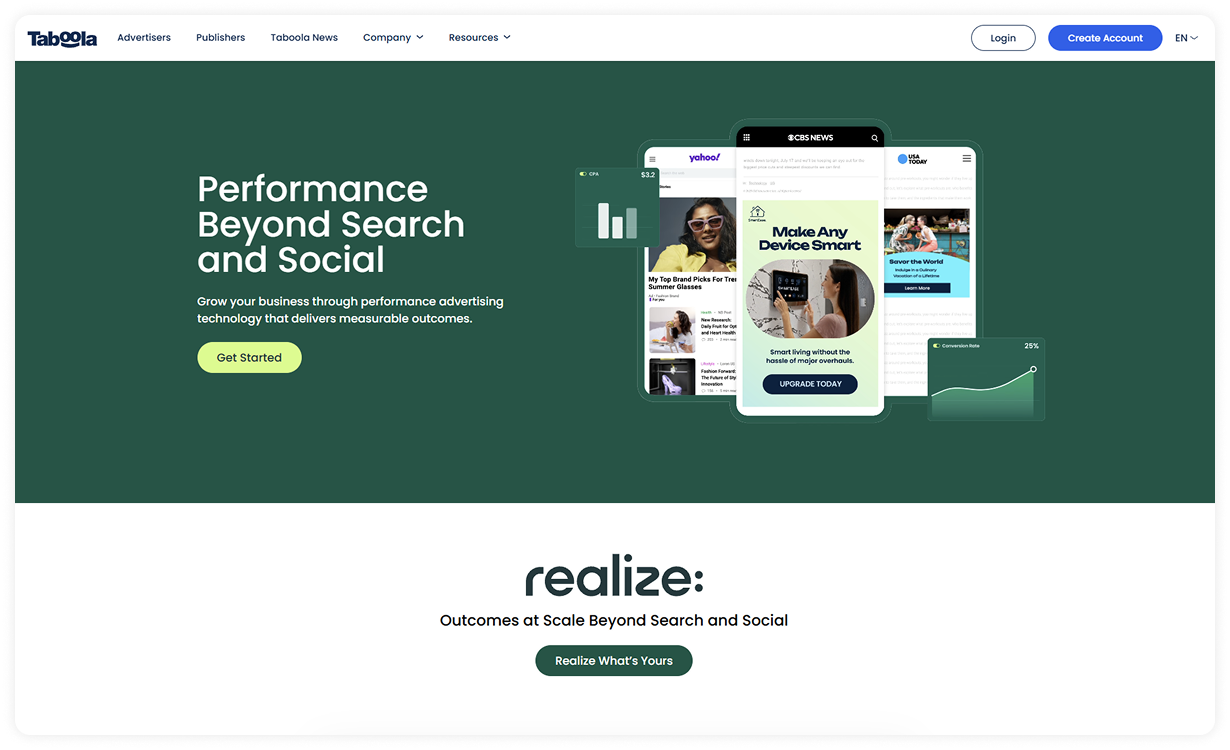
Key features include:
- Targeting. Options based on location, operating system, and device
- Campaign management. Set CPC bids, budgets, and campaign goals
- Reporting. Track clicks, engagement, and conversions to assess performance
Taboola is worth considering for content promotion, audience discovery, and traffic acquisition. However, results can vary across placements and audiences, so compare traffic quality and conversion performance before scaling.
Outbrain
Pros:
- Reach publisher audiences
- Run native and video ads
- Optimize bids and targeting
Outbrain is a native advertising platform that distributes sponsored recommendations across publisher websites and apps. It helps advertisers promote articles, videos, products, and other content to audiences beyond search and social media.
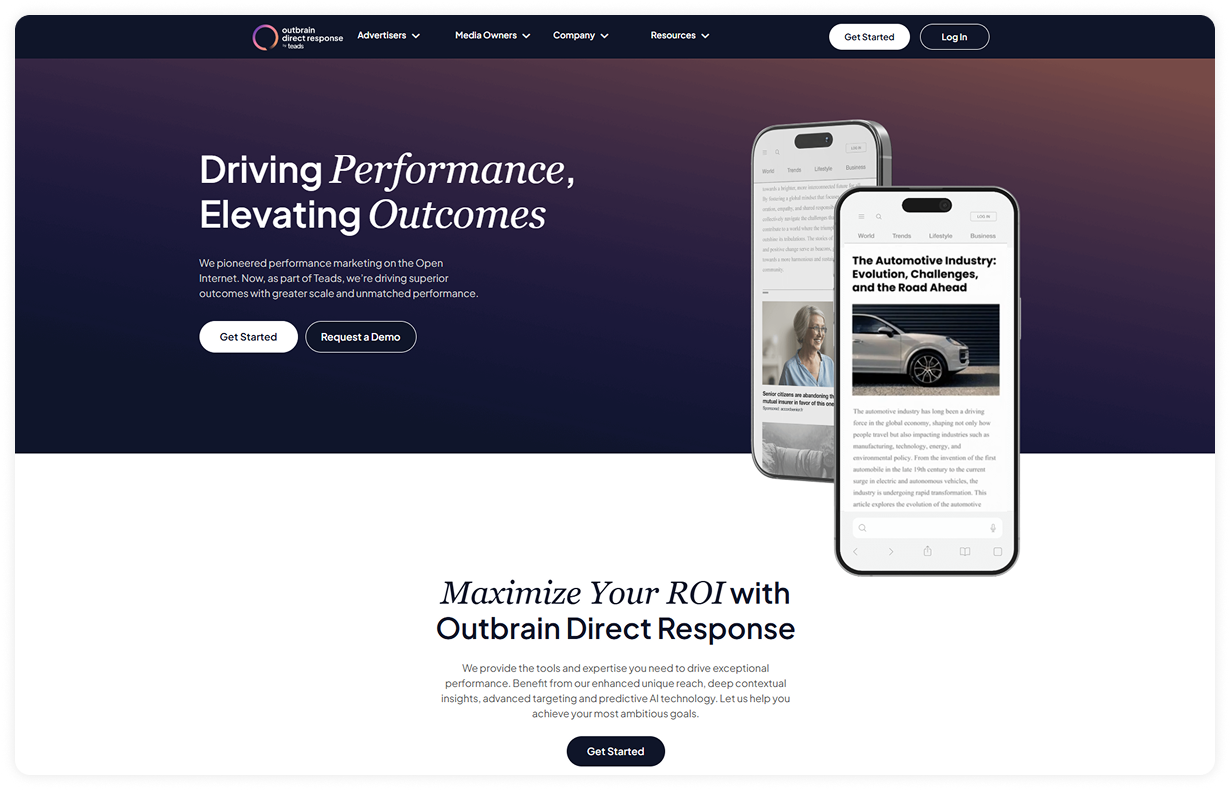
Key features include:
- Targeting. Interest, contextual, geographic, and audience-based targeting
- Optimization. Monitor clicks, CTR, and conversions, and adjust bids and placements
Like Taboola, Outbrain focuses on content discovery, but advertisers should compare their publisher networks, available formats, and targeting options rather than assume they're interchangeable. Performance also depends on creative quality and audience fit.
Search & Local Advertising
Search and local advertising platforms help businesses connect with potential customers at different stages of the buying journey. Search ads target users who are already looking for specific products or services, while local advertising solutions help businesses reach people researching nearby providers.
As an example, Google Ads and Microsoft Advertising offer search campaigns alongside other ad formats, whereas Yelp Ads focuses on increasing visibility among consumers looking for local businesses.
Here's how Google Ads, Microsoft Advertising, and Yelp Ads compare in terms of audience, ad formats, and pricing.
|
Platform |
Best for |
Advertising formats |
Pricing |
|
|
|
|
|
|
|
|
|
|
|
Let's break down the key features of these platforms, starting with Google Ads.
Google Ads
Pros:
- Reach active searchers
- Run campaigns across Google
- Automate bid optimization
Google Ads is Google's advertising platform for reaching potential customers across Search, YouTube, websites, apps, and other Google properties. It supports several campaign types, each designed for different marketing goals.
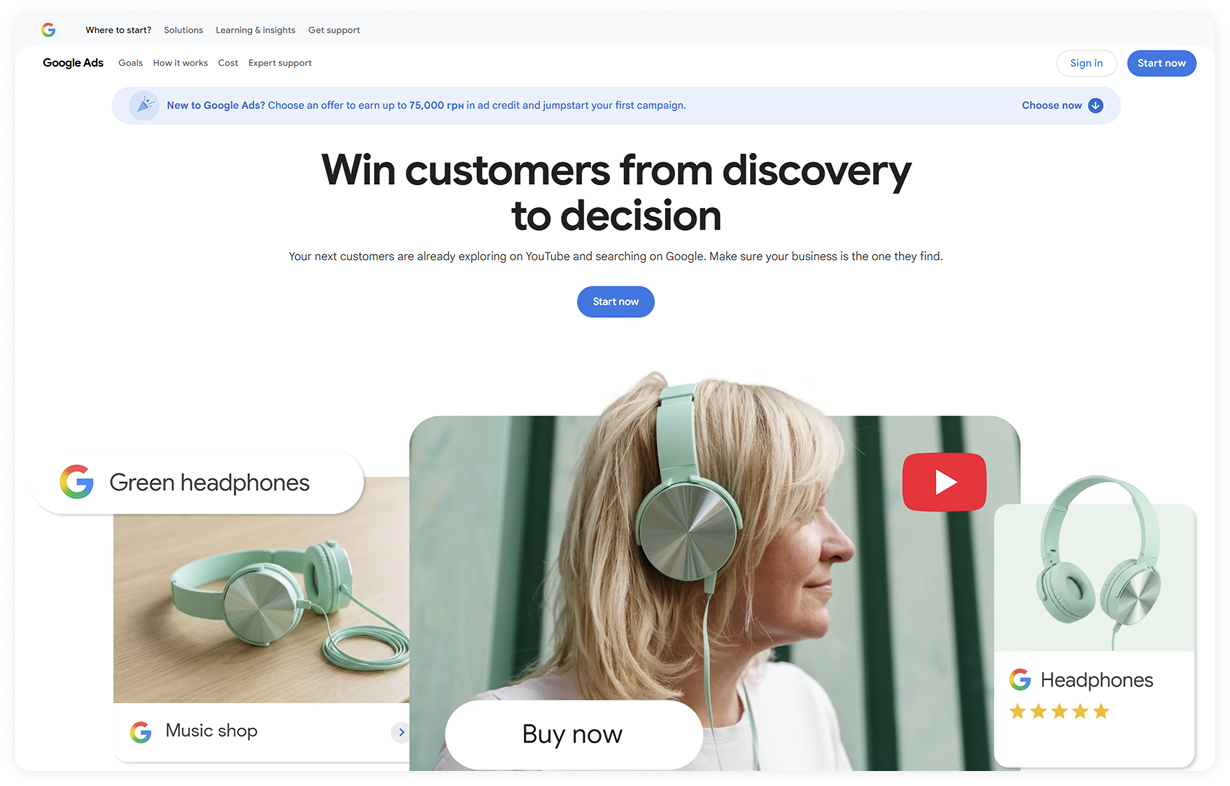
Key features include:
- Campaign types. Search, Display, Video, Shopping, Demand Gen, App, and Performance Max
- Targeting. Keywords, audience segments, geographic locations, demographics, and remarketing, depending on the campaign type
- Bidding and optimization. Automated bidding strategies, including Smart Bidding, which uses machine learning to optimize bids for conversions or conversion value
- Performance tracking. Conversion tracking and campaign reporting to measure results
Google Ads offers broad reach and flexible campaign options, but competitive keywords can drive up costs, and effective optimization requires reliable conversion data.
Microsoft Advertising
Pros:
- Reach Bing users
- Import Google Ads campaigns
- Target specific audiences
Microsoft Advertising is Microsoft's advertising platform, allowing businesses to reach potential customers through Bing and other search partners, as well as Microsoft's own properties and partner websites.
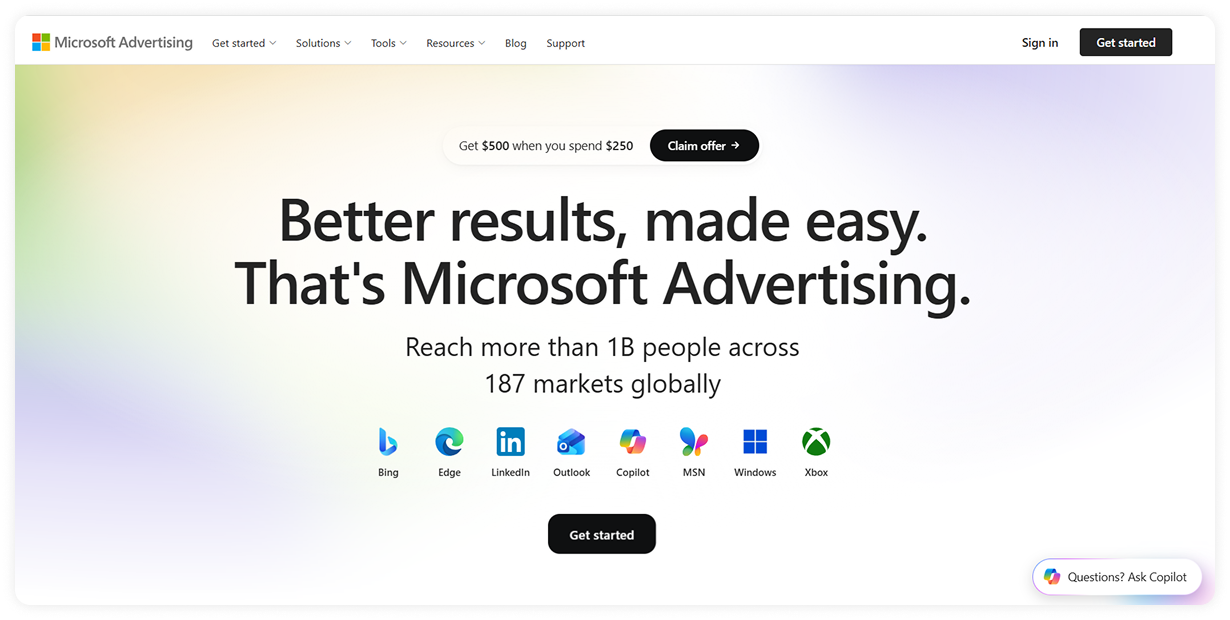
Key features include:
- Targeting. Keywords, geographic locations, demographics, and audience segments
- Campaign management. Import eligible campaigns from Google Ads instead of building them from scratch
- Performance tracking. Monitor clicks, conversions, and campaign results using built-in reporting and conversion tracking
Microsoft Advertising can complement Google Ads by providing access to additional search inventory and audience placements. However, traffic volume and campaign performance depend on the target market, industry, and audience.
Yelp Ads
Pros:
- Reach local customers
- Boost visibility in search results
- Track calls and messages
Yelp Ads helps local businesses reach people searching for products and services on Yelp. Sponsored placements appear in relevant search results and on pages of similar businesses, giving advertisers more visibility among potential customers researching local providers.
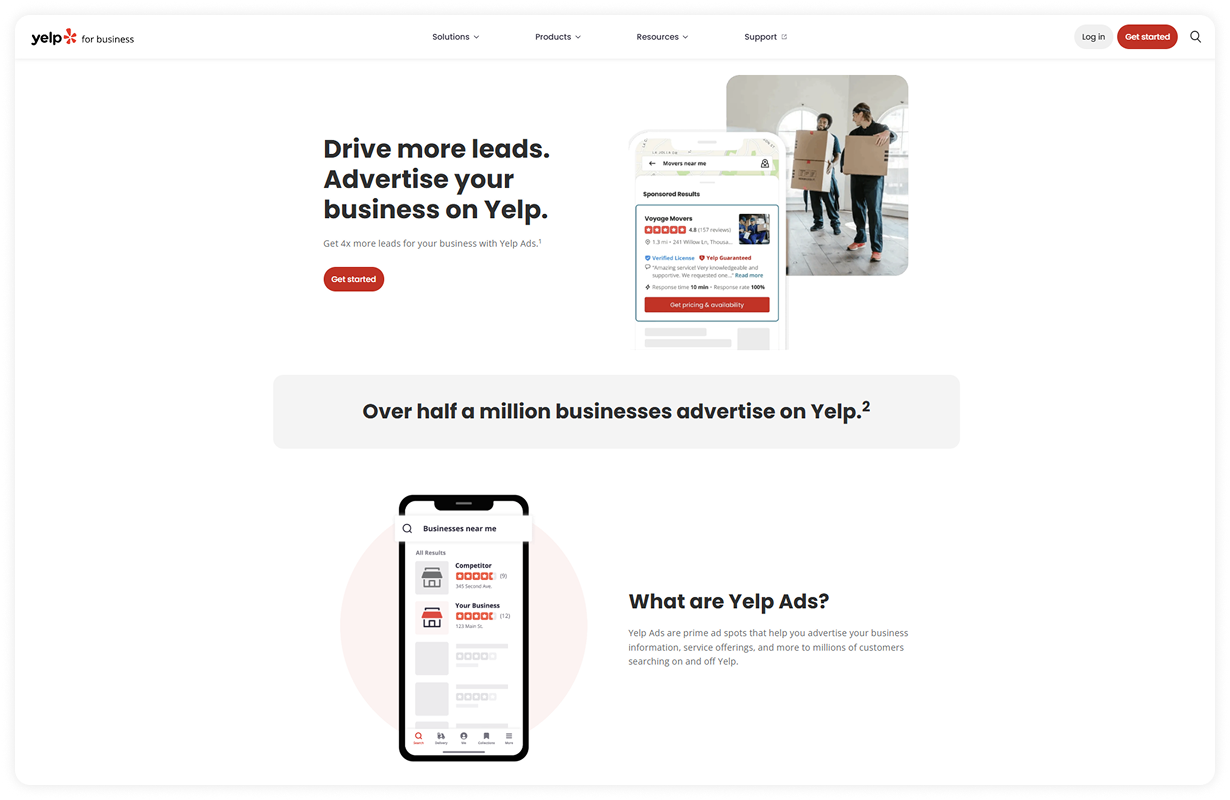
Key features include:
- Ad placements. Geo-targeted Sponsored Results across Yelp's website and mobile app
- Targeting. Reach users searching for relevant business categories and services in specific locations
- Lead generation. Encourage customers to call, request a quote, send a message, or book an appointment
- Performance tracking. Measure calls, messages, quote requests, bookings, and supported website actions
Yelp Ads offers access to users actively researching local businesses, but campaign reach depends on geographic coverage, category availability, and the size of Yelp's audience in the target market.
Social Media Advertising
Social media advertising platforms help brands reach potential customers while they browse, watch videos, and interact with content. However, each platform offers different audience targeting options and advertising opportunities.
Meta Ads provides access to audiences across Facebook and Instagram, TikTok Ads focuses on short-form video and product discovery, while LinkedIn Ads helps businesses reach professionals based on their career and company attributes.
Here's how Meta Ads, TikTok Ads, and LinkedIn Ads compare in terms of target audiences, advertising formats, and pricing.
|
Platform |
Best for |
Advertising formats |
Pricing |
|
|
|
|
|
|
|
|
|
|
|
Let's start with Meta Ads and look at how it helps businesses reach audiences across Facebook and Instagram.
Meta Ads (Facebook and Instagram)
Pros:
- Reach Facebook and Instagram users
- Target by interests and demographics
- Retarget website visitors
Meta Ads is Meta's advertising platform for creating and managing campaigns across Facebook, Instagram, Messenger, and other available placements. It supports a range of campaign objectives, from brand awareness to sales and lead generation.
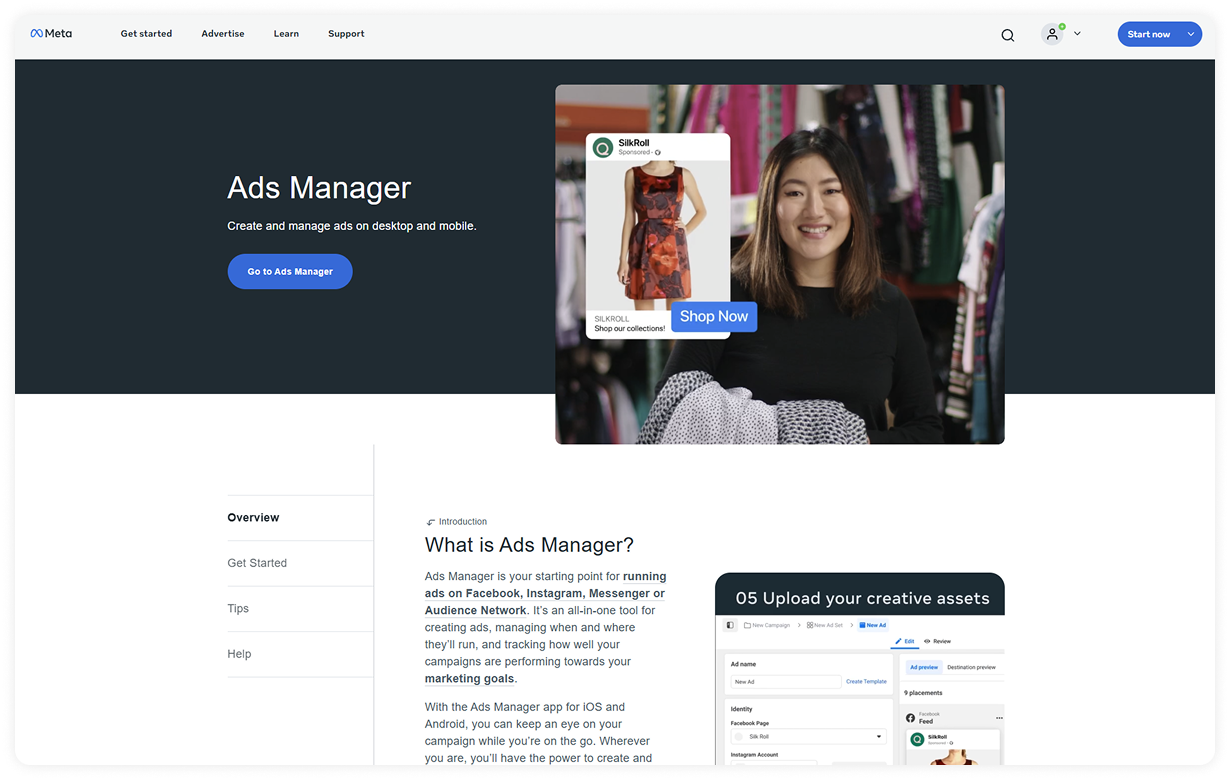
Key features include:
- Targeting. Audience segments based on demographics, interests, and custom audiences
- Retargeting. Reach people who have interacted with your business or website
- Optimization. Use campaign objectives, conversion tracking, and automated delivery to improve results
Meta Ads offers broad consumer reach and flexible campaign options. However, creative fatigue, measurement limitations, and the need for regular testing can make campaign management challenging.
TikTok Ads
Pros:
- Reach audiences through video
- Target by interests and behaviors
- Optimize for conversions
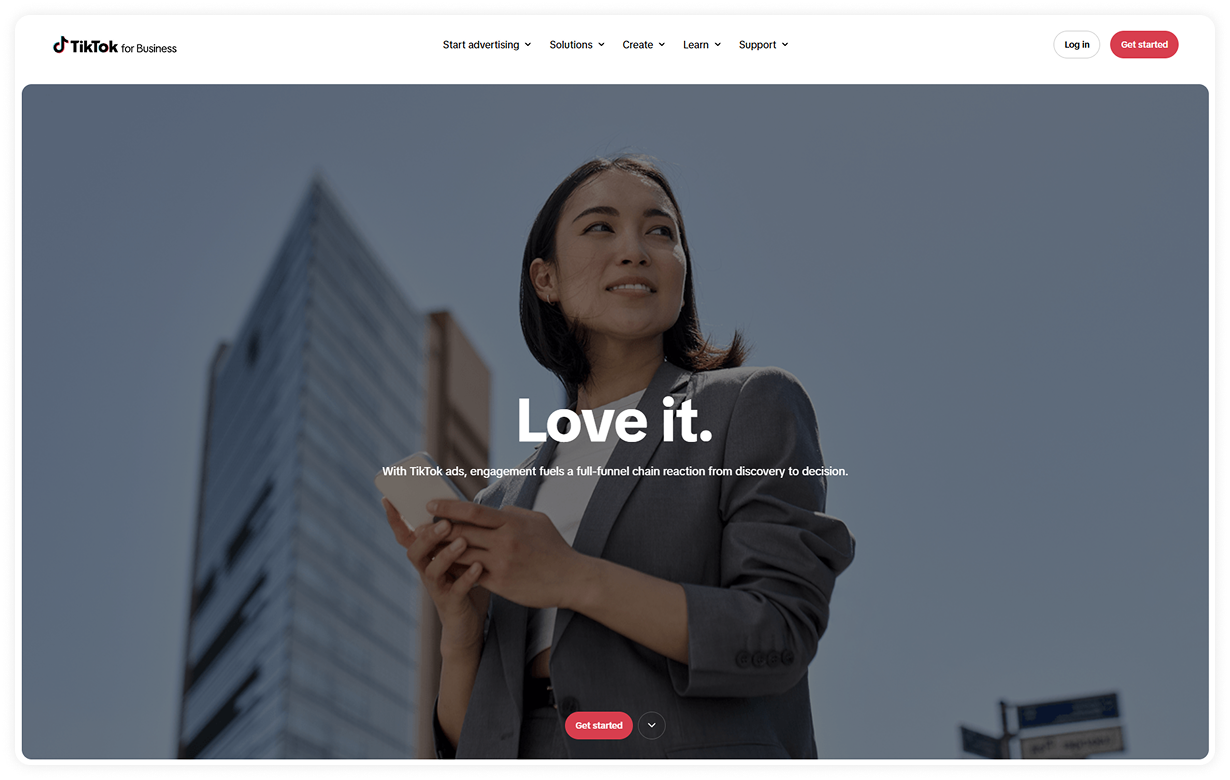
TikTok Ads is TikTok's advertising platform for reaching audiences through short-form video and other ad placements. It supports campaigns focused on brand awareness, traffic, lead generation, and sales.
Key features include:
- Targeting. Reach audiences based on demographics, interests, behaviors, location, and custom audience segments
- Campaign objectives. Choose goals such as reach, video views, website traffic, leads, and conversions
TikTok Ads creates opportunities for product discovery and audience engagement, but results depend on audience fit and creative execution. Advertisers should also account for the ongoing work of testing and refreshing video content. Its suitability depends on the target audience and market, not just age demographics.
LinkedIn Ads
Pros:
- Target by professional attributes
- Collect leads with pre-filled forms
- Track website conversions
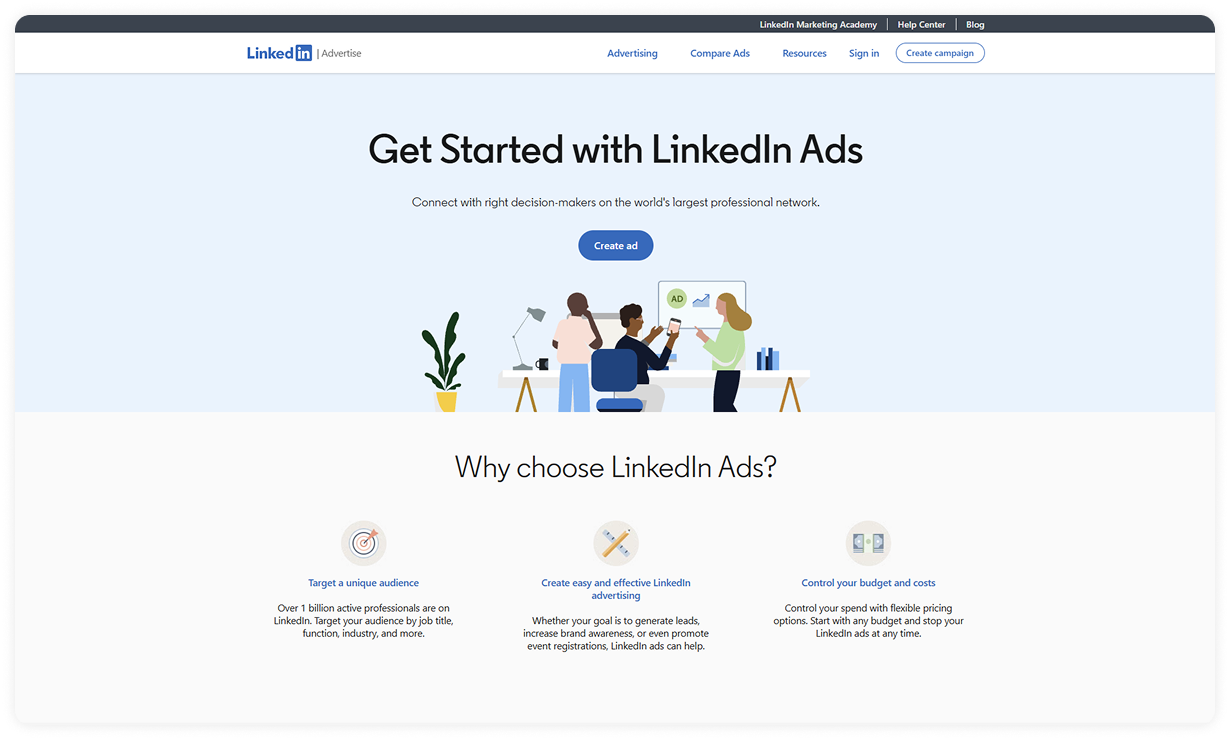
LinkedIn Ads is an advertising platform that helps businesses reach professionals using LinkedIn's profile-based targeting data. It's particularly useful for B2B campaigns, account-based marketing, lead generation, and event promotion.
Key features include:
- Professional targeting. Reach audiences by job title, function, seniority, industry, company name, and company size
- Lead generation. Collect contact details through pre-filled Lead Gen Forms
- Measurement. Track website conversions with the LinkedIn Insight Tag and use campaign reporting to evaluate results
LinkedIn's professional targeting is a major advantage, but advertising costs can be higher than on some other social platforms. Form submissions also need further qualification to determine lead quality.
Video & Streaming Advertising
Video and streaming advertising platforms help brands reach audiences through online video content and ad-supported TV services. They differ in buying options, creative requirements, and measurement capabilities.
Online video ads, such as those on YouTube and Snapchat, offer a range of formats, targeting options, and campaign objectives. Streaming TV advertising, represented here by Hulu, brings brands into professionally produced content and offers a more TV-like viewing experience.
Here's how YouTube Ads, Snapchat Ads, and Hulu Ads compare in terms of audiences, advertising formats, and pricing.
|
Platform |
Best for |
Advertising formats |
Pricing |
|
|
|
|
|
|
|
|
|
|
|
The table provides a quick overview, but let's take a closer look at what each platform offers, starting with YouTube Ads.
YouTube Ads
Pros:
- Reach audiences through video
- Choose from multiple ad formats
- Track views and conversions
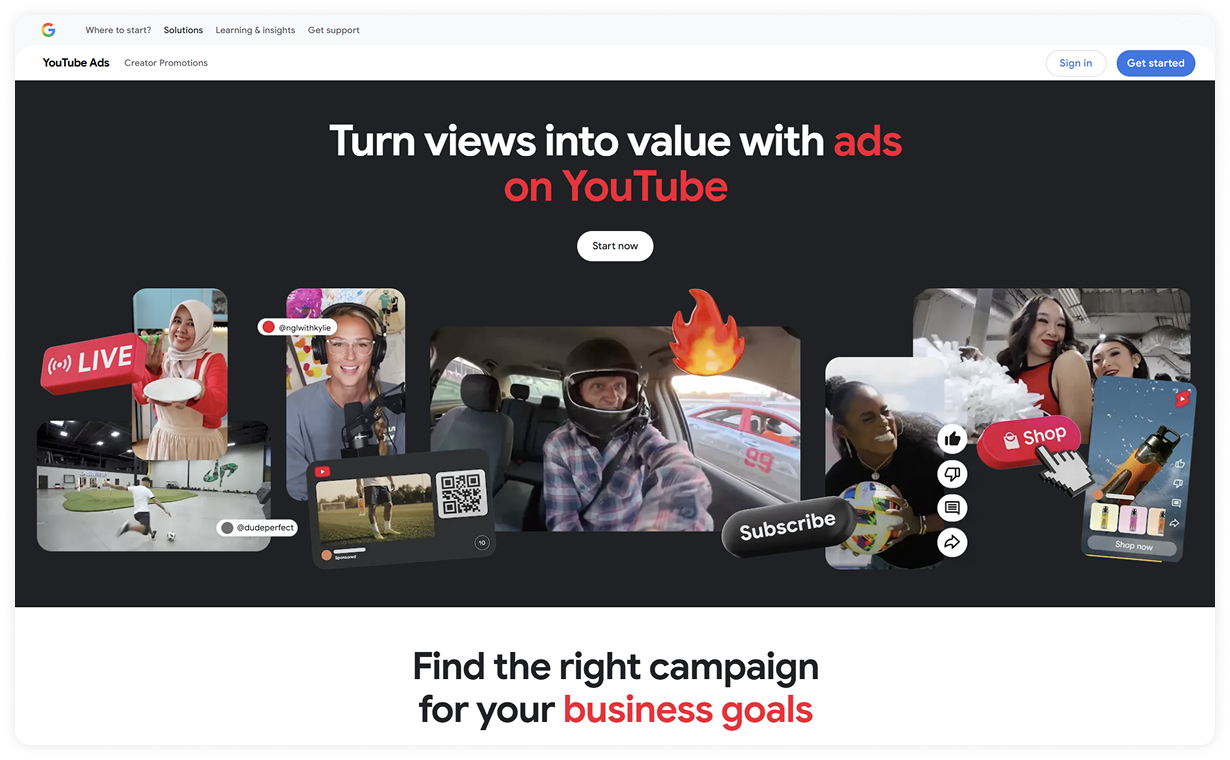
YouTube Ads is Google's video advertising solution, with campaigns created and managed through Google Ads. It helps businesses reach viewers with video content at different stages of the customer journey, from brand awareness to conversions.
Key features include:
- Targeting. Reach audiences using demographic, interest-based, and remarketing segments, as well as content placements
- Campaign objectives. Optimize campaigns for reach, video views, engagement, website traffic, leads, or sales
- Performance tracking. Measure views, interactions, and conversions through Google Ads reporting
YouTube Ads offers multiple ways to reach viewers, but campaigns require video assets, and views alone don't guarantee business results.
Snapchat Ads
Pros:
- Use interactive AR formats
- Reach mobile audiences
- Drive app installs and website visits
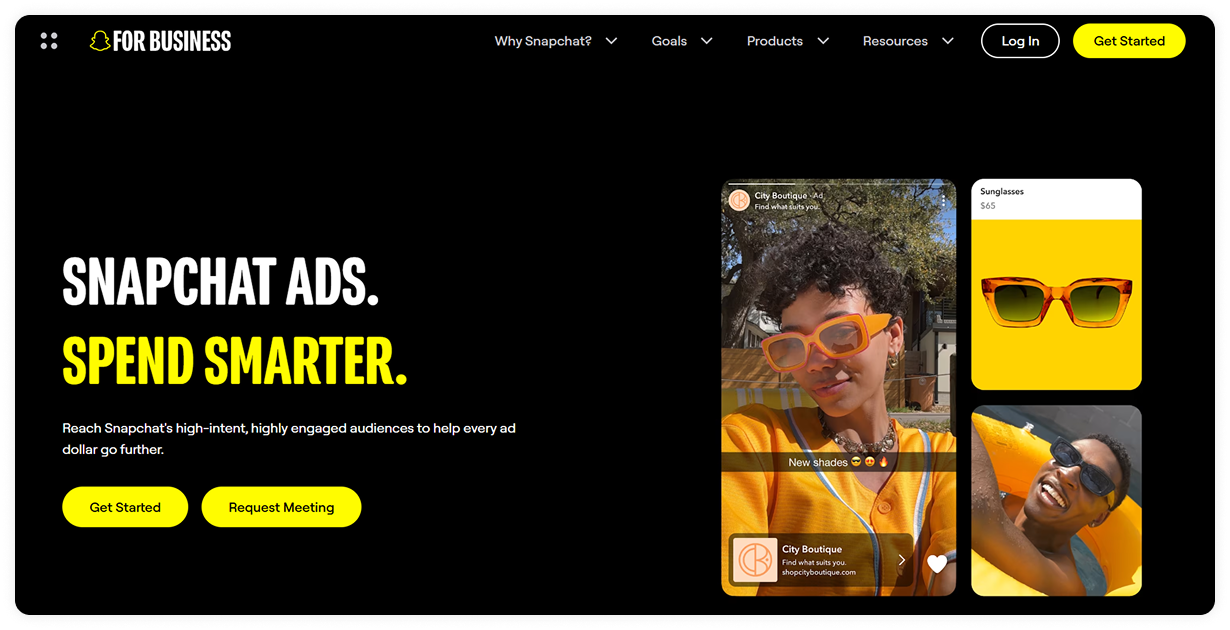
Snapchat Ads is a mobile-first advertising solution that helps brands reach audiences through full-screen visual and interactive formats. Campaigns can focus on brand awareness, website visits, app installs, and conversions.
Key features include:
- Targeting. Reach audiences using demographic, interest-based, and other available targeting options
- Campaign objectives. Optimize campaigns for awareness, engagement, traffic, app installs, or conversions
Snapchat Ads offers immersive creative formats and product discovery opportunities, particularly through AR experiences and Collection Ads. However, advertisers need platform-ready visual assets, and campaign results depend on audience fit, creative quality, and execution.
Hulu Ads
Pros:
- Reach streaming TV viewers
- Advertise alongside premium content
- Use interactive and shoppable ad formats
Hulu Ads gives advertisers access to streaming TV inventory across Hulu's content library, including Hulu Originals and shows from networks such as FX and National Geographic. Advertisers can manage campaigns through Disney Campaign Manager for Hulu or explore other buying options through Disney Advertising.
Key features include:
- Targeting. Reach viewers based on location, demographics, interests, and show genres
- Campaign management. Plan, buy, and optimize campaigns through Disney Campaign Manager
- Measurement. Access real-time campaign reporting and performance data
Hulu Ads offers TV-style storytelling and audience targeting, but its reach is primarily tied to the US market. Advertisers should also check current buying eligibility, campaign requirements, and video specifications before committing to a campaign.
E-commerce & Retail Media
Retail media platforms help brands reach shoppers while they're browsing products, comparing options, and making purchase decisions. Unlike broader awareness channels, they place ads within retailer-owned websites, apps, and other shopping environments, often closer to the point of purchase.
Amazon Ads and Walmart Connect use retail shopping data and advertising placements to reach their customers, while Pinterest Ads helps users discover products and ideas as they plan purchases.
Here's how Amazon Ads, Pinterest Ads, and Walmart Connect compare in terms of target audiences, advertising formats, and pricing.
|
Platform |
Best for |
Advertising formats |
Pricing |
|
|
|
|
|
|
|
|
|
|
|
Let's take a closer look at each platform, starting with Amazon Ads and its advertising options for brands and sellers.
Amazon Ads
Pros:
- Reach shoppers actively browsing products
- Target by keywords and products
- Track clicks, sales, and ACOS
Amazon Ads is a retail advertising solution that helps businesses promote products and brands across Amazon's shopping ecosystem. Its advertising products include options for individual product promotion, brand awareness, and audience-based campaigns.
Key features include:
- Targeting. Reach shoppers through keyword and product targeting, including automatic and manual options
- Campaign management. Set bids and budgets, select products, and manage campaign settings
- Performance tracking. Monitor clicks, sales, advertising cost of sales (ACOS), and other campaign metrics
Amazon Ads gives advertisers access to shoppers as they browse and research products. However, campaigns depend on product and account eligibility, and strong results require competitive bidding, relevant targeting, and well-maintained product detail pages.
👉🏻 If you are an Amazon seller, you may find this article helpful: How to Use Link Building for Amazon Sellers With Amazon Attribution.
Pinterest Ads
Pros:
- Reach users planning purchases
- Promote products through visual ads
- Drive traffic and sales
Pinterest Ads is an advertising solution that helps businesses reach users as they discover ideas, explore products, and plan purchases. Ads appear in Pinterest feeds and search results, blending with the platform's visual discovery experience.
Key features include:
- Targeting. Reach audiences based on keywords, interests, demographics, and previous interactions with your website or Pins
- Shopping capabilities. Upload product catalogs to create shoppable product Pins and shopping ads
- Campaign objectives. Run campaigns focused on brand awareness, video views, consideration, leads, and sales
Pinterest Ads can support visual product discovery in categories such as fashion, home decor, beauty, and food. However, campaigns rely on strong visual creatives, and results depend on audience fit and market availability.
Walmart Connect
Pros:
- Reach Walmart shoppers
- Promote products in search results
- Measure advertising performance
Walmart's website, app, and other advertising channels. It combines retail media placements with Walmart's first-party shopper data to support product discovery and sales.
Key features include:
- Targeting. Use Walmart's first-party data to reach shoppers across different stages of the purchase journey
- Campaign measurement. Access advertising performance data to evaluate visibility and sales results
Walmart Connect gives brands access to Walmart's shopping audience and retail media inventory. However, advertising opportunities depend on product availability, retailer participation, and advertiser eligibility. Available products and campaign options may also vary by advertiser type and market.
Community & Niche Advertising
Community-oriented advertising platforms help brands connect with people based on their interests, questions, and ongoing discussions. However, each platform offers a different way to reach these audiences.
Reddit Ads focuses on interest-based communities and subreddit discussions, Quora Ads reaches users researching specific topics and questions. At the same time, X Ads helps brands join real-time conversations and engage with relevant audiences.
Here's how Reddit Ads, Quora Ads, and X Ads compare in terms of target audiences, advertising formats, and pricing.
|
Platform |
Best for |
Advertising formats |
Pricing |
|
|
|
|
|
|
|
|
|
|
|
Let's take a closer look at each platform, starting with Reddit Ads and its approach to interest-based audience targeting.
Reddit Ads
Pros:
- Target niche communities
- Reach users by interests and keywords
- Promote products in relevant discussions
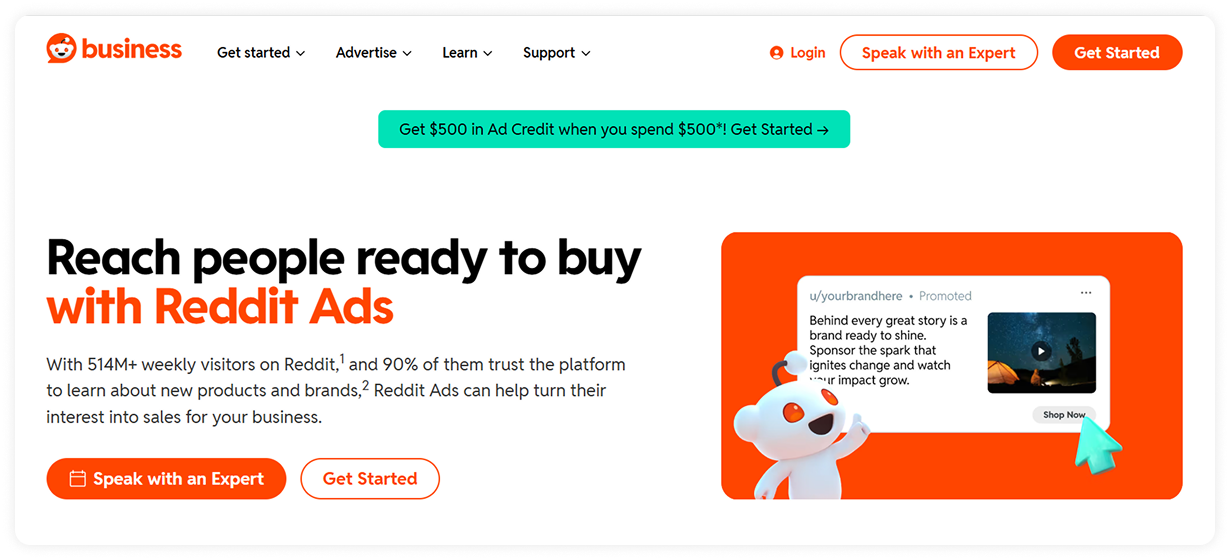
Reddit Ads is an advertising platform that helps brands reach users through interest-based communities and discussions. Advertisers can target specific subreddits, topics, and keywords to connect with audiences interested in relevant products or services.
Key features include:
- Targeting. Reach users based on communities, interests, keywords, demographics, and location
- Campaign objectives. Run campaigns for awareness, consideration, website traffic, sales, app promotion, and lead generation
- Measurement. Track impressions, clicks, and conversions using Reddit's reporting tools and conversion tracking
Reddit Ads offers access to specialized interest groups, but campaign performance depends on audience selection and creative relevance. Promotional content should fit the context and tone of the communities you're targeting.
Quora Ads
Pros:
- Reach users researching specific topics
- Target relevant questions and interests
- Generate leads with pre-filled forms
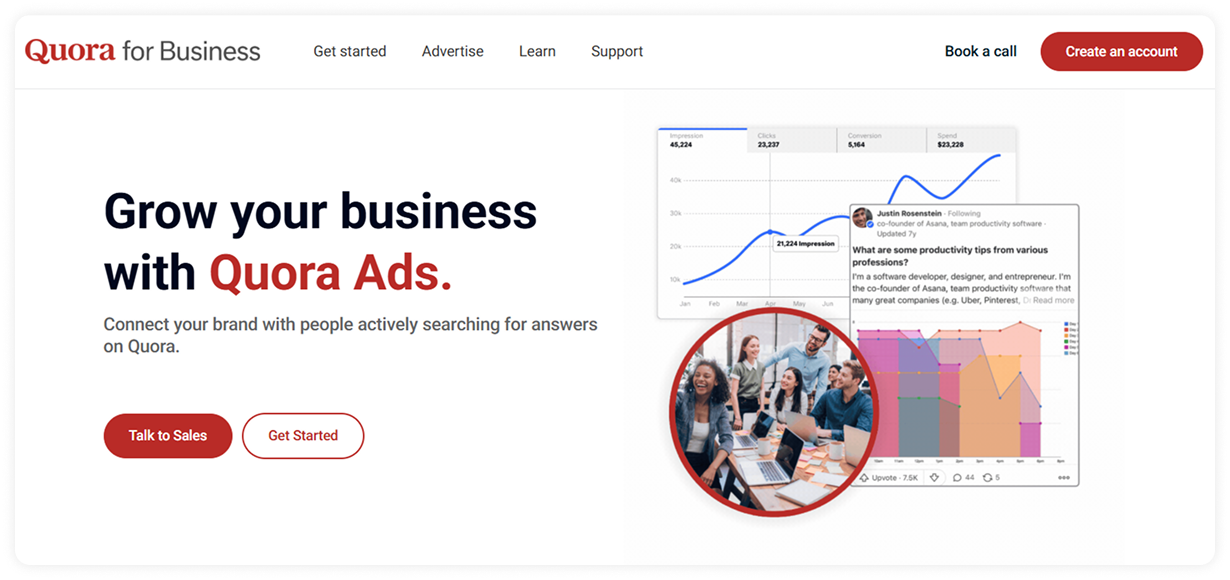
Quora Ads is a self-serve advertising platform that helps businesses reach users as they explore questions, topics, and answers. Its targeting options allow advertisers to connect with people researching specific subjects, products, or services.
Key features include:
- Targeting. Reach users based on topics, keywords, specific questions, interests, and previous interactions
- Campaign objectives. Run campaigns for brand awareness, website traffic, conversions, lead generation, and app installs
- Measurement. Track clicks and conversions using Quora's reporting tools and conversion pixel
Quora Ads can support B2B lead generation and campaigns for products that require research before purchase. However, results depend on topic audience size, landing page relevance, and lead quality.
X Ads
Pros:
- Join real-time conversations
- Promote launches and announcements
- Target users by interests and keywords
X Ads is an advertising platform that helps brands promote content within X's real-time conversations. It supports campaigns for product launches, event promotion, brand awareness, website traffic, and conversions.
Key features include:
- Targeting. Reach audiences based on keywords, interests, followers, location, and previous interactions
- Campaign objectives. Optimize campaigns for reach, engagement, video views, app installs, or website conversions
- Performance tracking. Monitor impressions, clicks, engagement, conversions, and cost per result through Ads Manager
X Ads can help brands join relevant conversations and promote timely announcements. However, results depend on audience selection, creative relevance, and campaign context. Regular testing and creative updates can also help maintain campaign performance.
Programmatic & Display Advertising
Display and programmatic advertising help businesses reach audiences across websites, apps, streaming services, and other digital channels.
For instance, Google Display Network provides access to display ad placements across Google's network, while The Trade Desk and Amazon DSP offer programmatic buying capabilities across multiple channels and inventory sources.
Here's how these platforms compare in terms of target audiences, advertising formats, and pricing.
|
Platform |
Best for |
Advertising formats |
Pricing |
|
|
|
|
|
|
|
|
|
|
|
Let's take a closer look at each platform, starting with Google Display Network and its role in Google's display advertising ecosystem.
Google Display Network (GDN)
Pros:
- Reach audiences across websites and apps
- Target users by interests and demographics
- Run remarketing campaigns
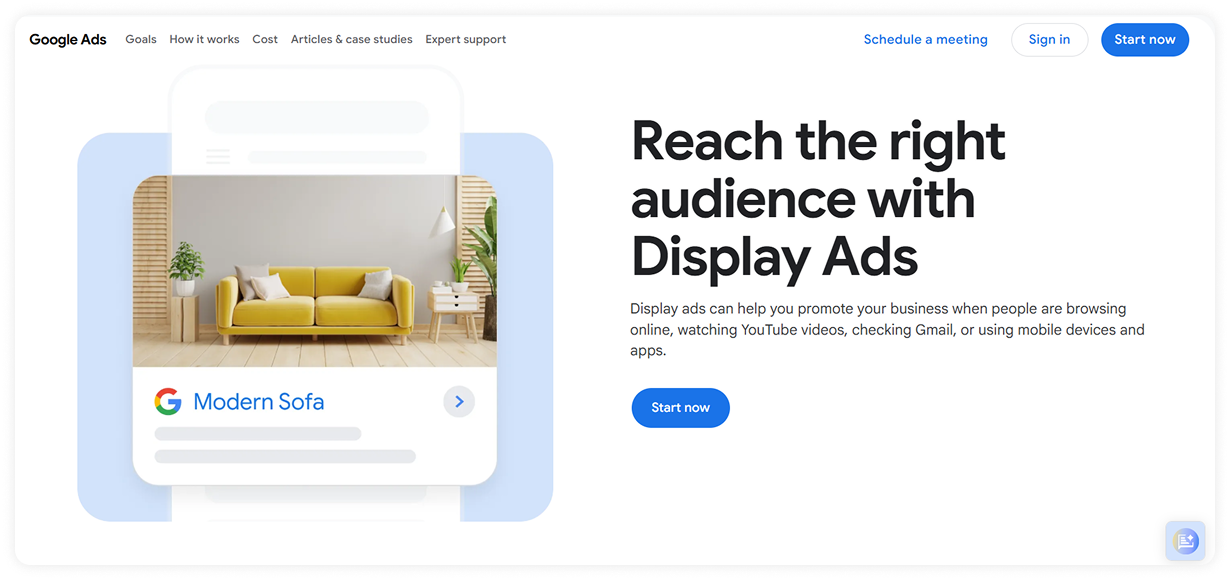
Google Display Network (GDN) is Google's display advertising network, allowing businesses to show ads across eligible websites, mobile apps, and Google-owned properties. Unlike Google Ads, which is the broader advertising platform, GDN refers specifically to the network where display ads appear.
Key features include:
- Targeting. Reach audiences based on interests, demographics, website content, selected placements, and previous interactions
- Campaign objectives. Build brand awareness, reach potential customers, drive website traffic, and support remarketing
- Performance tracking. Monitor impressions, clicks, conversions, and placement-level results
GDN offers broad display reach, but users may be browsing rather than actively looking for a product. Check placement quality and conversion data instead of judging campaigns by clicks alone.
The Trade Desk
Pros:
- Buy ads across multiple channels
- Target audiences using first- and third-party data
- Automate bidding and campaign optimization
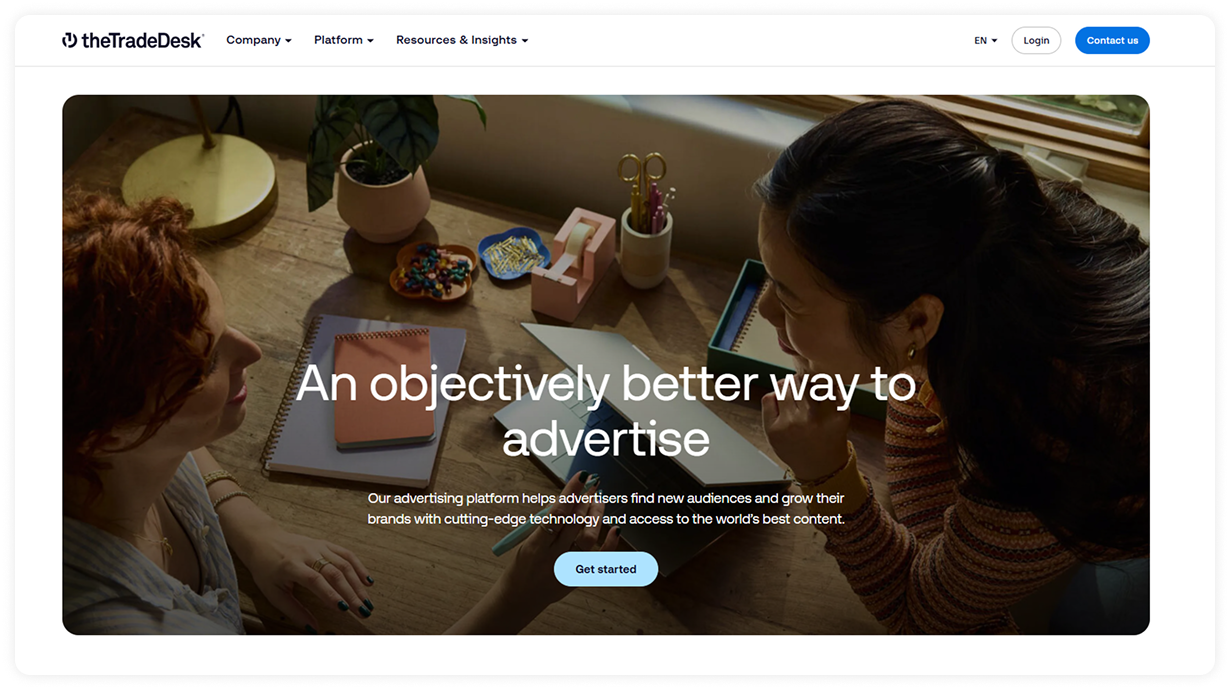
The Trade Desk is a demand-side platform (DSP) that helps advertisers and agencies plan, buy, manage, and measure programmatic advertising campaigns across the open internet. It provides access to multiple media channels through one platform.
Key features include:
- Targeting: Use first- and third-party data to identify and reach relevant audiences
- Campaign optimization: Automate bidding and adjust campaigns using AI-powered tools
- Measurement: Track campaign outcomes across channels and integrate third-party measurement solutions
The Trade Desk offers advanced buying capabilities and cross-channel campaign management. However, its range of tools and inventory options may require programmatic expertise. Check platform access and commercial terms before getting started.
Amazon DSP
Pros:
- Reach audiences using Amazon's shopping signals
- Access Amazon and third-party inventory
- Run display, video, and audio campaigns
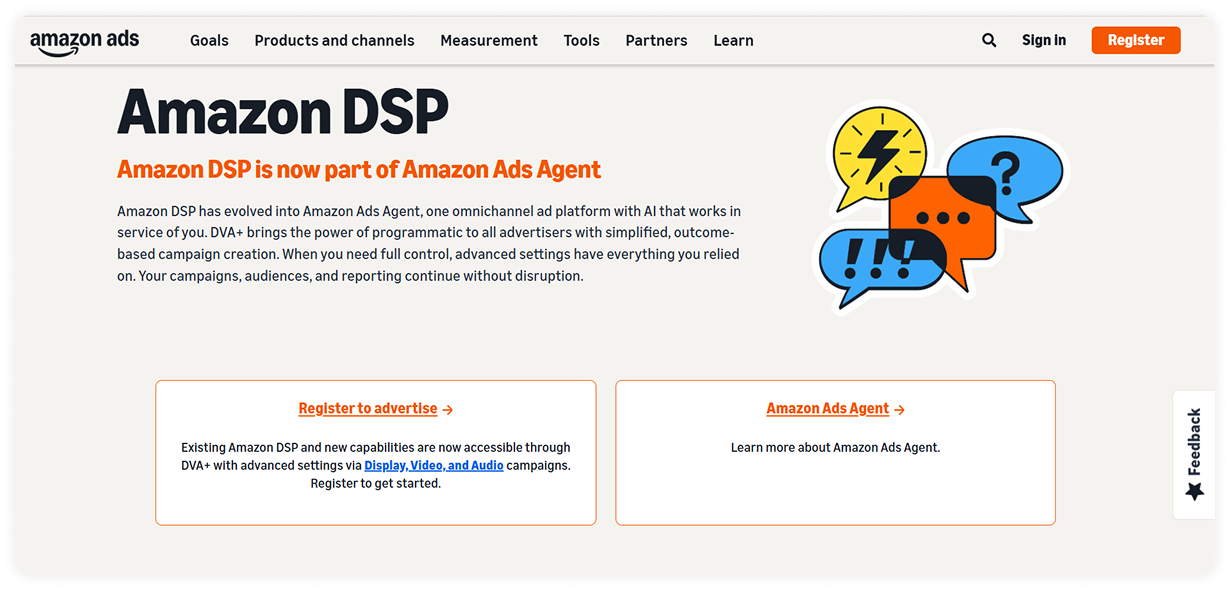
Amazon DSP is Amazon Ads' demand-side platform for programmatic media buying. Its capabilities are now part of Amazon Ads Agent, where advertisers can access advanced settings for display, video, and audio campaigns. It uses Amazon's first-party signals to help brands reach relevant audiences across Amazon properties and third-party publisher inventory.
Key features include:
- Targeting. Use demographic, shopping, browsing, and interest-based signals to reach relevant audiences
- Campaign goals. Support brand awareness, consideration, and conversions
- Measurement. Track reach, frequency, viewability, and other campaign metrics
Unlike Sponsored Ads, which focus on promoting products through cost-per-click placements, DSP campaigns enable broader programmatic buying. Access models and commercial terms vary, so check current requirements before getting started.
What Are Advertising Platforms?
Advertising platforms are online services that enable the creation, management, and measurement of paid advertising campaigns across various digital channels. These include search engines, websites, apps, social networks, online marketplaces, streaming services, and so on. Some advertising platforms focus on a specific channel or advertising model, while others support campaigns across multiple channels.
In other words, they make it easier and faster for businesses to build brand awareness and reach potential customers.
Depending on the platform, advertisers can manage every stage of an advertising campaign, from audience selection and budget allocation to performance tracking and campaign optimization.
For instance, Google Ads helps businesses reach people searching for products or services, while Meta Ads supports social campaigns, audience discovery, and retargeting across Facebook and Instagram.
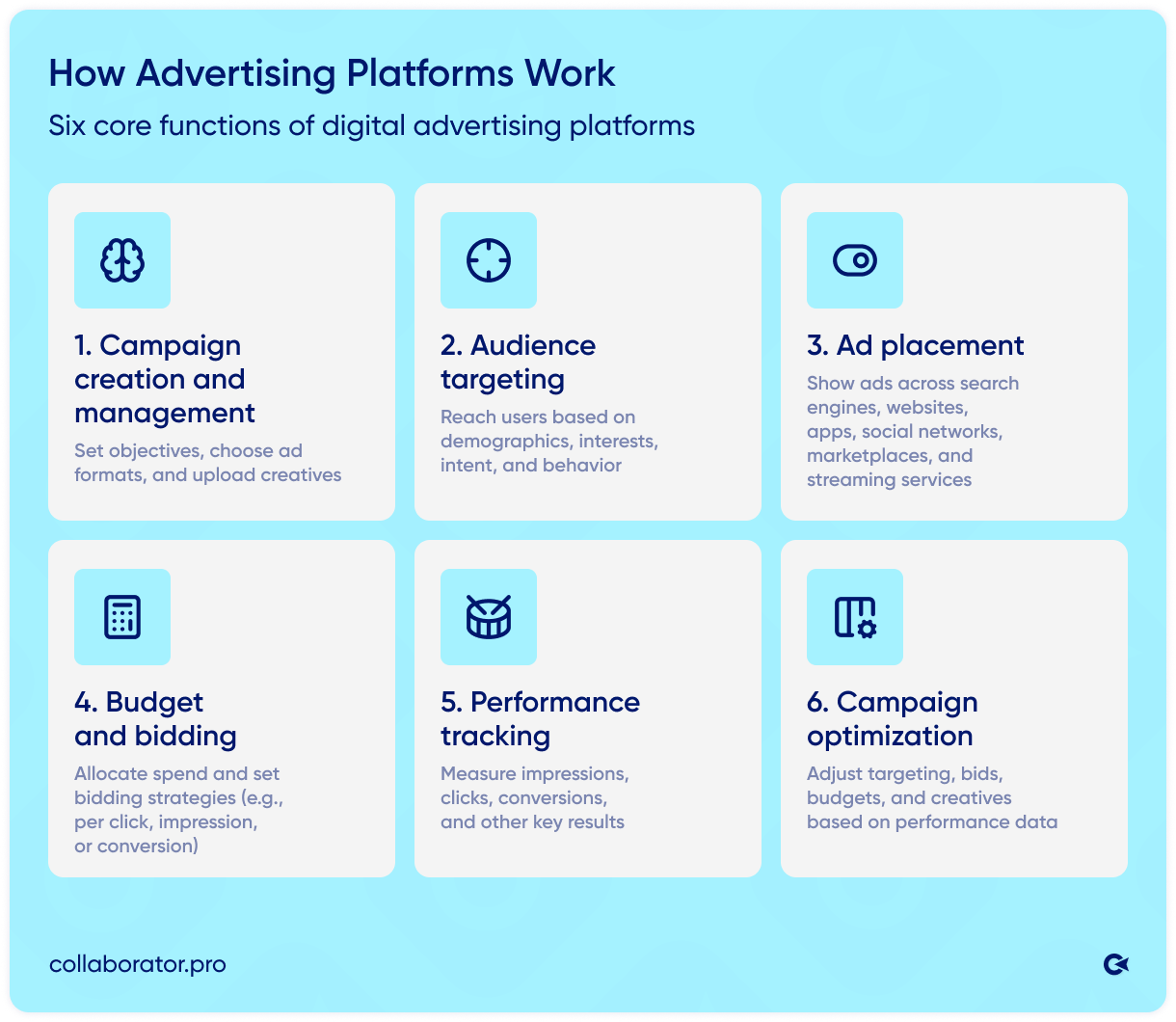
With so many advertising platforms available, choosing the right one comes down to more than popularity. You need to consider several factors, which we'll discuss below.
How to Choose the Right Advertising Platform
Choosing the right advertising platform starts with understanding what you want to achieve and who you want to reach. This is why, before going with any paid media platform, narrow down your options based on your specific requirements to avoid spending your budget on channels that don't fit your business needs.
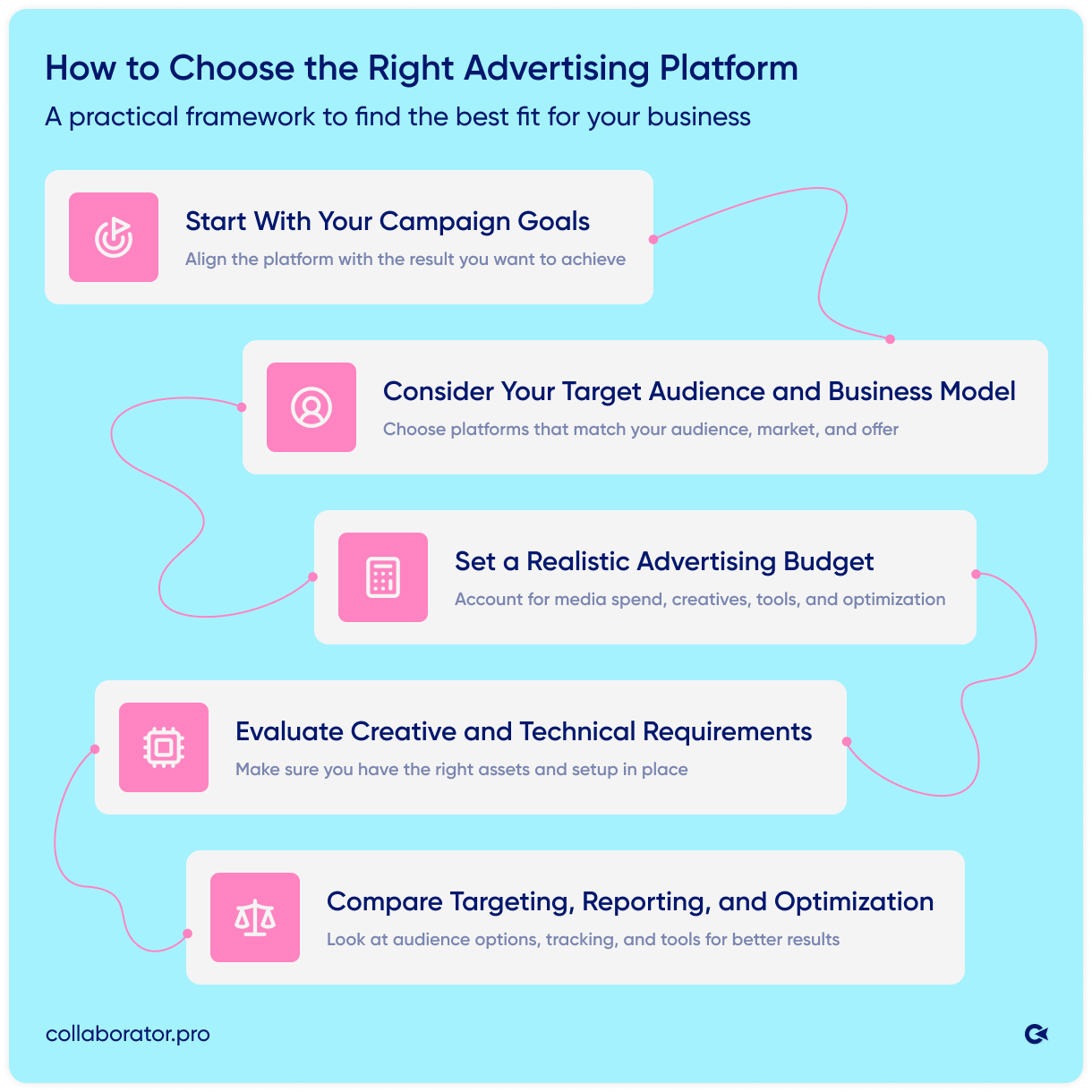
Now, let’s discuss each step in detail, starting with the goals you set for your campaign.
1. Start With Your Campaign Goals
Not every advertising campaign has the same purpose. Some businesses want to attract customers who are ready to buy, while others focus on building brand recognition, generating leads, or promoting content.
The table below matches common campaign goals with suitable advertising approaches and examples of platforms you can use.
|
Campaign goal |
Advertising approach |
Platform examples |
|
Capture existing demand |
Search advertising to reach people actively looking for products, services, or solutions |
Google Ads, Microsoft Advertising |
|
Build brand awareness |
Social media, video, and streaming campaigns to introduce a brand to broader audiences |
Meta Ads, TikTok Ads, YouTube Ads |
|
Generate leads |
Search campaigns, professional networks, and targeted social ads to attract potential customers and collect inquiries |
Google Ads, LinkedIn Ads |
|
Drive product sales |
Ecommerce advertising and retail media networks to promote products to online shoppers |
Amazon Ads, Walmart Connect |
|
Retarget interested audiences |
Display and social advertising to reconnect with previous website visitors and people who have interacted with a brand |
Google Display Network, Meta Ads |
|
Distribute content |
Sponsored articles, native advertising, and content recommendation platforms to reach relevant readers |
Collaborator, Taboola, Outbrain |
Example: Consider two businesses with the same $5,000 advertising budget. The budget is identical, but the campaign objectives call for different platforms. A local plumbing company looking for immediate customer inquiries may prioritize search ads to reach people actively searching for emergency services. A new clothing brand, on the other hand, may invest in social media and video campaigns to introduce its products and build recognition among potential buyers.
Once you've identified your campaign goals, the next step is to understand who you want to reach. Your target audience and business model will help determine which advertising channels are most likely to reach potential customers.
2. Consider Your Target Audience
Even a well-designed advertising campaign can underperform if it reaches the wrong people. Your audience's online behavior, purchasing habits, and preferred channels should influence your advertising platform comparison.
Some campaigns work best with search ads, while others rely on social media, video, or content recommendations to reach potential customers. The table below shows which platforms you can consider for different targeting needs and campaign goals.
|
Targeting consideration |
Audience type |
Recommended advertising platforms |
|
Local reach |
Customers in a specific geographic area |
Google Local Services Ads, Yelp Ads, and Google Ads |
|
International reach |
Audiences across multiple countries |
Google Ads, Meta Ads, TikTok Ads, and LinkedIn Ads |
|
Broad audience targeting |
Large, diverse audiences |
Meta Ads, TikTok Ads, and YouTube Ads |
|
Niche audience targeting |
Specific professional or interest-based groups |
LinkedIn, Reddit, and Quora |
|
Customer acquisition |
People who haven't interacted with the brand before |
Google Ads, Microsoft Advertising, Meta Ads, TikTok Ads, and YouTube Ads |
|
Retargeting |
Previous website visitors, customers, and people who have shown interest |
Google Display Network and Meta Ads |
|
High-intent campaigns |
People actively looking for a product, service, or solution |
Google Ads and Microsoft Advertising |
|
Audience discovery |
People who may be interested in a product or service but aren't actively searching for it |
Meta Ads, TikTok Ads, YouTube Ads, Taboola, and Outbrain |
Keep in mind that platform availability, targeting options, and audience characteristics vary by country and campaign type. A platform with strong reach in one market may offer fewer opportunities in another, so check its coverage before committing your budget.
Also, consider how much you can realistically invest in reaching your target audience and managing the campaign.
3. Set a Realistic Advertising Budget
The cost of running an advertising campaign goes beyond the amount you pay for clicks or impressions. When planning your budget, account for the resources needed to prepare, launch, and manage the campaign, not just the platform's advertising fees.
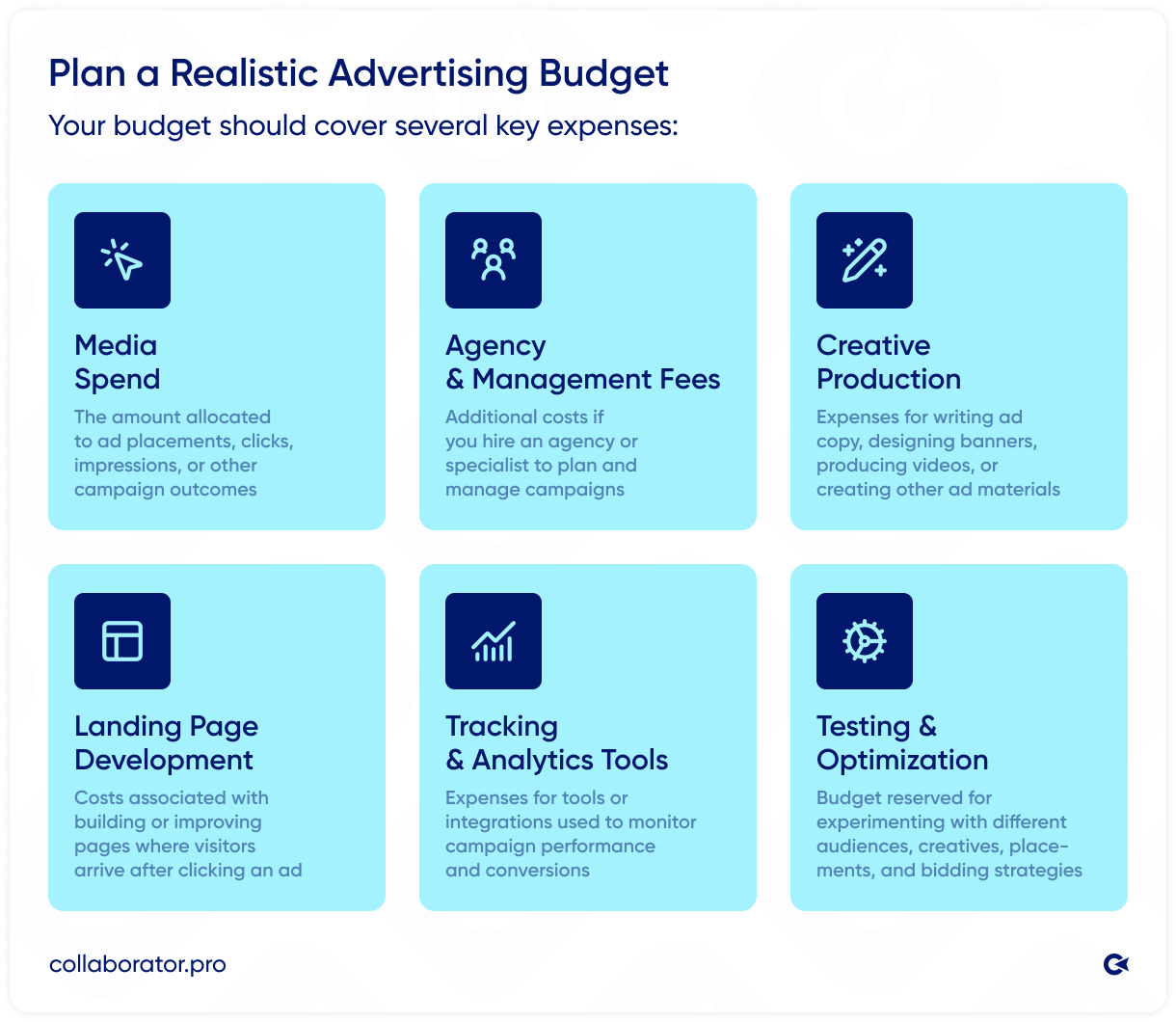
Tip: Start with an amount you can afford to test, then assess the results before increasing your investment.
Once you've set a realistic budget, consider whether you have the creative assets and technical resources needed to run campaigns on your chosen platform.
4. Evaluate Creative and Technical Requirements
Advertising platforms differ in the types of content they accept and the technical setup required to run campaigns. Before choosing one, check whether your team has the creative assets, skills, and infrastructure needed to use it effectively.
For example, launching a basic search campaign doesn't require the same resources as producing a series of video ads for streaming services. Programmatic campaigns may also demand more technical knowledge than a straightforward social media campaign.
The table below highlights what to consider and provides examples.
|
Requirement |
What to consider |
Platform examples |
|
Ad formats |
Check available formats: text, image, video, or display ads |
Google Ads, Meta Ads, TikTok Ads, YouTube Ads, Google Display Network |
|
Creative resources |
Make sure you can produce the required visuals, videos, and ad copy |
TikTok Ads and YouTube Ads (video); Google Ads (text and responsive assets) |
|
Landing pages |
Ensure landing pages match your ads and have clear calls to action |
Google Ads, Microsoft Advertising, LinkedIn Ads |
|
Conversion tracking |
Check whether you can measure purchases, leads, calls, and registrations |
Google Ads, Meta Ads, LinkedIn Ads |
|
Product feeds |
Check product catalog and inventory integration requirements |
Amazon Ads, Walmart Connect, Google Ads |
|
CRM integration |
Make sure you can track incoming leads and assess their quality |
LinkedIn Ads, Google Ads |
|
Programmatic setup |
Consider the technical expertise needed to manage automated media buying |
The Trade Desk, Amazon DSP |
Choose a platform that matches your team's capabilities, not just your marketing goals. A solution with advanced features won't necessarily deliver better results if you don't have the resources to use them properly.
Your choice should also depend on how precisely you can target potential customers, track results, and improve campaign performance.
5. Compare Targeting, Reporting, and Optimization
Once you've narrowed down the options, look at how much control each platform gives you over audience selection and campaign performance. Two platforms may offer similar advertising formats but differ in their targeting capabilities, reporting tools, and optimization options.
Use the following criteria to compare them:
- Audience targeting. Check whether you can define audiences by demographics, interests, search intent, professional attributes, or previous interactions with your brand
- Geographic and demographic controls. Make sure the platform supports the locations, age groups, and other audience characteristics relevant to your campaign
- Contextual and interest-based targeting. Find out whether you can reach users based on the content they're viewing or topics they're interested in
- Retargeting capabilities. Check whether you can create audiences from website visits, previous ad interactions, or customer lists
- Conversion measurement. Review which actions and campaign outcomes you can track, and whether the platform supports the measurement setup your business needs
- Reporting transparency. Look for clear performance reports that help you understand where your budget goes and which placements or audiences generate results
- Optimization tools and automation. Consider whether the platform offers automated bidding, campaign recommendations, or tools for adjusting delivery based on performance
Don't evaluate these features in isolation. For instance, detailed audience targeting is useful only if the platform can also provide relevant reach, while extensive reporting has limited value if you can't track the conversions that matter to your business.
Of course, performance isn't the only thing to consider. You also need to know roughly how much it costs to run campaigns on each platform.
How Much Do Advertising Platforms Cost?
Advertising platforms use different pricing models depending on the ad format, campaign objective, and buying method.
Some charge advertisers when users click an ad, others calculate costs based on impressions or video views. Sponsored content and direct publisher placements may use fixed prices instead.
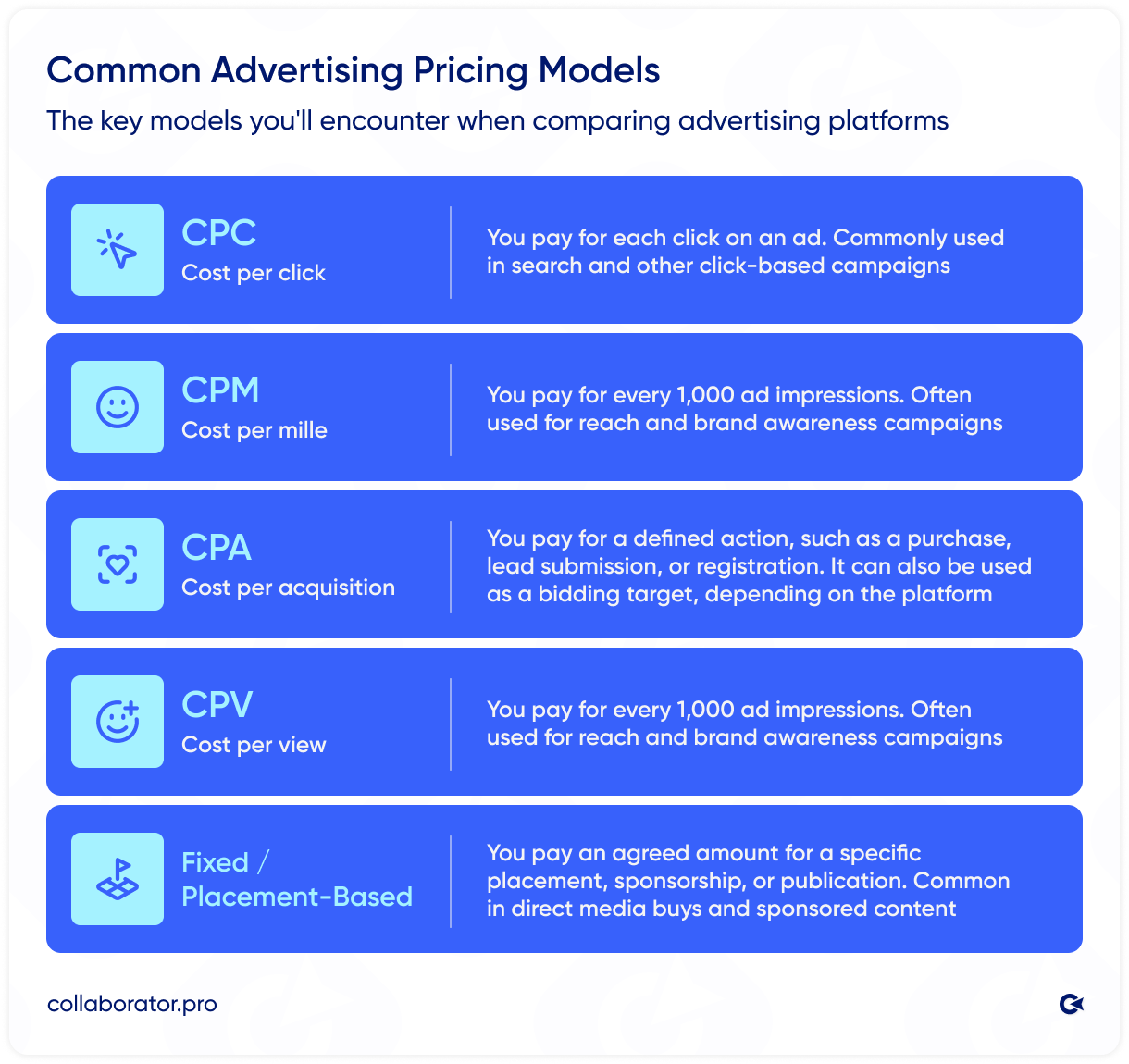
It's also useful to distinguish between a pricing model, a bidding strategy, and a performance metric:
- CPC and CPM describe how advertising costs are calculated. CPC charges advertisers per click, while CPM charges them per 1,000 impressions
- Bidding strategies determine how an advertising platform uses an advertiser's bid to compete for available placements and optimize campaign performance
- CPA can refer to a performance metric (the cost of an acquisition or completed action) or a target used in automated bidding
These terms are related, but they don't mean the same thing.
What Affects Advertising Costs?
There isn't a universal price for advertising online. The amount you pay depends on several factors, and the same platform can produce different costs across campaigns, audiences, and markets.
The main factors include:
- Industry and competition. Advertisers competing for the same audience or keywords may face higher costs, particularly in competitive markets
- Audience size and targeting restrictions. Narrow targeting can limit the available audience and increase competition for specific placements
- Geographic market. Advertising costs can differ between countries and regions because audience demand, competition, and available inventory vary
- Ad format and placement. Search ads, display banners, video ads, and sponsored content use different buying models and inventory
- Campaign objective and bidding strategy. Campaigns optimized for clicks, views, leads, or purchases may use different bidding approaches
- Creative quality and engagement. Ad relevance and user response can influence delivery and performance on platforms that use engagement or quality signals in their ad auctions
- Landing page experience and conversion rate. These factors affect what happens after a click. A high click cost may still be commercially viable if the visitors convert into valuable customers
- Seasonal demand. Competition for advertising inventory can increase during busy shopping periods, holidays, and major sales events
- Platform-specific requirements. Eligibility rules, available ad formats, account conditions, and buying arrangements can affect which options advertisers can access
CPC alone doesn't tell you whether a campaign is profitable.
For example, a channel with more expensive clicks may still be worthwhile if it attracts customers who make larger purchases or convert more often. Compare advertising costs with the results that matter to your business, such as qualified leads, sales, or customer acquisition costs.
Now, let’s discuss what budget you need to start your advertising campaign on special platforms.
Do Advertising Platforms Have Minimum Budgets?
Yes, some advertising platforms set minimum spending requirements, while others give advertisers more flexibility when setting campaign budgets. The amount you need to get started depends on the platform, campaign setup, market, and type of advertising arrangement.
Below are examples of minimum budget requirements across different advertising platforms.
|
Platform |
Minimum budget or spend requirement |
What to know |
|
Google Ads |
No universal minimum published |
Advertisers set their own average daily campaign budgets. The amount needed depends on the campaign and bidding strategy. |
|
Microsoft Advertising |
From $0.05/day (USD) |
Microsoft's API documentation lists this as the minimum daily budget for USD accounts. Actual campaign budgets should be based on your goals and expected traffic. |
|
TikTok Ads |
More than $50/day at campaign level and $20/day at ad group level |
These are the minimum daily budget thresholds. Lifetime budgets for ad groups depend on the campaign duration. |
|
Amazon Sponsored Ads |
$1/day minimum |
Amazon recommends starting with around $10/day per campaign in several marketplaces. The minimum and recommended starting budget are different. |
|
Amazon DSP |
$50,000 for managed service (US) |
Self-service advertisers set their own budgets. The managed-service minimum may vary by country. |
|
Meta Ads |
No universal figure included |
The minimum can depend on campaign settings and delivery requirements. Check the budget shown in Ads Manager when setting up your campaign. |
|
The Trade Desk |
Not publicly specified |
Minimum spending terms may depend on the advertiser's agreement and buying arrangement. |
|
Walmart Connect |
Varies by ad format and advertiser type |
For example, its Sponsored Videos documentation lists specific daily and total-budget requirements. Check the rules for the format and marketplace you're using. |
When comparing affordable advertising platforms, don't focus on the minimum entry cost alone. A small starting budget may be enough to test an audience or creative, but it won't necessarily generate enough data to assess campaign performance. Consider your objective, expected reach, conversion goals, and the time you can give the campaign before deciding how much to invest.
Even with a realistic budget and the right platform requirements in mind, it's easy to make choices that limit your campaign results. Here are some common mistakes to watch out for when comparing advertising platforms.
Common Mistakes When Choosing an Advertising Platform
Choosing an advertising platform based on the wrong criteria can lead to wasted spending, missed opportunities, and misleading performance data. Watch out for these common mistakes before committing to a channel:
- Choosing a platform because it's popular. A large user base doesn't guarantee access to the audience you need. For example, search advertising may be a better fit for reaching people actively looking for a solution, while social media campaigns may work better for introducing a new brand to a broader audience.
- Spreading the budget across too many channels. Dividing a limited budget between several platforms can leave each campaign with too little data to evaluate its performance. Start with a manageable number of channels and expand when you have evidence that additional platforms can contribute to your goals.
- Ignoring conversion tracking. Clicks, impressions, and engagement don't show whether a campaign generates valuable leads or sales. Set up conversion events and attribution before launching campaigns, and connect lead data with CRM or revenue information where possible.
- Overlooking creative and landing page requirements. Even relevant ads can struggle if their format doesn't suit the platform or the landing page fails to deliver on the ad's promise. Check that your creatives match the placement, the page works well on mobile, and visitors can easily complete the intended action.
- Comparing platforms using incompatible metrics. CPC, CPM, CPA, and ROAS measure different aspects of campaign performance, so comparing them without considering campaign objectives can lead to the wrong conclusions. Evaluate platforms against the same business goal and use metrics that reflect the result you're trying to achieve.
- Ignoring platform eligibility and limitations. A platform may not support your target market, industry, or ad format, and some campaigns require specific account approvals, product feeds, or buying arrangements. Check these conditions in advance, including any minimum spending requirements and differences between self-serve and managed services.
Conclusion
The best advertising platform depends on what you want to achieve, who you want to reach, your budget, and the resources you can dedicate to campaign management. For instance, retail media platforms connect brands with shoppers, and programmatic solutions offer more advanced options for buying media across channels. For businesses looking to secure sponsored content placements and build backlinks, platforms like Collaborator offer a way to connect with relevant publishers.
When choosing a platform, I recommend shortlisting the options that align with your goals and target audience. Define the metrics you’ll use to measure success, set up conversion tracking, and test your campaigns with a manageable budget. Once you have enough data to evaluate performance, you can decide where to increase your investment.
You don't need to advertise everywhere. I’d rather focus on a few platforms that deliver measurable results than spread the budget across channels that don't support your objectives.
Related reading
- • 5+ Best Backlink Price Comparison Tools in 2027 (Free & Paid)
- • Vetted List of 60+ Profile Creation Sites for High-DA Backlinks: Free & Authoritative Platforms
- • 23 Types of Backlinks: Examples, Costs and Risks
- • 42 Best Review Sites in 2026: Full List by Industry
- • Best SEO Affiliate Programs: Top 35+ Programs Compared