Building an effective and unique link-building strategy or advertising campaign doesn’t mean much until you know what it will actually cost you or your client.
“How much will the linkbuilding campaign cost?” — this is usually the very first question clients ask, often before they even look at the full strategy. And too often, it becomes the sticking point — the reason for broken contracts or overlooked, well-planned advertising campaigns and link-building strategies.
Why does this happen? Because the proposed budget often doesn’t align with the real one, especially in link building, where link prices aren’t always easy to predict.
While there’s plenty of information online about the average cost of links by niche, it’s essential to know the exact price you’ll need to pay for a specific link.
To help with this, we’ve gathered free and paid backlink price comparison tools that provide direct access to backlink prices. Many of them also offer useful SEO metrics and details on link placement types.
TL; DR:
- Most Affordable: Backlink Price Checker ($4.99/mo for unlimited searches).
- Best Free Option: FatGrid (core features are free).
- Most Feature-Rich: Link-Finder (AI search, competitor analysis, Chrome extension).
- Largest Database: LinkBuilder.com & Link-Finder (both have 300,000+ sites).
- Best for Direct Outreach: LinkDetective (includes seller contact information).
Free and Paid Top Price Backlinks Comparison Tools: A Detailed Overview
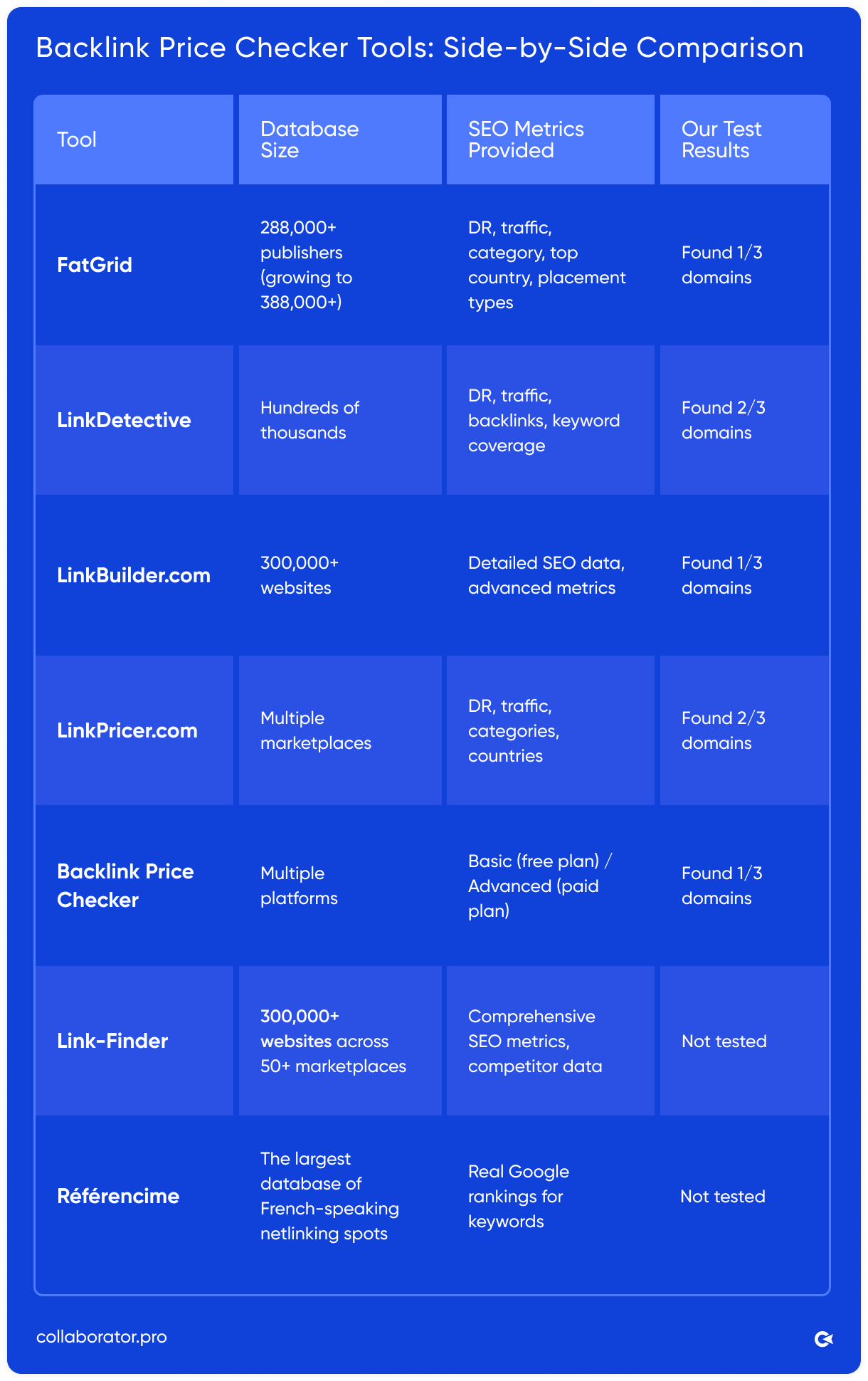
We personally tested every tool from the article using three high-profile domains: The New York Times, Forbes, and The Washington Post. This hands-on approach gave us a clear picture of how each platform performs and what sets them apart.
This real-world test provided valuable insights into each tool’s strengths, weaknesses, and overall usefulness for backlink budget planning and developing an effective link-building strategy.
We examined the backlink opportunities these tools uncovered, the pricing data they provided, and the SEO metrics available for each site. The results varied significantly.
1. FatGrid (former GetLinks.Pro) — https://go.fatgrid.com/
FatGrid is a new backlink pricing engine built to make link building more transparent and cost-effective. Launched in public beta on September 1, 2025, it brings together data from the biggest guest posting and link-building marketplaces into one simple dashboard.
Instead of jumping between platforms or guessing what a backlink might cost, users can instantly compare live prices, authority scores, traffic stats, and placement types — all in one place.
As of the date of this article’s publication, FatGrid tracks over 288,000 publishers and is expected to add another 100,000 soon. The database is updated daily.
All you need to do is register, go to the “Publisher Price Finder” section in the left menu, and enter the domains you’re interested in.
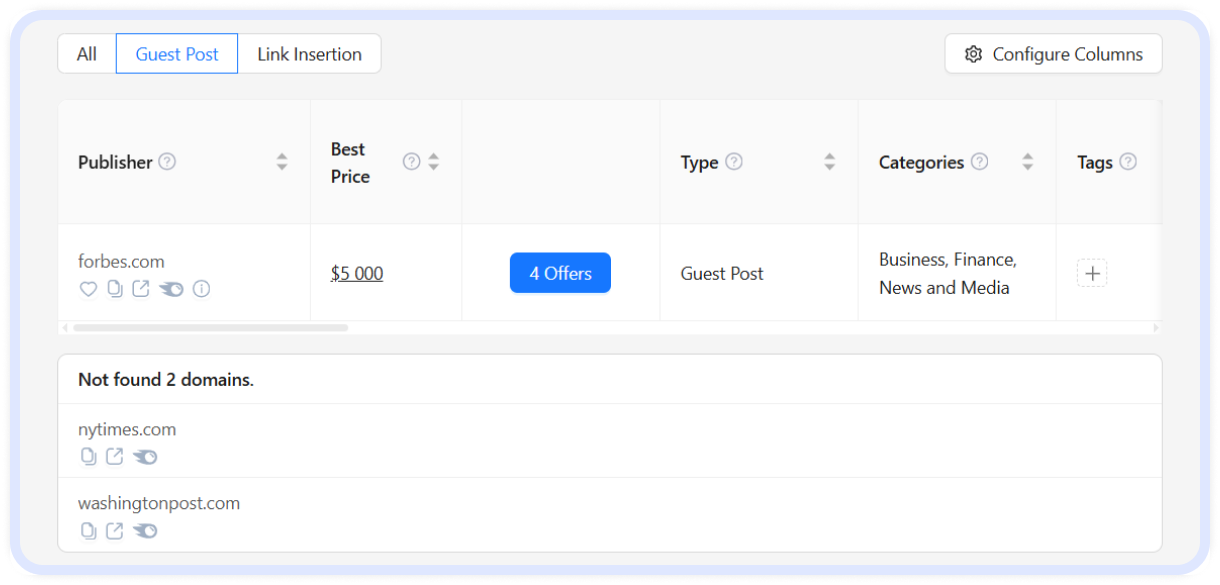
To test how the system works, we entered the above-mentioned three well-known media outlets. As you can see, one domain was found and instantly displayed with the lowest guest post price, along with other useful metrics such as category, DR, top country by organic traffic, and more. You can view all price offers and marketplaces for ordering publications by clicking the corresponding button.
To make searches smarter, FatGrid also offers an AI-driven keyword filter that shows publishers who have actually written about your topic before — so your backlinks look natural and relevant.
The best part? The core tool is completely free to use. FatGrid cuts out middlemen, gives SEOs, agencies, and affiliates a clear view of fair market prices, and helps them spend their budget wisely. Bulk lookup and custom alerts are also on the roadmap as premium features.
2. LinkDetective — https://linkdetective.pro/
Instead of guessing what a guest post might cost, you can upload a list of domains in LinkDetective and instantly get key metrics such as DR, traffic, backlinks, keyword coverage, and even actual seller pricing. With easy-to-use filters, you can sort results and quickly find the best opportunities that fit your budget.
Let’s test this tool together. Here you can also simply enter the list of domains you’re interested in to instantly see the results.
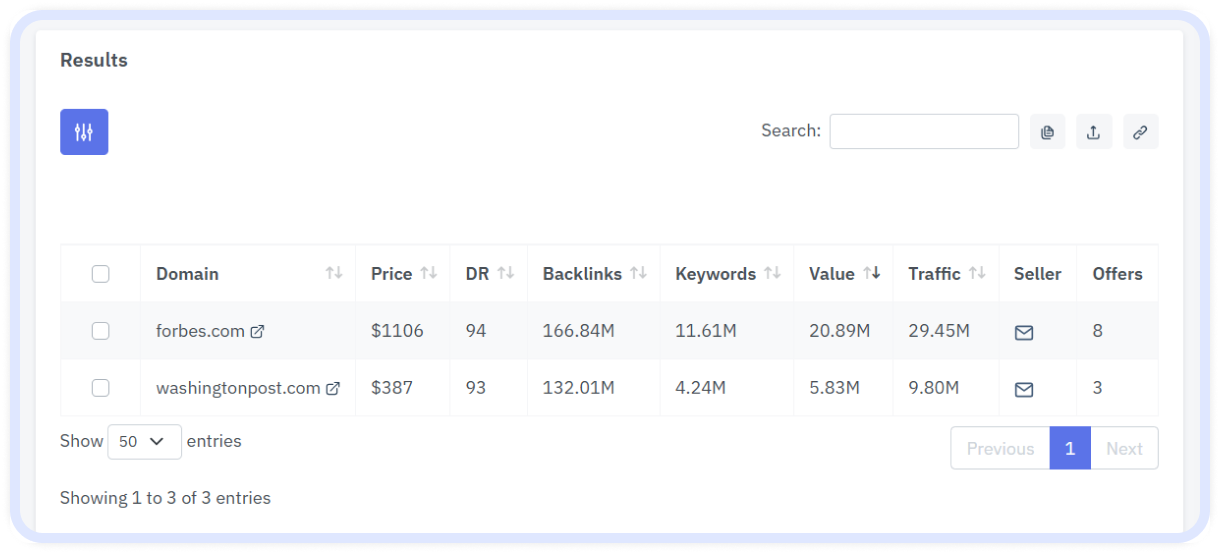
As you can see, LinkDetective found link prospects for two out of three domains — and even discovered a lower link price. By clicking the envelope icon, you can view a list of sellers (not only PR marketplaces and link building platforms) with their respective link prices and contact those you may be interested in collaborating with.
LinkDetective monitors hundreds of thousands of domains, offering SEO specialists, freelancers, and agencies a practical way to evaluate link prospects, compare costs, and make smarter decisions without wasting time or money.
3. LinkBuilder — https://linkbuilder.com/
LinkBuilder.com brings together backlink pricing data from more than 300,000 websites, blogs, and media outlets across 150+ countries, allowing users to compare offers from different sellers in a single dashboard.
With advanced filters, export options, and detailed SEO data, the tool removes the guesswork from link building, helping users find the most cost-effective placements with confidence.
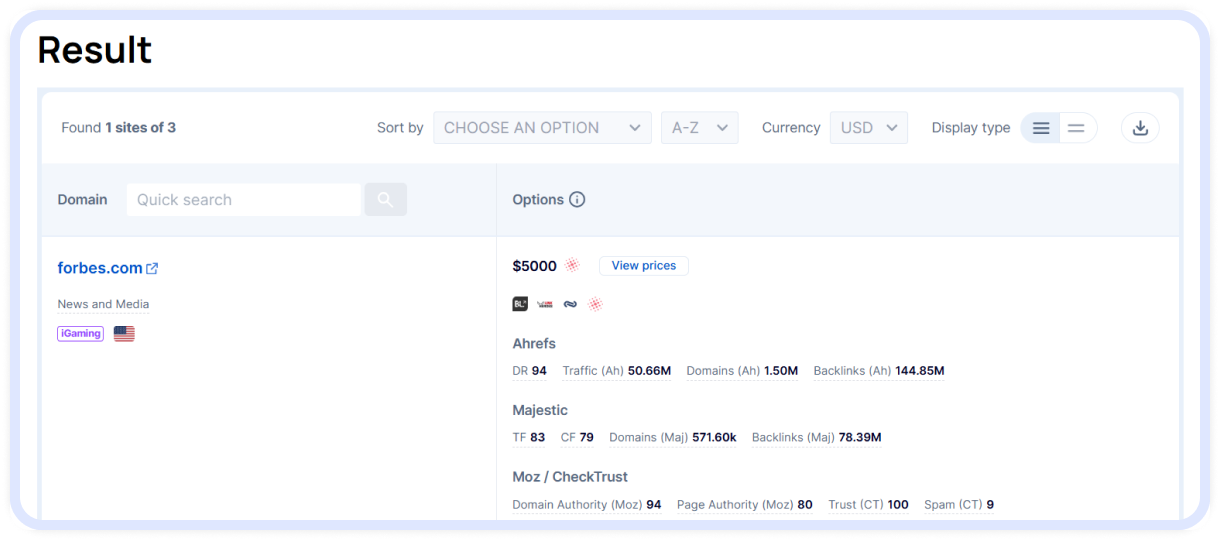
As with the previous tools, we tested LinkBuilder using our three media outlets to see how it performs. The results are shown below — it found only forbes.com, with a minimum price of $5,000 for a guest post.
4. LinkPricer — https://linkpricer.com/
LinkPricer.com is another backlink price comparison tool designed to make link building easier and more transparent. It gathers pricing data from multiple backlink marketplaces so users can compare offers from different sellers all in one place.
With real-time updates and instant access to marketplace prices, LinkPricer helps SEO specialists and marketers quickly find the best deals for their campaigns. By removing the need to manually search across platforms, it saves time and makes backlink purchasing more efficient and cost-effective.
After registration, you can use bulk domain search and filter results by DR, traffic, categories, and countries for your convenience. The prices are shown in euros. So with this tool, we have found link prospects for two out of three domains.
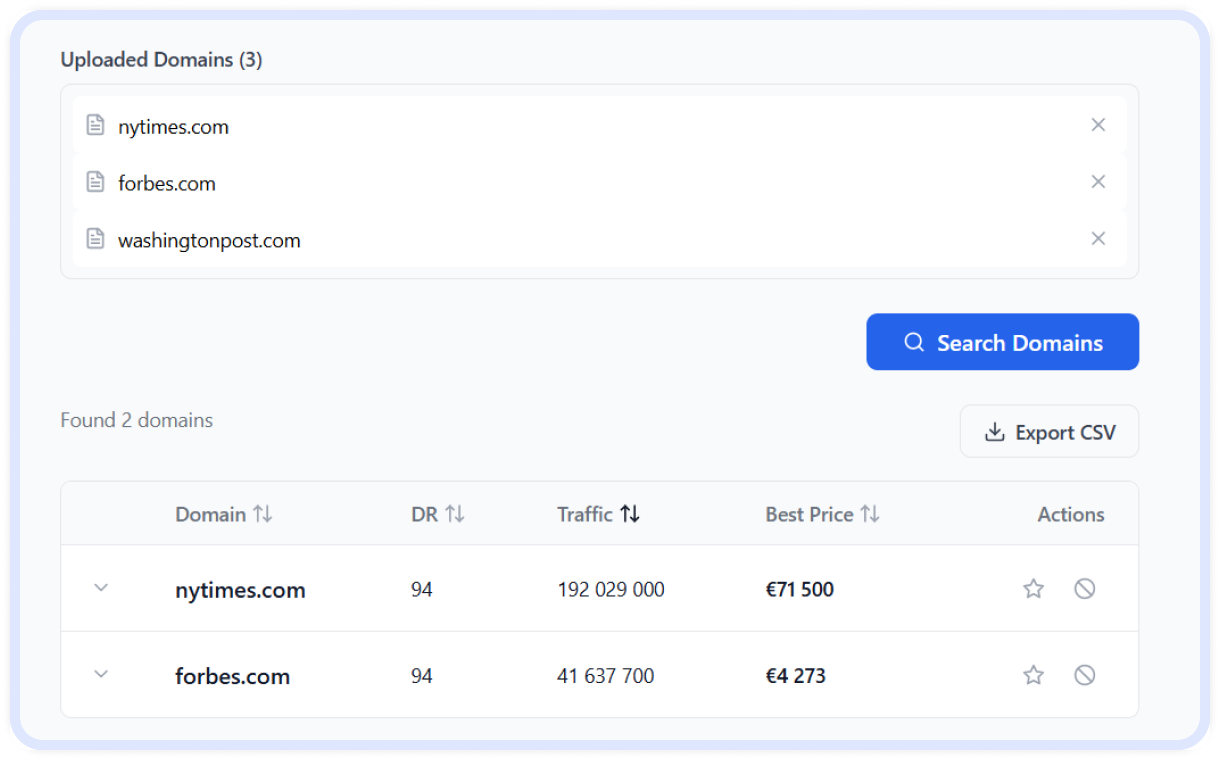
The price for guest posting on the NY Times is significantly higher compared to the link-building opportunities found with the tools described above. As for Forbes, the minimum price is about $5,000, which is similar to other cases.
5. Backlink Price Checker — https://backlinkpricechecker.com/
Backlink Price Checker estimates the price of a backlink while comparing it to market averages. It brings together data from multiple link-selling platforms to make it easy to discover backlink opportunities in various niches and plan smarter, cost-effective strategies without overspending.
The platform offers two plans. The free plan ($0/month) lets you run up to three domain searches per month with access to basic marketplace data and email support. For more frequent use, the Unlimited plan ($4.99/month) gives unlimited domain searches, full access to the marketplace database, advanced filtering tools, and priority support. 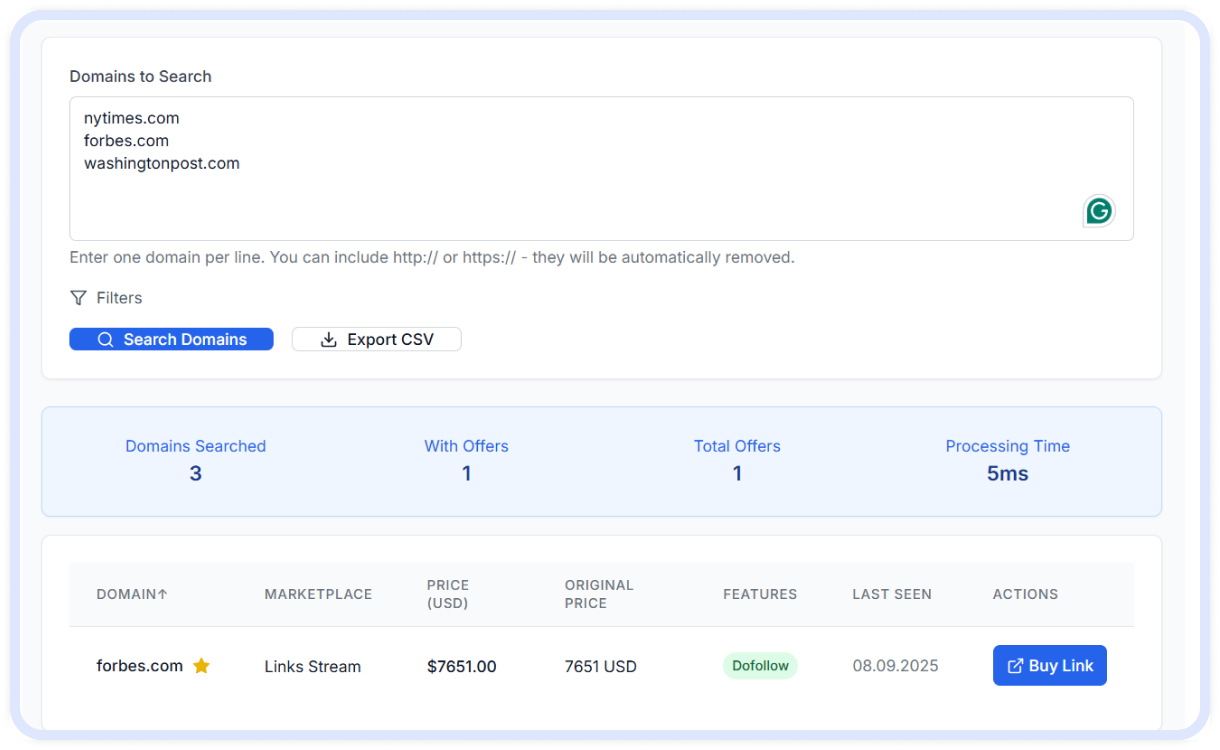
Backlink Price Checker found backlink prospects on one out of three domains.
Additional Paid Options
In addition to free backlink price comparison tools, we found two paid options that can be useful when building a link-building strategy.
Link Finder — https://link-finder.net/
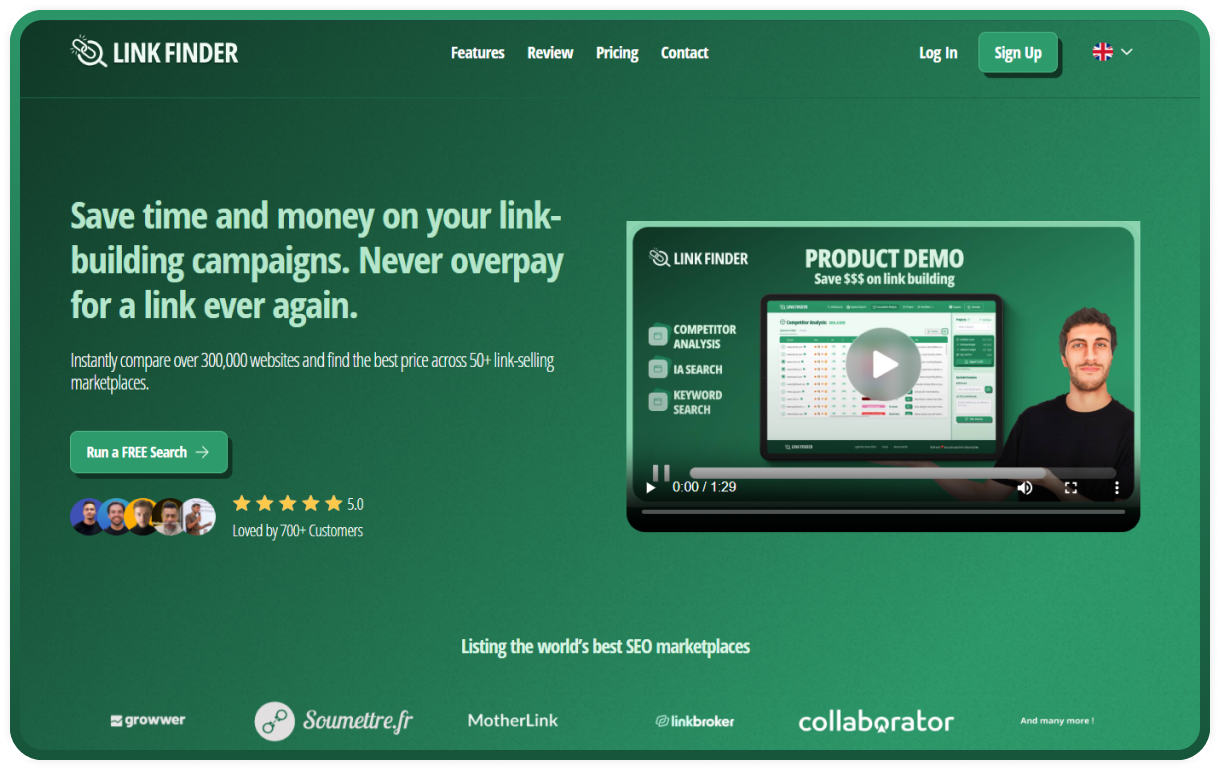
Link Finder pulls inventory from more than 300,000 websites across 50+ link-selling and content distribution marketplaces. Instead of jumping from one platform to another, you get all the prices for guest posts, niche edits, and other link opportunities in one place.
To make the process smarter, the tool comes with AI-powered search, competitor link gap analysis, and keyword-based prospecting. For example, you can enter your domain along with competitors, and Link-Finder will show you sites they’ve already secured backlinks from — so you can target them too. It works similar to Collaborator’s automatic competitor analysis. The key difference is that with Collaborator, you can instantly order a publication on those websites.
Link-Finder actually goes beyond pricing. It offers backlink monitoring, project management features, and even a Chrome extension that highlights link-selling opportunities right in the search results. Publishers benefit as well, since they can use the platform to manage link rates across multiple marketplaces, stay competitive with market prices, and provide more transparency to advertisers.
This tool isn’t free and doesn’t offer a free trial period. You can choose among three plans:
- The Standard plan ($39/mo) is best for testing Link-Finder’s core features with limited searches and monitoring capacity.
- The Booster plan ($89/mo) expands limits significantly, making it suitable for freelancers or small agencies managing multiple projects.
- The Spammer plan ($150/mo) offers nearly unlimited use with massive search and monitoring quotas, designed for heavy users who need large-scale link prospecting and analysis.
Annual plans are available too, letting you save more on your monthly cost.
Référencime — https://referencime.fr
Référencime analyzes the real performance of websites and creates a monthly ranking based on how well these sites rank for the entered keywords. The platform offers several features to simplify link-building campaigns.
For starters, it monitors real visibility by scanning Google SERPs each month, allowing users to compare prices across different netlinking platforms. It also includes AI assistants such as ChatGPT and Claude to help automate campaign creation and reporting.
The platform also combines data from SERPs and Google Search Console so users can track ROI and clearly see how their performance compares to competitors.
To start using Référencime, you'll need to register, add your website, and verify ownership through Google Search Console.
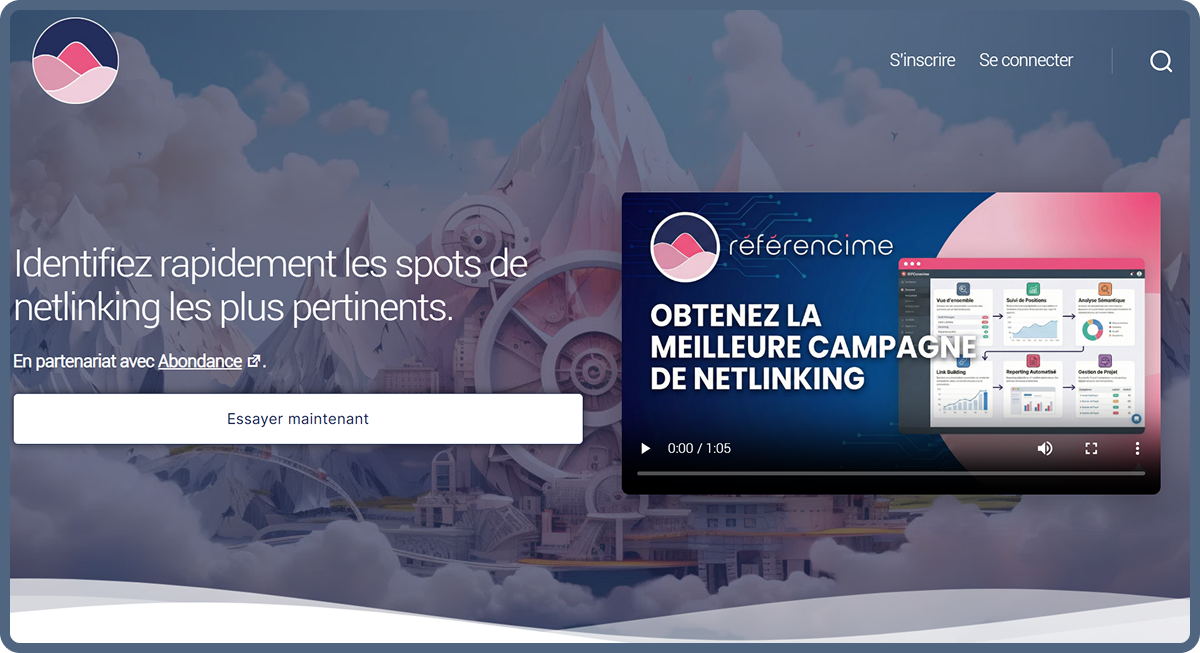
The platform offers a choice of four plans:
- Free: €0/month (1 campaign)
- Starter: €9/month (2 campaigns)
- Pro: €39/month (10 campaigns)
- Max: €99/month (30 campaigns)
Annual plans are also available.
How Is a Backlink Price Built?
Backlink price isn’t just pulled out of thin air. It’s shaped by a mix of different factors. Simply put, the more value a link can bring, the more it’s going to cost. Pretty straightforward, right? Let’s take a closer look at what actually goes into that price tag.
At the end of the day, the backlink price is built with consideration of the following parameters:
- Website Authority. A backlink from a top-tier site (high DR or DA) is like getting endorsed by someone everyone trusts. Those links cost more because Google pays more attention to them.
- Traffic Quality. Big traffic numbers mean actually nothing if they’re fake or irrelevant to your niche. What really matters are real, engaged users who could actually be interested in your products or services.
- Niche Relevance. Link prices depend on the industry. For instance, a link from a finance blog usually costs more than one from a random lifestyle site.
- Placement Type. A link in a new article (guest post) generally costs more than inserting it into existing content. It’s mainly because creating fresh content requires more effort.
- Content Quality. Sites that consistently publish polished, professional articles charge higher rates.
- Geography & Audience. Typically, links from sites with strong audiences in the USA or Western Europe are more expensive than those focused on smaller, regional markets.
- Marketplace Demand. In competitive niches like crypto, betting, or SaaS, everyone’s fighting for the same placements. Obviously, it naturally pushes prices up.
When buying a backlink, you’re not just improving your website’s SEO and ranking, but investing in trust, authority, and exposure. And here’s a smart tip: don’t rush into the first offer. Prices can vary a lot between marketplaces, and sometimes the exact same link is cheaper elsewhere. A little search with backlink price comparison tools can save you money without sacrificing quality.
Final Thoughts
Choosing the right backlink price comparison tool comes down to your goals, budget, and scale of work. Our hands-on testing with high-profile domains showed that each tool has its strengths and limitations, so there’s no one-size-fits-all solution. The best choice will depend on whether you prioritize price, database size, features, or outreach capabilities.
Related reading
- • Free Backlinks: 55 High-Authority Sites List to Build Links for Free in 2026
- • 175+ Free Guest Posting Sites List 2026. Top Websites To Submit Guest Posts
- • 25 Press Release Submission Sites List 2026: Best Websites to Submit Press Releases [Free & Paid]
- • 20+ Best SEO Podcasts to Listen in 2026
- • Best SEO Extensions in 2026: 40+ Free & Freemium Browser Tools for Every SEO Task