This is one of the most common questions in SEO: “How many backlinks does it actually take to rank?”. If you’re expecting to find a universal number... it doesn’t quite work that way. The real answer is: it depends😁

It depends on your competition, your page's quality, the niche you're in, timing, and even the anchor text mix you use. But that doesn’t mean we’ll leave you guessing. In this guide, we’ll break down:
- How to calculate the right number of backlinks for your site.
- What actually makes a link “strong” in 2026 (hint: not just DR).
- How to analyze your competitors' backlink profiles, and outsmart them.
- What velocity and anchor ratios keep you in Google’s “green zone”.
- How to build a sustainable backlinks strategy based on your individual goals.
By the end, you’ll have a clear hands-on framework for planning your backlink campaigns based on actual research and pro advice. Whether you’re a SEO professional, or trying to push your own product for the first time, this guide is built to help you understand the topic starting from basics, going all the way to the advanced tactics.
The Role of Backlinks in Google Rankings: What Still Works in 2026
Every year someone declares backlinks are dead. Let’s get this straight: Google still considers backlinks one of its core ranking signals. That hasn’t changed. In fact, it was reaffirmed in recent court cases and documents tied to the antitrust investigation.
In the case of United States v. Google LLC (final ruling on April 17, 2025), several internal Google presentations were made public, showing that backlinks are part of what’s known as the ABC signals:
- A — Anchors (backlinks)
- B — Body (on-page content)
- C — Clicks (user behavior signals)
Backlinks (the "A") are still listed as one of the three foundational pillars driving Google’s ranking decisions. That means they’re not just “good to have” — they’re non-optional if you want to rank competitively.
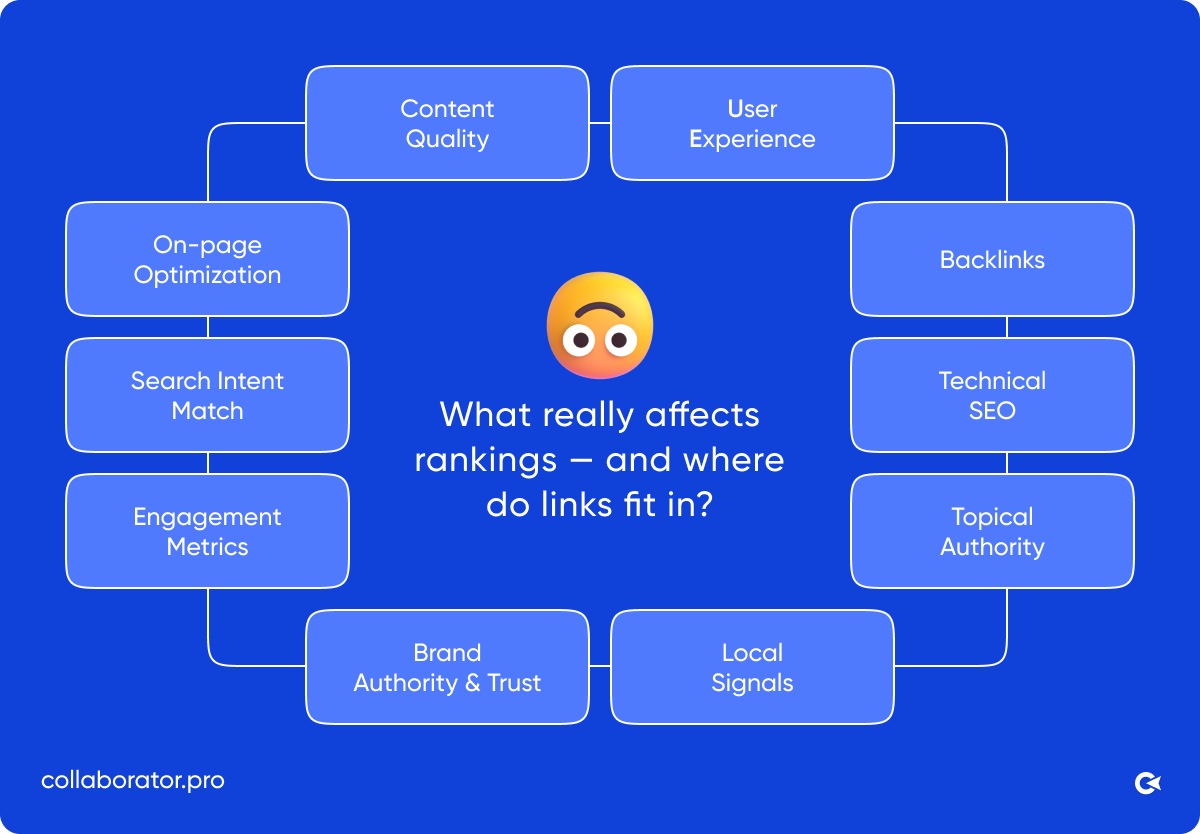
So, while search is evolving drastically, link building still sits at the core of SEO. What has changed is how you earn backlinks, and which ones actually move the needle. And that’s what we’ll cover next.
What Makes Links Effective in 2026?
Several key factors determine backlink effectiveness in 2026:
- Authority over volume. A single link from a high-trust, relevant site is far more valuable than hundreds of weak backlinks.
- Topical relevance (context) matters. Links from niche sites in your specific industry carry more weight than generic news portals.
- Anchor diversity = strength and safety. Over-optimizing anchors (especially exact-match) increases the risk of suspicion from Google. Branded, URL, and natural anchors are safer bets.
- Link growth should look natural. Sudden spikes raise red flags. Google favors steady, predictable link growth over time.
That means that your strategy shouldn’t chase just the number of backlinks — it should focus on steadily building the relevance, trust, and reputation for your website over time.
How to Calculate the Right Number of Backlinks
Most guides suggest opening Ahrefs, checking how many referring domains (RDs) top competitors have, and using that number as a benchmark. But there’s a catch: if you’ve just started, and your competitors are sites that have been around for 10 years, with media mentions, branded traffic, and large teams, copying their backlink profile will only burn your budget and your nerves. The right approach is not to copy, but to analyze.
There’s no universal backlink formula that guarantees a spot in the top rankings. But there is a way to calculate a realistic target based on what’s already working in your niche.
In this section, we’ll go through a 5-step process that helps you estimate how many backlinks your site actually needs to rank in Google, as well as how to determine their types and growth pace based on your competitors’ data.
Step 1: Identify Relevant Competitors
Start by choosing competitors who are actually comparable to your site, and not just whoever is ranking #1. Look for:
- Sites with similar Domain Rating (DR) or organic traffic volume.
- Pages that match yours in format (blog, service, category, etc.).
- Newer sites that recently broke into the top 10.
💡 In Ahrefs, use SERP Overview to find fast-growing, realistic competitors with whom you’ll be competing in search:
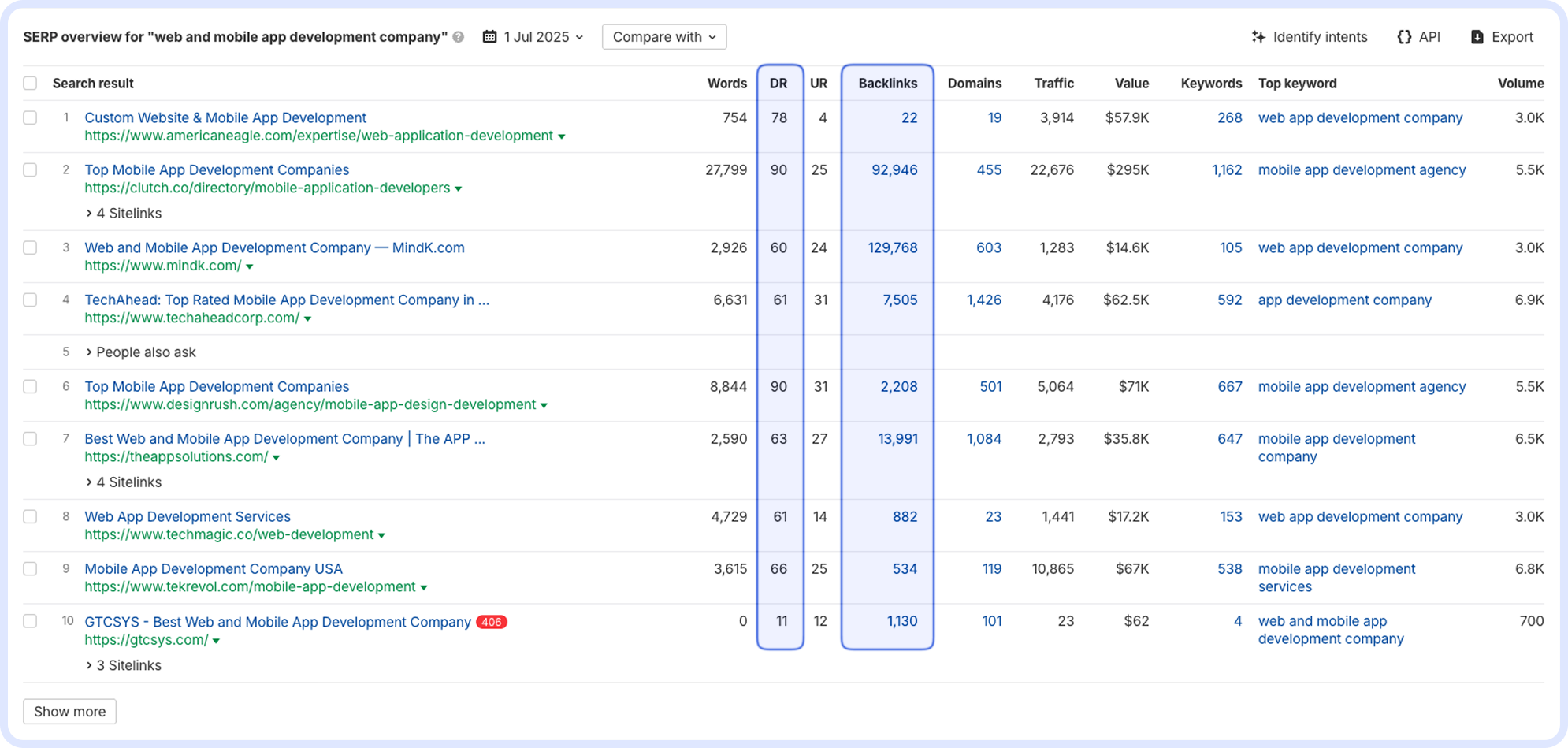
If your site is brand new, Google may show huge domains above you by default. Don’t panic – you’re aiming to outrank the closest relevant competitor, not Amazon.
Step 2: Pull the Right Metrics
Once you’ve picked 3-5 solid competitors, start analyzing what’s pushing them to the top. Here’s what to look at:
- Referring Domains (RD): The number of unique domains linking to the page. This is often more useful than just raw backlink count.
- Domain Rating (DR): A rough estimate of authority. It’s helpful for context, but is also easy to manipulate, so keep that in mind.
- Domain Traffic: If a site has a high DR but zero organic traffic, it’s a red flag. Double check if the RDs actually rank for real queries.
💡 You can also use Ahrefs to filter RD per page, not just by domain. A homepage might have 1,000 RDs, but the actual ranking blog post could have 20.
Step 3: Analyze Link Types and Anchors
Next, figure out what kinds of links are helping your competitors rank. And remember that not all backlinks hold equal value. Classify what you see:
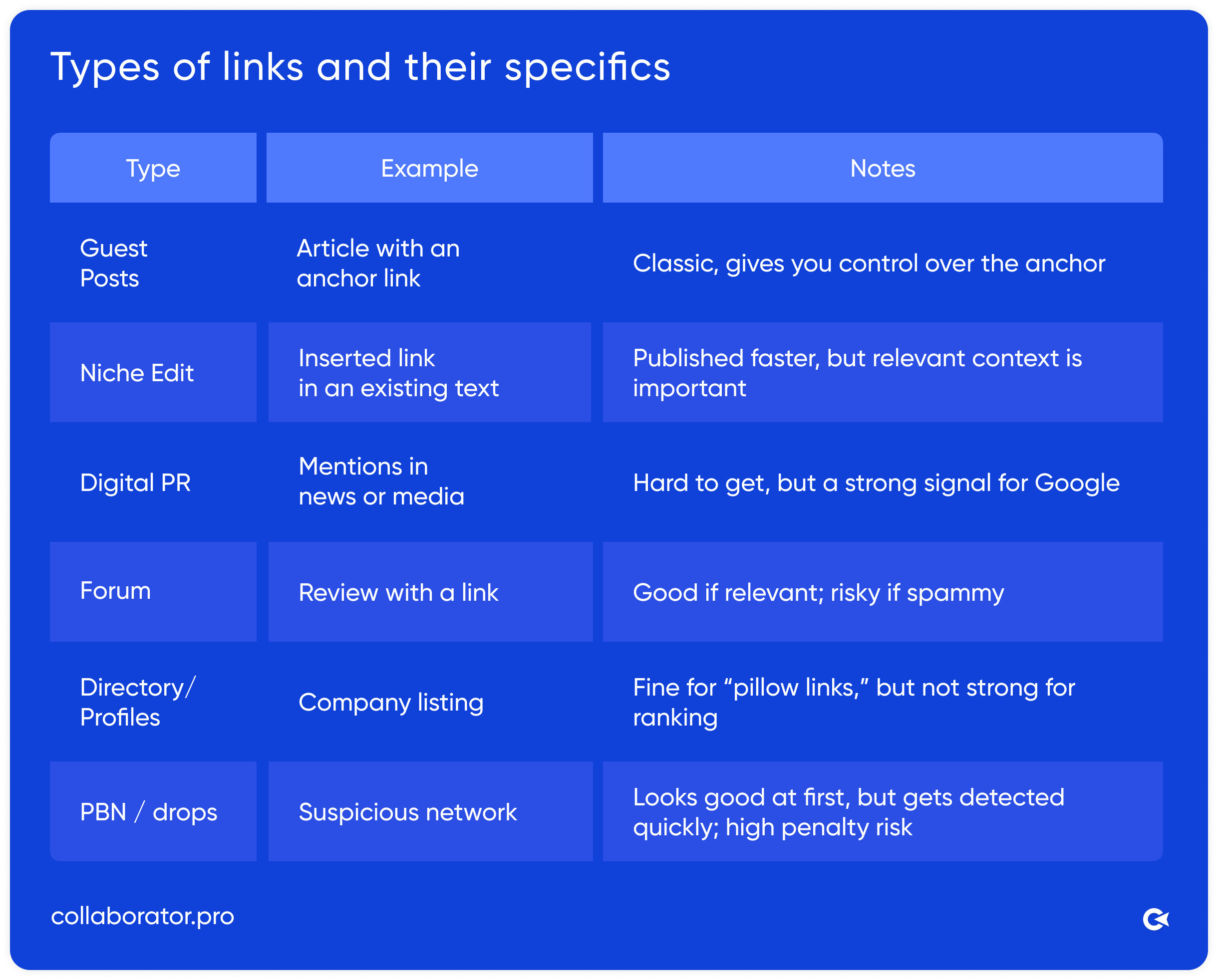
💡 You can manually classify links or use tools like Link Type Classifier GPT to speed things up.
Also, pay attention to anchor text usage:
- Branded and generic anchors = safe.
- Exact-match anchors = risky if overused.
- Partial-match = somewhere in the middle.
Step 4: Study Link Velocity (Growth Rate)
How fast are your competitors acquiring links? You don’t want to put up 50 backlinks in one week if your competitor gained them over a year. Google watches that growth pattern closely, and flags any unnatural spikes fast.
How to check it:
-
Go to Ahrefs → Backlink profile → Referring domains → New & Lost tab
-
Set the filter to 12 months
-
Analyze the chart: Is growth steady? Are there sharp spikes or drops? How many RDs are added on average each month?
💡 If you see a jump from 3 to 60 RDs in a single month, it’s a sign that either a Digital PR campaign worked really well, or someone was “gaming” the system.
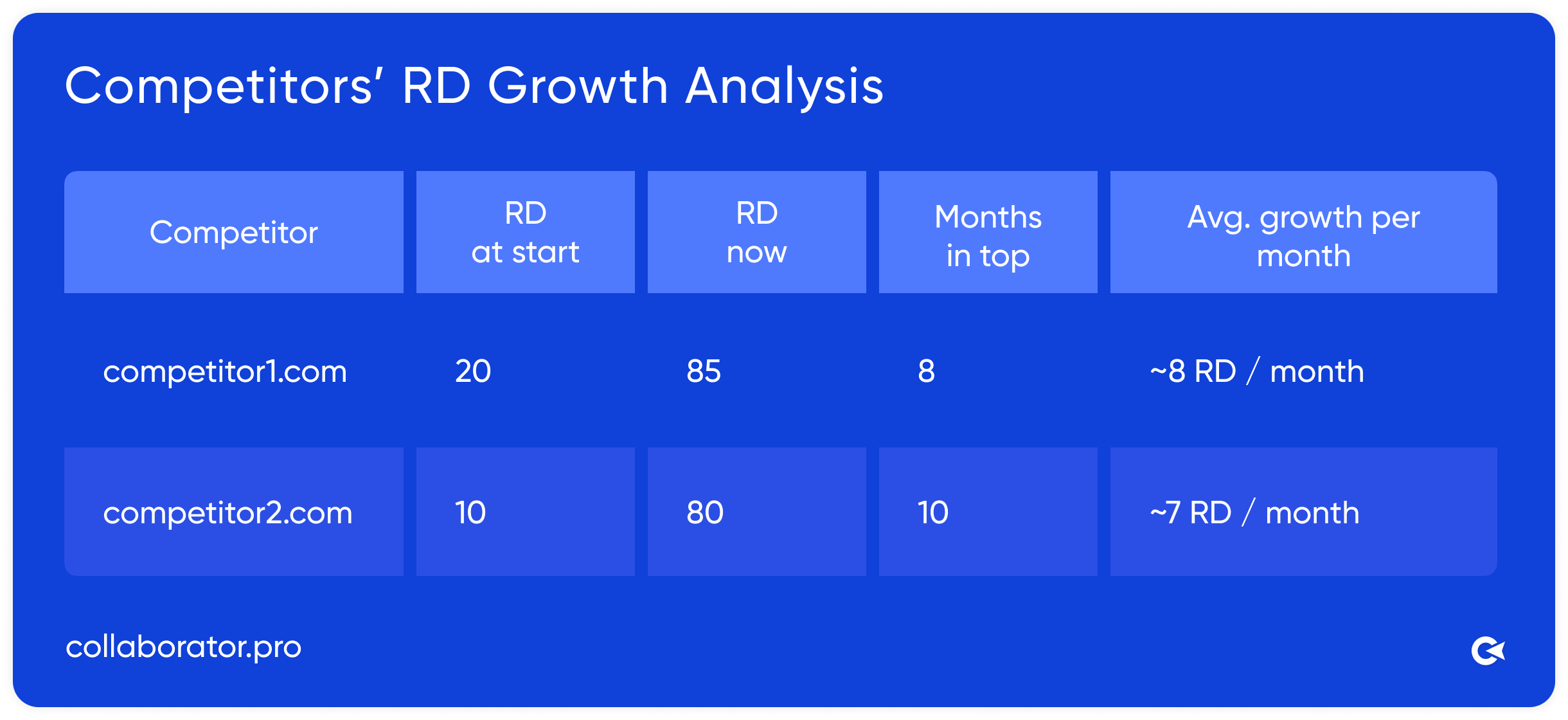
You can estimate:
- New site: 2-5 new RD/month.
- DR 30+ site: 10-15 RD/month.
- Established brand: up to 30+ RD/month (if growth is organic via PR, content, etc.)
Use this mini table to map out competitor growth:
By now you already know who your real competitors are, and how many links they need to rank. You’ve gathered information on what kinds of links they used, how fast they acquired them, and what anchor strategies they followed.
Based on this research, you start building a custom link plan. Here’s a simple structure to start with:
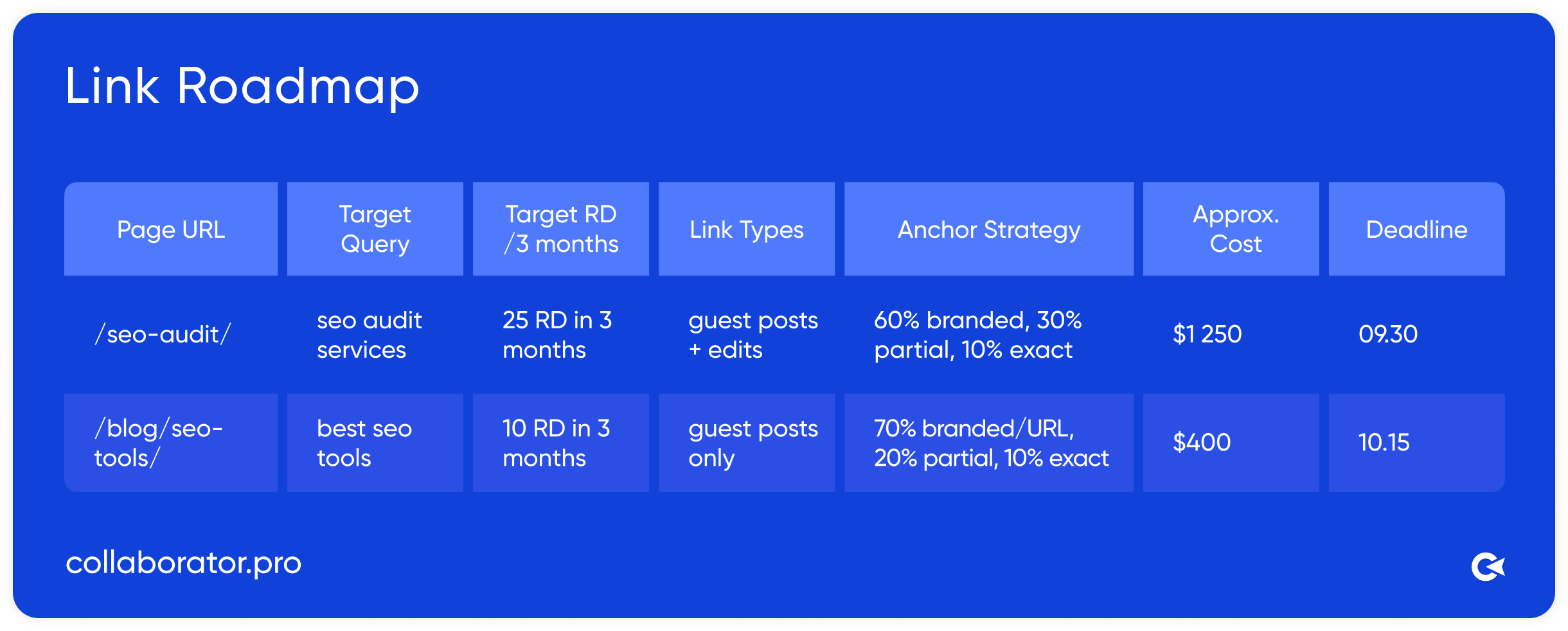
💡You can also use Collaborator competitor link lookup functionality to add it to your future backlinks list, and purchase guests posts down the line.
We’ll go into the details of strategy building later in the article, but this is your starting point: analyse first, build second.
Common Mistakes That Waste Budget
Even the best strategy can fall apart in execution. When it comes to link building, there are plenty of avoidable mistakes that can drain your time, waste your budget, and undermine Google’s trust. Keep your blind spots in check, and you are already ahead of most people in your niche. Here’s what to look out for:
- Buying cheap links just because they’re cheap.
It’s tempting to grab the lowest-priced backlinks you can find, but these usually come from spammy sites, irrelevant networks, or automated placements. They don’t drive rankings — and worse, they can trigger penalties.
👉 Better approach: invest in links from vetted sites with real traffic and topical relevance. - Over-focusing on DA/DR as the only metric. Chasing only high authority websites often leads to irrelevant placements. Google values topical alignment and natural link profiles more than just a high DR.
👉 Better approach: balance authority with niche relevance, organic traffic, and context of the placement. - Buying links without diversifying anchors. Repeating the same exact-match keyword anchor looks unnatural. It’s one of the fastest ways to tank a site by getting flagged by Google.
👉 Better approach: mix in branded, URL, and natural anchors to keep the profile balanced. - Publishing all your links in one burst. Seriously, don’t do this. A sudden rise in backlinks will look artificial, especially if your site doesn’t have the authority to justify it in Google’s eyes.
👉 Better approach: Stick to the link velocity recommendations for your site to imitate that natural growth. - Failing to track what actually worked. Without tracking tools or baselines, you’ll have no idea what helped, what flopped, or what never even got indexed.
👉 Better approach: Set up rank tracking, indexing checks, and visibility reports from day one. Use Ahrefs, GSC, Looker Studio, or even just a shared spreadsheet.
Build Your Link Strategy: Budget, Pages, Anchors
Now that you’ve done the hard part of figuring out how many backlinks you’ll likely need, and know how to be smart about building your backlink profile, it’s time to turn those numbers into an actionable plan. The goal isn’t just to "get more links." It’s to build a strategy that aligns with your business goals and available resources. Here’s a step-by-step:
Step 1. Open your sheet
Don’t overthink it, one Google Sheet is enough. Add columns to track the things we mentioned earlier:
- Page URL
- Target keyword
- Target RD
- Link types
- Anchor strategy
- Estimated cost
- Deadline
💡 Use competitor analysis to inform your RD targets, but always adjust based on your own budget, content, and timeline.
Step 2. Prioritize pages that actually matter
Not every page needs to have backlinks, so focus on what will drive revenue, leads, or visibility. Start with:
- Monetization pages (services, products) – they bring ROI fastest.
- Content hubs (if you’re building a cluster) – they pull topical authority.
- Homepage, for brand trust and domain strength.
- Blog posts, but only if they target long-tail queries with strategic value.
💡 Skip the unnecessary work: don’t waste budget on very generic explainer pages unless they’re part of a bigger funnel or cluster.
Step 3. Budget realistically
Link building isn’t just about buying placements, there are other steps that also go into it. You will need to account for content production (guest posts, blog articles), operational expenses (outreach, project management), and of course the link cost itself.
Using your sheet as a guide, you can allocate your budget based on impact and RD targets. For example, if your audit page needs 25 RD and a blog post needs 10, your $1,500 budget could break down like this:
- Audit page: $1,000 toward link placements, $150 for content, $100 for outreach/ops → $1,250 total
- Blog post: $150 for placements, $100 for content → $250 total
This approach keeps your spending focused on pages that drive the most value, rather than spreading your budget thin across low-impact pages.
💡 Track everything in a monthly sheet like this (placements, costs, anchor ratios) so you can quickly adjust priorities if needed.
Step 4. Lock your anchor ratios before you start
For best results, set anchor ratios from the start and stick to them. For most sites, the safe territory looks like:
- 60–70% branded/URL/generic
- 20–30% partial match
- <10% exact match
This ratio keeps your profile natural, avoids triggering Google’s filters, and lets you build momentum without risking over-optimization and penalties.
💡 Remember that you’re not just buying backlinks, but building authority with clear priorities and at a sustainable speed.
Step 5. Treat your table as a live system
Think of your backlink table less as a contract and more as a dashboard you’ll constantly adjust. Competitors won’t sit still — if one of them suddenly adds 50 links into a page in two months, you’ll see the spike and know when to respond. And if your budget shifts, you can always slow down link velocity while keeping anchor ratios intact.
💡 Use Collaborator’s link catalog to source placements. You’ll find guest posts, niche sites, and even the same sites your competitors already use, all in one marketplace. That way your table is directly connected to execution.
FAQ
❓ How long does it take for backlinks to actually affect rankings?
Backlink impact isn’t instant, and it usually takes a few weeks to several months. Most SEOs report small shifts starting around weeks 4-12, and noticeable impact between months 3-6, depending on link quality and site authority. Improvements can take longer, especially for new or low-traffic domains.
❓ What metrics should I track to know if my link building is working?
Track KPIs like total click growth (Google Search Console), organic ranking improvements, and increased RD. Domain Trust Flow or DR trends help monitor quality. Tools like Ahrefs, GSC, Majestic, and Google Analytics are reliable.
❓ Is quantity or quality of backlinks more important?
Quality always wins. One link from a high-trust, highly relevant site dramatically outweighs dozens of low-value links. Prioritize relevance, trust, and contextual fit over sheer numbers.
❓ How do I disavow bad backlinks or recover from toxic ones?
If you’ve picked up spammy or irrelevant links, first confirm they’re actually harmful. Collect them in a list and submit a disavow file in Google Search Console. If you’ve already taken a hit, pair disavow with fresh, relevant links to compensate for the bad ones.
❓ Should I hire an agency or keep link building in-house?
In-house gives you control and potentially lower costs, but it’s resource-intensive (content, outreach, tracking). Agencies shortcut the ops but add markup. A hybrid is often the sweet spot: keep strategy and high-value outreach in-house, outsource repetitive guest post or niche edit placement.
❓ How do I find competitor link gaps?
Tools like Ahrefs’ “Link Intersect” or Semrush’s “Backlink Gap” show sites linking to your competitors but not you. That’s your ready-made prospecting list. Focus on the domains linking to multiple competitors — those are usually open to outreach and more impactful for closing the gap.
Try Collaborator’s Competitive Analysis Functionality👈
Final Thoughts
You don’t need 100 backlinks — you need a plan that works for your site, your niche, and your goals. In 2026, link building isn’t just about DR, or buying links in bulk. It’s about consistent, strategic and focused effort informed by real research and your long-term priorities.
Here are the key takeaways to act on:
- Prioritize quality over quantity. One link from a relevant, high-authority site can outperform dozens of low-value links. Identify placements that actually move the needle.
- Use competitors as a data source, not a blueprint. Reverse-engineer what works in your niche, but adjust based on your content, budget, and domain strength.
- Anchor text matters. Stick to a natural mix: mainly branded/URL/generic, some partial-match, and minimal exact-match. Avoid keyword stuffing — it’s a red flag.
- Plan for gradual growth. Backlinks compound over time. Avoid sudden spikes and maintain a steady link velocity aligned with your domain’s authority.
- Leverage the right tools. Use Ahrefs, Google Search Console, GPT classifiers, or your competitor tracking sheet to simplify monitoring, find opportunities, and scale effectively.
Next steps you can implement today:
- Map out your pages, link targets, and anchor mix in the template from this guide.
- Audit your competitor list and mark opportunities for linkbuilding.
- Track progress monthly: referring domains, anchor distribution, rankings, and organic traffic. Adjust as needed.
- For additional help, consider booking a free strategy call with the Collaborator team to get feedback on your backlink plan.
Rememmber: link building isn’t luck — it’s a craft. With the right approach you can consistently grow your authority and rankings. Now it’s time to put the plan into motion. Good luck, and may Google be on your side💪