Niche: designer lighting and fixtures
Promotion period in this case: 2 years
Tools used: Google Search Console, Google Analytics, Google Merchant Center, Collaborator, Google Ads
How did consistent link-building through Collaborator help an E-Commerce project hit +1469% organic traffic growth?
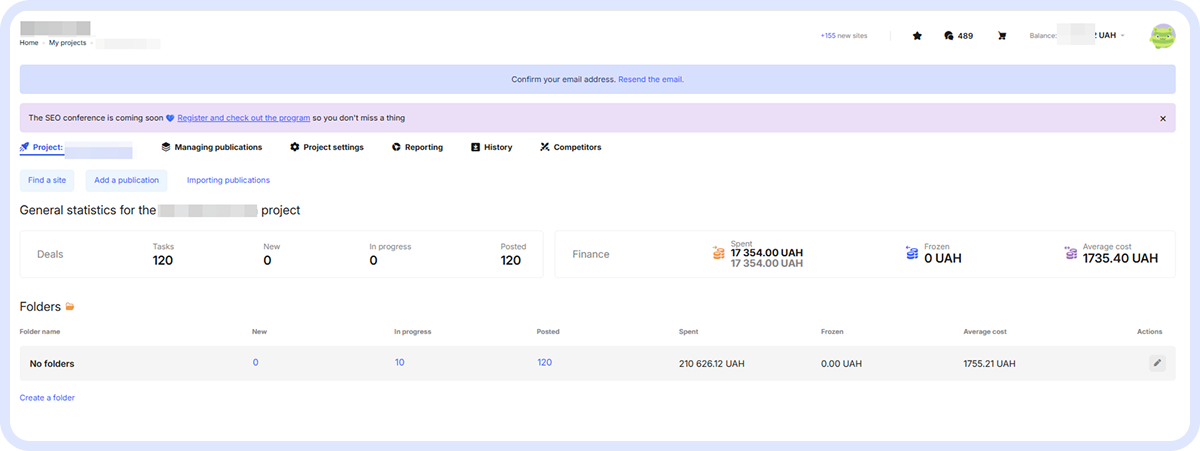
The math is straightforward: 120 anchor article links and a $5,000 USD investment (average link price $41 USD) helped boost domain authority over two years, speed up indexing of new pages, and build a natural, competitive link profile.
Results:
- Organic traffic: 750 → 11,796 (+1469%)
- Sales: x1 → x12 (+1100%)
- Site visibility: 0.1 → 49.1 (+49,000%)
Initial Data
WEDEX is one of the Top-3 SEO agencies in Ukraine, according to IT Rating Ukraine. Since 2013, the company has been helping businesses achieve stable organic traffic and steady sales growth through comprehensive SEO strategies.
In this case study, we break down how we managed to promote a designer lighting website in a highly competitive niche through strong On-Page and Off-Page optimization, despite having a very limited initial site structure, a minimal number of landing pages, and low starting metrics.
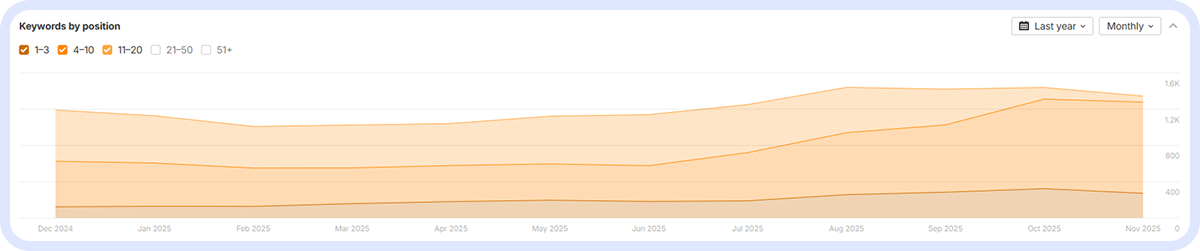
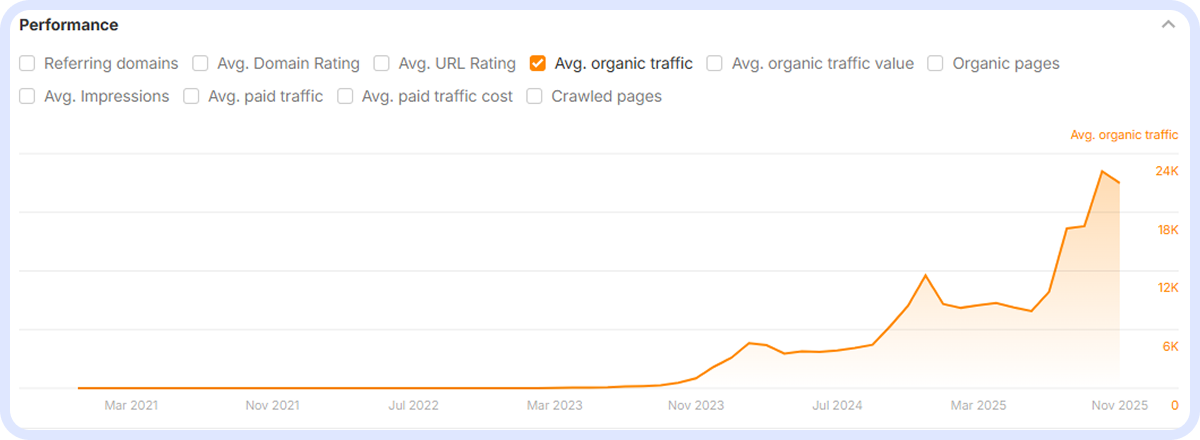
This project came to us when the domain was already almost 2 years old, but essentially no work had been done for search optimization. At the moment we started, the site had around 750 visits, and over 80% of them were branded visits to the homepage.
Another important point was that the site was positioned in the mid-to-high price segment, so we immediately excluded traffic from “cheap” queries.
The main sales channel was the offline showroom and partially an Instagram shop, while the website served primarily as a catalog for product selection and to showcase products to clients via DMs.
|
Metric |
Value |
|
Initial Organic Traffic |
750 |
|
Conversion Rate |
0.1% |
|
Site Age |
2 years |
|
Target Region |
Ukraine |
Project Goals
The main goal was to turn the site from a “business card” into an effective tool for attracting clients via Google search.
Another growth point was contextual product advertising via Google Ads, which was meant to cover SEO costs until it became profitable. But, jumping ahead, when it did happen, the ads were not stopped but scaled as an additional lead generation channel.
To start off, we focused on the following:
- Technical optimization.
- Improving overall structure and optimizing existing pages.
- Working on category page structure and content.
- Improving and expanding product pages.
- Adding SEO-optimized content.
We also prepared the site for product advertising, ensuring it met Google Merchant Center requirements, and worked on optimizing product cards to gain an advantage in campaigns.
Main Challenges & Strategy
The niche was highly competitive, dominated by large aggregators with huge assortments and wide SEO structures. Competing directly in every direction would have been inefficient.
So, we focused on:
- Priority product categories.
- Creating subcategories based on semantic clustering.
- Gradually strengthening each page with content and links.
This approach allowed us to quickly increase visibility in lesser competition segments with higher conversion rates. As we improved the site, we scaled and created new pages to cover more keywords. This steadily bettered rankings for high- and mid-frequency queries, while low-frequency queries quickly reached top positions and generated real converting traffic.
What We Did
Technical Optimization
The custom CMS needed a tailored approach since even basic optimization tasks took time. To ensure proper indexing and improve user behavior metrics, we:
- Optimized URLs for clarity.
- Configured robots.txt and sitemap.xml with all language attributes.
- Added canonical tags to eliminate duplicates.
- Improved loading speed, Web Core Vitals, and mobile responsiveness.
- Fixed critical HTML/CSS and pagination issues.
Technical foundation is key for long-term SEO, and we worked closely with developers to improve the site.
Semantic Core
We didn’t just collect keywords — we segmented them by search intent and commercial value, which allowed us to:
- Assign queries correctly to pages.
- Create subcategories with clear user intent.
- Achieve faster results in top 10 for low- and mid-frequency queries.
Expanding the semantic coverage was crucial; focusing only on a small set of keywords would have left us unable to compete with aggregators. Over time, we added more queries, but the priority was to generate the first sales. The site size grew over 13 times during the project through new pages.
Structure Expansion
Before creating new pages, we analyzed queries and optimization potential:
- Which queries exist.
- How quickly we could integrate them via filters.
- Which categories and segments were priorities.
New subcategories and page groups were added, integrated logically into the site structure, increasing entry points and improving relevance for Google.
Content
Content was key for growth. Having a semantic structure alone doesn’t tell search engines which keywords to rank a page for, but content and anchor links – they direct bots. We:
- Optimized metadata on all priority pages.
- Analyzed top competitors and built an effective text structure.
- Created SEO content for categories and subcategories.
- Automated alt/title tags for images.
- Structured pages and distributed main keywords across headings and blocks.
We didn’t just “stuff keywords”, we provided users with valuable information.
Usability
SEO isn’t just about rankings: it’s about sales. So, it’s important to also pay attention to the overall user experience. We’ve improved the following, which further increased conversion rates and sales:
- Navigation and product search logic.
- Conversion elements (buttons, forms, CTAs).
- Shopping cart functionality.
- Product filtering.
- Product page improvements.
All of this boosts behavioral signals that Google values highly, therefore it strongly impacts rankings.
Structured Data
To improve how the site is understood not only by regular users but also by search engine bots, we needed to integrate all available types of structured data. This is something that genuinely affects the site’s overall rankings and helps search engines read page information more accurately.
We added the following schema types:
- Product
- Offer
- AggregateRating
- Review
- Breadcrumbs
- Organization
- LocalBusiness
The enriched snippets generated from these microformats immediately drew more attention in search results, increasing CTR from 0.95% to 1.2% — and this happened without any changes in average position.
Link Building through Collaborator

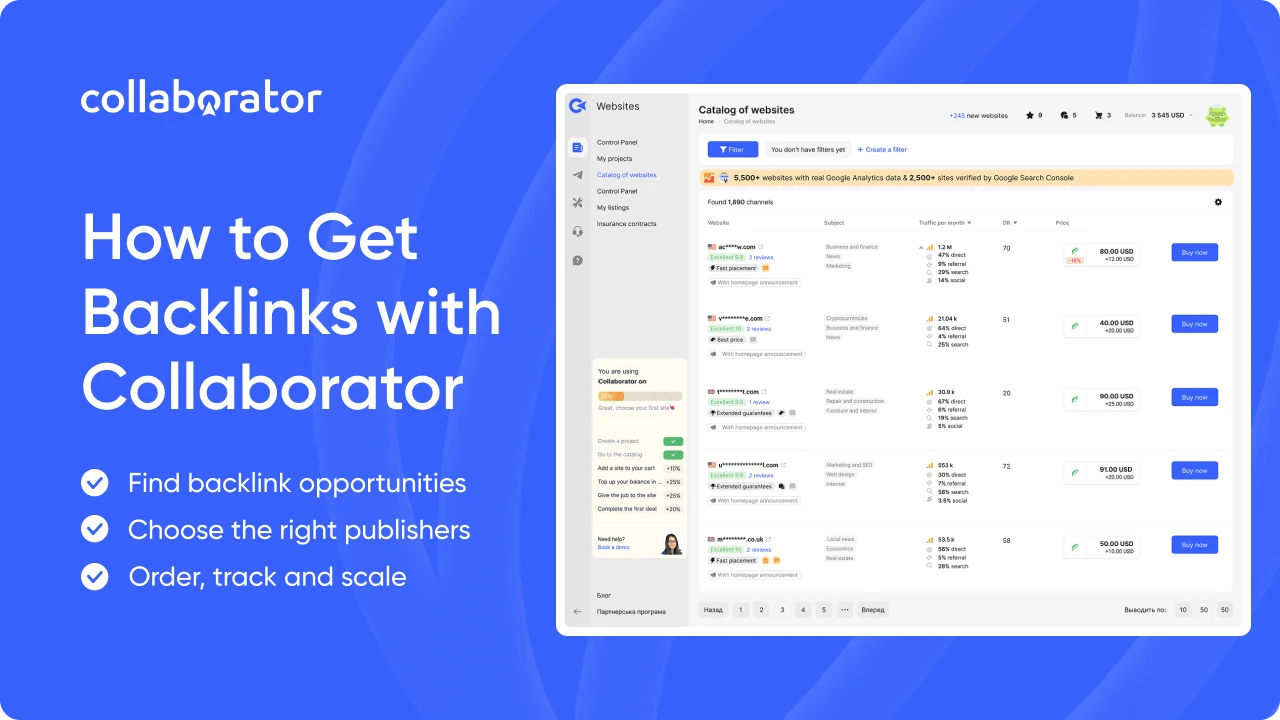
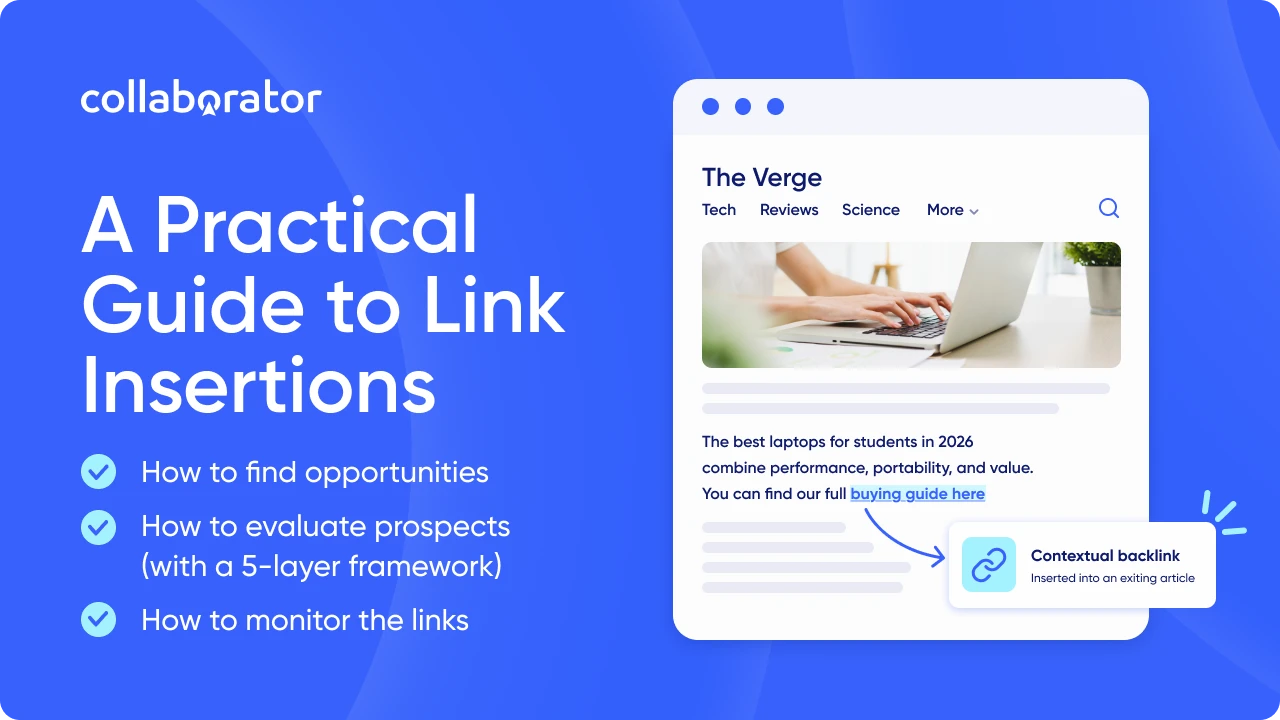
If a mistake is made with the query, there’s a chance to re-optimize the page. But if you build an incorrect link profile, this can kill your Google rankings. This is why we approach link selection and purchasing very carefully. We mostly buy anchor text links through the Collaborator marketplace – there are several reasons why this is convenient, even for a bigger agency with high project volumes:
- Large database of portals and websites worldwide.
- Convenient filtering options.
- Single payment for multiple links across different domains.
- Easy direct messaging with publishers.
- Link retention guarantee.
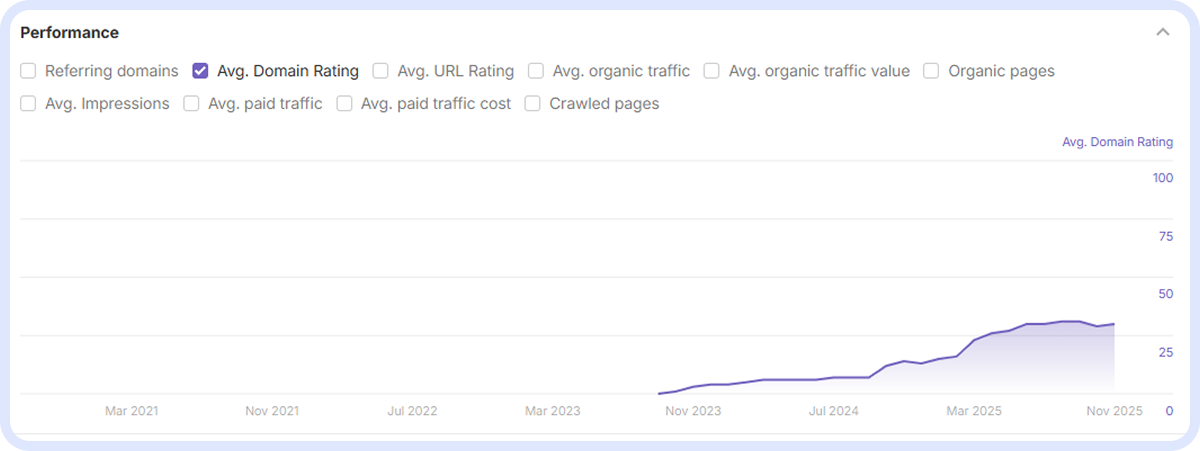
To make the link profile that is as natural as possible, we analyzed the closest competitors and identified the median indicators for anchor ratios, number of links, types of links, and the growth dynamics of competitors’ profiles. Based on this, we created a 6-month strategy. The initial period of building the link profile is the most critical, because algorithms look at it much more closely.
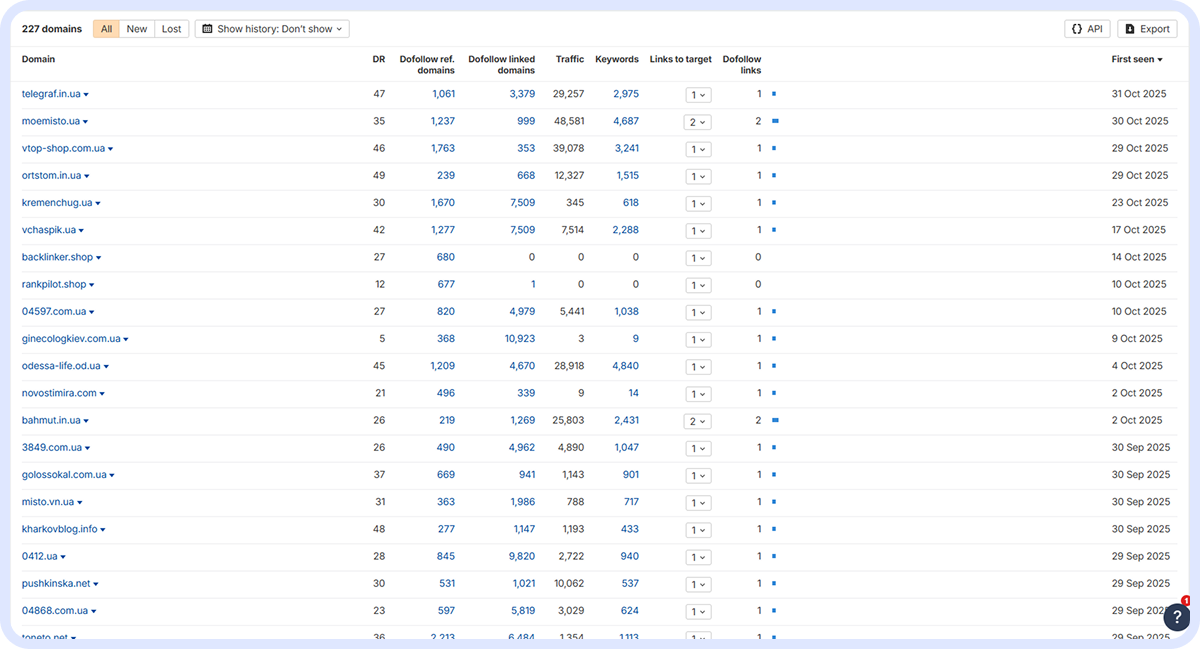
The link strategy was adjusted every 3 months based on niche audits and updated data. Gradual growth in the number of external links added authority, improved rankings, and accelerated indexing of new pages.
At the time of writing, we had purchased around 120 anchor article links for a total of $5,000 USD. The average cost of one link was $41 USD.
 As of now, the website continues to grow its traffic and rankings.
|
|
Start |
After 2 Years |
Change |
|
Organic Traffic |
750 |
11,796 |
+1469% |
|
Sales |
1× |
12× |
+1100% |
|
Visibility |
0.1 |
49.1 |
+49,000% |
Next Steps
Work on the site continues — we’re updating content to meet new requirements, constantly monitoring the technical state of the site and how it functions.
We’re also actively building the link profile so we don’t fall behind the market leaders — we monitor the niche and adjust the strategy as needed.
And the most important point for right now: we’re already actively working on promoting the store in LLMs, because that’s the future.
Thank you to the WEDEX team for the detailed case study. And to our readers: wishing you fast growth on your projects and powerful link-building strategies😉
Related reading
- • Fintech SEO Case Study: Strategies and Trends Proven To Drive Leads and 200% Traffic Growth
- • Optimize Crawl Budget for SEO and Grow Your Website 3X: Case Study
- • Case Study: How SEO Drove 24x Traffic Growth for This SaaS Brand
- • Traffic Analysis of 7,500+ Websites: Ahrefs vs Google Analytics vs Google Search Console. Unexpected Results
- • Claude for SEO: A Practical Guide to SEO Automation with AI in 2026